Throughout our history the onion has been a very important part of our diet. From soups to stews and on sandwiches or in salads, nothing quite matches up to the onion. They can be pickled, boiled, fried, baked or simply eaten raw. Because it is suitable to eat raw, the cancer preventing antioxidant properties of the onion are particularly potent. They also come in a wide variety of types with different colors and flavors.
You can get white onions, yellow onions, brown onions or red onions. You can even get onions that are sweet or shallots for a little more variety. Onions can be dehydrated and even come in a powder form. Red onions also have a higher antioxidant content than brown onions and therefore have greater health benefits.
Onions do have a couple of drawbacks but they don’t impair their worth as a super food. If eaten raw they can leave you with bad breath and when chopping or slicing onions they can make your eyes water. So if you eat a lot of onions, you will need to brush your teeth or pop a mint in your mouth. Otherwise, you may wind up with a few less friends. To keep your eyes from watering just put a little white vinegar on your cutting board when slicing or chopping onions.
Ian Marber, author, broadcaster and health journalist comments:
"The term superfood tends to be applied to nearly everything these days, but the humble onion does offer far more benefits than most vegetables owing to its potent antioxidant and probiotic effects."
Onions…gotta love ‘em!
Staying above the water line!


While many times a bartering agreement may be beneficial for both parties involved in the trade, there are times when you may want to reconsider your options. In a survival situation or a crisis, sometimes you’re better off passing on the deal than risking a shortfall in what may wind up as an item in limited supply virtually overnight. You should always make sure you can maintain a positive position in any type of barter or trade arrangement you may be involved in or seeking to complete.
One such example is bartering for bullets. With limited availability of certain types of ammunition, you would probably want to be on the receiving end of the deal. Getting ammunition in trade for some other item of value should be a positive trade on your behalf. You should consider a couple of factors before finalizing the deal in any type of barter or trade you wish to make.
During a crisis or an emergency situation the value of certain items will increase exponentially at a rapid pace. Water, food, fuel, temporary shelter, just to name a few, can all skyrocket in value literally overnight during a crisis. Thus, you should have a sufficient quantity of an item so that its disappearance in a trade will not leave you with a possible near term shortage. You may be increasing your problems rather than eliminating them.
You should also take care to never reveal that you may have an abundance of an item so as to protect what you do have from someone that may have ill intentions which could arise at a later time when you may be least prepared to deal with the situation.
Always treat any item you are trading as if it’s the best one in the world and you’ve only got one left and that you will never get another one. In many survival situations this will wind up being the rule rather than the exception.
Staying above the water line!
There are numerous types of knives for a wide variety of uses that fall into the specialty category. There is probably no single tool that has done more for man’s survival than the knife. Having the right knife for the job can be an important factor in your survival. With the large amount of time that people spend in vehicles due to commutes to work, hauling supplies or even a simple trip down the road to visit friends or relatives, our chances of being involved in an accident at some point in time are increased. A seat belt cutter may be an item you may want to consider keeping handy in your vehicle.
Seat belt cutters are designed for one simple thing; to cut seat belts. Many times you can become trapped in a vehicle by your seatbelt. Seatbelts are very tough and most have Kevlar woven into the fabric to give them exceptional strength and holding power. This also makes them extremely difficult to cut. It is those times when an inordinate amount of weight pressing against a seatbelt makes them almost impossible to unlatch. This is the time when having access to a good seatbelt cutter may be crucial to your survival.
Seatbelt cutters come in a wide variety of styles and prices to fit most any budget. Most have thin, flat ultra-sharp hooked blades that allow them to be inserted between a person’s body and the seatbelt without risk of cutting the person trapped in the seatbelt but allowing the seatbelt to be cut quickly and efficiently. Even a simple accident where a person may simply have suffered a fractured arm or leg may incapacitate you to the point where you may be unable to release the tension on a seatbelt due to the inability to shift or move your body.
A good seatbelt cutter with their ultra-sharp blade is also designed to handle the tougher fabric construction of seatbelts. The seatbelt cutter pictured above is an
Seatbelts are an essential item for your survival when in a vehicle and have saved many lives and reduced the number of critical injuries people have suffered when in an accident. Don't forget to buckle up!
Staying above the water line!
Knives are the major tool found in any kitchen. From small paring knifes to large carving knives, there are a wide range of knives found in every kitchen. Knives which are dull can cause more accidents and be more dangerous than a sharp knife. Dull knives can slip and cause serious bodily injury if you experience difficulty when cutting and chopping food items. One small slip with a dull knife can do serious damage to your fingers or hands. Many kitchen accidents are knife related but can be avoided by following some simple rules. Here are a few simple tips for kitchen knife safety while working in the kitchen.
Knife Safety in the Kitchen
1. Always keep your kitchen blades properly sharpened.
2. Always make sure you use the right knife for the job.
3. Always keep the knife blade angled away from your body when in use.
4. Always hold the knife by the handle. Never hold a knife by the blade when cutting.
5. Always use a proper cutting surface when using knives in the kitchen. A good cutting board used properly will help to prevent many accidents.
6. Always hand wash and dry all of your kitchen knives separately. Never leave knifes in a sink full of soapy dishwater where they can’t be seen.
7. Always store your knives properly when not in use and separately from other kitchen tools.
8. Always remain alert when using a knife so that you can avoid a serious injury. Pay attention to what you are doing.
9. Never try to catch a knife which has fallen or been dropped. It’s a lot safer to pick up once it has come to a rest.
10. Always use care when using other kitchen tools that can also cause serious injury. Potato peelers, ice picks, and kitchen shears or scissors can all cause serious injuries if used improperly.
You can read Part One here: Home Survival - Part One - Kitchen Safety
Using a little common sense and following a few basic safety rules will help you avoid a needless accident in your kitchen.
Staying above the water line!

There are many creatures that you can run into in the summer. Some are more dangerous than others that you may encounter. In my area of

This is a picture of a bat that had died which I found in a Crape Myrtle tree in my yard. It was only about 3 feet off the ground and well within reach of many youngsters. They are quite small and this particular one, a Mexican Free-tailed bat, had a wingspan of approximately 10 inches. They consume large amounts of insects which help to keep the insect population under control. Many people build bat houses to attract them since they are a natural predator of mosquitoes and will consume large quantities of mosquitoes when feeding at night.
Using your powers of observation will allow you to find these hazards before a young child can. Children are always curious and quite often see things before you do. Their little brains soak up everything they see and sometimes their curiosity will get them in trouble. Although this bat was dead when I found it, many times they may still be alive and can pose a potential hazard. You should always exercise a proper amount of caution and a great amount of care when dealing with wild creatures, whether they are alive or dead.
You can learn more about the different types of bats in
http://www.tpwd.state.tx.us/learning/webcasts/caves/battypes.phtml
Got bats?
Staying above the water line!
Many times it is difficult to find simple recipes that allow you to use the various food items in your food storage. Here is a quick and simple recipe that allows you to use a number of food storage items to make a healthy snack or side dish that can be served with almost any meal.
Rice Rolls Recipe
Ingredients:
1 Pint of Water
1 Pint of Milk (you can use powdered milk)
2 Teaspoons of Butter
2 Teaspoons of Lemon Juice
2 Teaspoons of Sugar
2 Eggs (uncooked)
Instructions:
Form mixture into finger-size rolls or small patties. Dip rolls or patties in egg wash (additional eggs required) and then coat with cornbread.
Fry coated rolls or patties in butter till golden brown. Serve hot as a side with any meal or by themselves as a snack.
Riverwalker
Every survival kit should contain maps. Even though you may be familiar with your own area, there is a possibility of having to make detours because of traffic congestion, an accident, road construction or there may be roads which have become impassable due to weather conditions.
The first map you should have is a current state map. This will insure that you can find a suitable route in case you are forced to evacuate due to a hurricane, flooding or other natural or man-made disaster. This will allow you to alter your route if it becomes necessary.
The second map you should have is a good county map. If you need to take a detour, having a good county map may save you valuable travel time by affording you the option to take a road less traveled. You should also obtain county maps for any areas you may be traveling through on your way to your designated bug-out location.
The third type of map you should have is a good city map for your area. if you live in a large urban area, it is virtually impossible to remember all the possible routes you may use in order to leave town in a safe and timely manner. Many times you can get a combination map that includes both a city map and a county map.
You can often get a
No matter how familiar you may be with your area there is always the possibility of the stress caused by a disaster or emergency situation that may make it harder for you to remember all the different shortcuts you may be familiar with and a good set of maps will help to eliminate any confusion or problems.
Get a free Texas map here: http://www.traveltex.com/travelguide/order.aspx
Got maps?
Staying above the water line!
There are many types of raw food items that store well if given a little drink of water. It is a great method for preserving parsley but works well with other types of greens. Florists have used this trick for years to preserve fresh flowers and it works quite well. Here is but one more example of prolonging the shelf life of your fresh food items.
Mrs. RW and myself both like shallots, especially on a fresh garden salad. To keep the shallots fresher and thereby maintain their nutrient values to the utmost extent possible, we use the same method when preserving shallots as we do with parsley.
Simply place them in a glass container with a small amount of water and wrap lightly with some plastic wrap to help retard the effects of dehydration. This keeps your shallots fresh and tasty. This is a simple but effective way to preserve the freshness and the quality of fresh food items, especially greens. Fresh always tastes better and is actually better for your health.
Keeping it fresh?
Staying above the water line!
One of the main problems of food storage is keeping track of your food inventory. Proper rotation will help to eliminate waste from food items that may go bad as a result. In order to assist others out there, I would like to make a food inventory report spreadsheet available to anyone out there who may need assistance in keeping track of their food storage.
This is a very simple Excel spreadsheet that allows you to keep track of over 100 food items and print out reports for quantities on hand and amounts needed to replenish your food inventory when necessary. Got more than a hundred food items? Simply make an additional copy. This is not a complicated spreadsheet but you will need to know the basics of using Microsoft Excel. There are three worksheets in this spreadsheet and most if not all of the entries can be made to the first worksheet. Values are automatically calculated from the first worksheet’s values.
If you think this type of spreadsheet may be of value to you, please respond in the comment section with an e-mail link and I will send you a copy. This copy is totally FREE. The file size is 58kb. This makes it easy to send by e-mail and suitable for back-up to a small USB drive. I will supply you with a password allowing you to use this spreadsheet.
I will initially limit this to the first 50 people to respond. I get a huge volume of e-mail each day and need to impose this limit in order that I may respond in a timely manner to those requesting a copy. Once I have responded to the first fifty requesting this spreadsheet, I will send additional copies to people as I am able to do so. You may freely disseminate this copy to anyone you wish if you find it helpful. I realize that everyone’s level of computer literacy is different and this spreadsheet may not be for everyone. Hopefully, you will have someone in the family who is and can help you in this regard. It largely depends on your skill level.
Special Note: I will make a copy available to any prepper networks out there who think their members may benefit from the use of this FREE spreadsheet.
Hopefully, this may help you be better prepared in your food storage efforts. I have been using this simple spreadsheet for inventory purposes for quite a number of years. I made up this spreadsheet program due to the fact that there were no cost effective programs out there for use that weren’t very expensive. It is a simple worksheet designed by me to keep track of inventory. I can make no guarantees that it will be useful for you and cannot offer tutoring services for those people unfamiliar with using Microsoft Excel.
If you would like to try this spreadsheet and see if it can work for you please respond in the comments section with an e-mail link. My only request is that you respond with comments…good or bad.
I prefer plain and simple to fancy and complicated programs. Thanks!
*edit*
Please let me know when you receive your copy. Your comments and email will be deleted after 24 hours or once I have sent you a copy. This is in order to cut down on any spam being directed to your email. I know only too well how much spam you can get with a posted email. Thanks. RW
You can e-mail a request for the spreadsheet here: riverwalker_texas@yahoo.com
Riverwalker

Common Shooting Errors (75.2 kb)
Pistol Group Analysis (52.2 kb)
Shooter Fault Terms and Definitions (9.11 kb)
All of the above files are in PDF format.
Staying above the water line!
Riverwalker

Sometimes learning how to survive can be as simple as studying nature. Many of the creatures that co-exist with us can show you the way. Many times it is so obvious that we fail to observe the little things that they do and in this we are failing to learn some of the simple but often harsh lessons, if ignored, that nature can teach us.
One example of such an activity is the nesting habits of woodpeckers. Pictured above is a tree cavity where a nesting pair of red-headed woodpeckers live in my yard. I tried to get a picture of the actual woodpecker but I don’t think he was “home” at the time, although he does stick his head out on occasion.
They take advantage of natural cavities in trees to make their homes. They do have to do a little work to make it useable but know it will be worth the effort. They know it affords protection from the heat, the cold, the wind and the rain. If you don’t have a tent or a tarp handy, you’d better be prepared to find natural forms of shelter that are often readily available in nature or be able to utilize natural materials that are available to make one.
Take a little time to observe nature’s creatures and they can show you simple ways to survive.
Got bushcraft?
Staying above the water line!
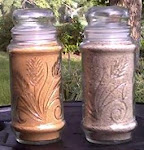
Wheat is a food grain that has very good nutritional value. It contains large amounts of protein and several nutrients necessary to promote good health, including calcium and niacin among others. When storing wheat for long term storage, it is necessary to kill or destroy any bugs, microorganisms and weevil eggs that may be present in the wheat. Failure to do so may leave you with a large amount of contaminated wheat.
One of the simplest and safest ways to store wheat is to use “food grade” diatomaceous earth. Make sure that you use only “food grade” because the diatomaceous earth used in pool filters may contain algaecides and fungicides that are harmful if consumed. Using food grade diatomaceous earth is a simple, safe and inexpensive method to get rid of those pesky "critters" that may contaminate your wheat when being stored for long term purposes. Diatomaceous earth is also very easy to use and requires no special skills or preparation.
Most wheat is usually stored in 5 gallon “food grade” buckets for long term purposes. Treating wheat with food grade diatomaceous earth for storage in a 5 gallon container is a simple and easy process. Simply add approximately 1 1/2 cups of food grade diatomaceous earth to each 5 gallon bucket or container. Mix the food grade diatomaceous earth into your wheat as you are putting it in your storage bucket. Then to thoroughly mix the two, put the lid on and simply turn your bucket on the side and roll it around to mix the wheat and diatomaceous earth together so that all the wheat is coated. The wheat can be used as is, since the food grade diatomaceous earth is organic and the consumption of it is not harmful to people or other animals. The wheat can also be rinsed with water and dried but this step is not required in order to make the wheat usable.
"edit"
IT IS VERY IMPORTANT THAT ONLY THE NATURAL OR ORGANIC FORMS OF DIATOMACEOUS EARTH BE USED FOR INSECT CONTROL OR FOOD TREATMENT.
CAUTION: Diatomaceous earth can be a respiratory hazerd and care should be taken not to breathe in the dust particles. Use a good dusk mask. It also is highly absorptive and can dry your your skin out if handled without gloves. Use a good pair of gloves to protect your hands when working with diatomaceous earth.
Both pool grade and organic (i.e., the natural form) diatomaceous earth come from the same sources. They are processed quite differently however. The organic grades are dried and ground up. As an additional part of the process, the pool grade is often chemically treated and heated which causes the silica in diatomaceous earth to form crystalline silica which can be a health hazard. The natural form contains non-crystalline silica and this is not a hazard to the human body which can usually dissolve it without any problems when ingested.
Staying above the water line!
Riverwalker
There are many different hazards to our everyday survival. One of the most dangerous places people frequent is their own homes. We spend a lot of time each day at home and one of the places where we spend the majority of our time is in the kitchen. Some spend their time cooking and others spend their time eating. I’m better at eating than cooking but still spend a great deal of time in the kitchen. It is only prudent to take the necessary steps to make your stay in the kitchen a safe experience. Here are a few kitchen safety tips to help you avoid a hazardous experience and enable you to survive while in the kitchen.
Kitchen Safety Tips
1. A working smoke detector in your kitchen is a vital part of kitchen safety. Make sure you have a working smoke detector in your kitchen. Check it regularly to make sure it is working properly and replace it if isn’t. If it is battery operated, change the batteries out on a regular basis.
2. Keep a working fire extinguisher in the kitchen at all times. It pays to be cautious when it comes to your kitchen activities which will involve fire and flames. Check the fire extinguisher on a regular basis to make sure it is functioning properly.
Safety Tip: A small pan fire can be smothered by putting a lid on it or covering it with baking soda. NEVER put water on a grease fire. This will only make your problems worse.
3. Keep a small fire extinguisher close to the stove where it can be reached quickly.
5. Always use pot holders and oven mitts to protect yourself when handling hot pans or dishes. Make sure they are kept dry. Water is an excellent conductor of heat and a wet oven mitt or pot holder offers very little protection.
6. Cooking oils and grease when being used in the kitchen should be given your utmost attention. Remember that the warmer they get, the more dangerous they become.
7. Keep your kitchen tools and utensils where they can be easily accessed without reaching across a hot stove.
8. Glass lids for pots, pans or casserole dishes if left on a hot burner or fire may explode sending dangerous glass shards flying in all directions.
9. When cooking food in the kitchen, it is vital that you never leave your stove or oven unattended. If you do have to leave the stove, oven or the immediate area to deal with another emergency (screaming kids come to mind!), turn the stove or oven off till you are able to get back to what you were doing. Automatic timers are great timesavers but are also a good way to start a house fire if left unattended.
No matter what type of stove you have, always make sure that it is in proper working condition. Faulty controls, bad valves, non-working vents can all cause a fire hazard if they aren’t working properly. Keeping it clean of grease splatters, etc. will also help to reduce the risk of an unwanted fire.
Home Survival - Part Two - Kitchen Tool Safety will cover additional safety concerns.
Staying above the water line!