Showing posts with label Bushcraft. Show all posts

Thursday, August 1, 2013

Bushcraft - Central Texas Style - The Artist Conk


The Artist’s Conk (Ganoderma applanatum) is a polypore that ranges in size from a few inches to as much as three feet across. They have a woody, shelf-like appearance with a reddish brown top surface and an underneath (pore surface) that is white and stains to a brown color when marked on or scratched. It gets its name from the fact that the white spore surface can be drawn upon turning it a dark brown color. They are frequently used as a canvas of sorts for artists to render their drawings. They are generally found in clusters on dead or dying hardwoods.


If you need to leave a message for someone, you don’t need a pencil or paper if you have some artist conk in the area. Just scratch a note on the white spore surface.


Often called bracket fungi or shelf mushrooms, this fungus is widely distributed on dead or dying species of oak, elm, and other hardwoods in Texas. Artist conks are perennial and new layers of pores form on the lower surface each year. This give the interior of older artist conks a layered appearance. The interior of the artist conk will also have a velvet like texture.


Artist conks are usually found near ground level which makes them easy to harvest. While this type of conk is normally not considered edible, it does have some other uses that make it valuable. It can be used as a hearth board for starting a fire, burned to repel insects or used as a means to transport a fire when necessary. It can also be boiled as a tea or concoction but this is something I haven’t tried and would advise against.
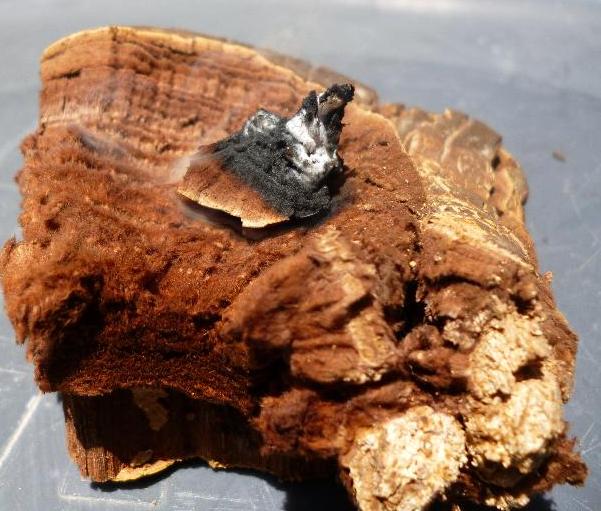


Unlike tinder conk, artist conk is not a very good tinder material even though it catches fire quite easily when exposed to an open flame. It actually smolders without producing an open flame. If charred, you can get similar results as when using char cloth. Artist conk will smolder for hours and maintain a good set of embers that will allow you take your fire with you.

My preferred use is to repel insects and it works similar to those green coil things sold in stores. Just throw a chunk of artist conk in your fire bowl and you won't have to worry about the insects. This is also a lot better because it’s free.

Got artist conk?

Staying above the water line!


Riverwalker

Sunday, July 28, 2013

Bushcraft - Central Texas Style - The Spotted Ground Squirrel


The spotted ground squirrel is a familiar inhabitant that is seen frequently in different areas of West Texas but can also be found in other dry, sandy areas of the state. This ground-dwelling squirrel normally lives in long, shallow burrows in the sand.  A slight mound of sand, usually hidden by clumps of vegetation, is often the only indication of the entrance to their burrows. The average weight of a spotted ground squirrel is between 4 and 5 ounces and they can be as long as 8 or 9 inches if you include the tail. 

These squirrels are quite small and very quick. They are easily missed if you aren't watching carefully because their color blends in with the sand perfectly. These ground-dwelling squirrels are easily identified by the scattered and numerous white spots that can be seen on their backs. The ground squirrel in the above picture was spotted by Lil’ RW, my grandson, who is pretty good at spotting little critters.

One of the primary things you should always be aware of when practicing bushcraft is the type of plants and animals that live and are found in your area. There will be fewer surprises from nature when you do.

Got ground squirrels?

Staying above the water line!


Riverwalker

Wednesday, June 26, 2013

Desert Survival Skills Practice - Part Two - Water, Wildlife and Plants


Wildlife and plants can be a good indication that water may be present in a desert environment. Water in a desert environment can be an extremely difficult item to locate. Many forms of wildlife would simply cease to exist if they were not skilled in finding sources of water. In addition to the presence of wildlife, plants can also be an indicator of recent rains or the presence of water nearby. 


Many plants in the desert will bloom profusely after a rain. This can be indication of recent rains or a source of water that is nearby. The desert willow is a prime example of this type of plant.


Many animals will also leave signs which indicate their presence. Tracks in a dry stream bed will often give away their presence in the area. Even though you may not see them, you will know they've been in the area.


The dry stream bed eventually entered a closed canyon after about a quarter of a mile. 


At the entrance there was also a creepy crawler in the form of an orange and black millipede. The orange and black coloration is a good indication that it may have had a nasty sting or might be toxic and it was left to proceed to whatever destination it had in mind.


Inside the closed canyon there were numerous pools of water that had collected in the depressions in the rock.


There was also another creepy crawler found in one of the pools. This was a small checkered garter snake. They are also quite harmless, unlike some of the other snakes that reside in the desert.


The dry stream bed which entered the closed canyon continued on for approximately a mile before reaching a fairly steep drop off of 25 to 30 feet which would have required some additional gear to proceed any further. This is commonly referred to as a pour-off.


The drop off fed into the waters of the Rio Grande. Although the river couldn't be seen from the vantage of our starting point, by following the dry stream bed we were eventually led to the river.

Plants and wildlife are always good indicators of your natural environment. When combined with local information and knowledge of the area in which you are traveling, you will be better equipped to handle the challenges of a natural environment.

Nature will always give you the signs you need to survive but you will need to be able to recognize them. 

Got desert skills?

Staying above the dry stream bed!

Riverwalker 

Sunday, June 23, 2013

Desert Survival Skills Practice - Part One - Checking the Dry Stream Bed


Dry Stream Bed

Spent some time following a dry stream bed to see if we could locate some shallow pools of water. When checked, the ground was fairly moist just below the surface and several locals indicated that there had been some rain recently in the area. This indicated that there was an extremely good chance of finding a source of water nearby.

Being able to read the signs and then using them to find a source of water can be extremely critical to your ability to survive in a desert environment.

When you're spending some time in the desert, it's a good time to practicing your desert survival skills.

Staying above the water line!

Riverwalker

Saturday, June 22, 2013

R and R on the River


On the River

It's time for a little R&R and there's no better place to spend that time than on the river. 

Let you know how the trip turns out later.

 All I really need is a shady spot to rest and recharge the batteries.

Staying above the water line!

Riverwalker

Friday, June 21, 2013

Riverwalker's Pics - Old Highway Bridge at Eagle Nest Creek


Old Highway Bridge at Eagle Nest Creek

Here's a more traditional view of Eagle Nest Creek that shows the old highway bridge in the background. You can also get a pretty good view of the cave located in the canyon.

Staying way above the water line!

Riverwalker

Thursday, June 20, 2013

Riverwalker's Pics - Eagle Nest Creek


Eagle Nest Creek

Just a pic from one of my recent trips. This pic was taken in Pecos County near Langtry, Texas.

Staying way above the water line!

Riverwalker

Tuesday, February 5, 2013

Bushcraft - Central Texas Style - Learning to Hide in Plain Sight


Many times nature is at its best when helping creatures to hide in plain sight. What should be obvious to the eye is not always readily apparent. A little skill in knowing the habits of nature's creatures make them easier to find or avoid. 

One such creature is the Texas spiny lizard. Their coloration allows them to easily blend into their environment but they also maintain a place of safety that is readily accessible should they be discovered. In the case of the Texas spiny lizard, they like to hide in the loose bark of dead trees. All you have to do to discover their presence is peel away the bark to reveal their place of safety.


Here is a closer view of a Texas spiny lizard. They have the ability to remain absolutely motionless, even when exposed to help prevent their presence being revealed. They can also swiftly retreat to a different place of safety when their hiding place has been discovered.

Nature teaches many valuable lessons if you pay close attention to your environment.

Got natural survival lessons?

Staying above the water line!

Riverwalker


Thursday, August 16, 2012

Bushcraft - Central Texas Style - River Shelter


Rocky Outcropping

In a wilderness setting, rocky outcroppings often have areas that often provide suitable areas for use as temporary shelters. They quite often will be found on higher ground and can provide you with protection from the elements.


River Shelter

The above picture shows a small cave-like area in a rocky outcropping. Just be sure to check that there aren't any current residents before making it a temporary shelter. Natural shelters give you the advantage of not having to use valuable resources to build a shelter. This enables you to save a substantial amount of time and effort by using natural forms of shelter.

Got river shelter?

Staying above the water line!

Riverwalker

Tuesday, August 7, 2012

Bushcraft - Central Texas Style - Natures Puzzle


Natural Pond

Natural sources of water are always a priority in a survival situation. Natural springs are also a good source of fresh water and can often be found collecting in natural depressions.  The natural pond pictured above is fed by a fresh water spring. The water is clear and cold and creates a nice "swimming hole" to help with a hot summer day. 

This pond overflows into a small creek that feeds into the river further along. It was probably close to twenty or twenty-five feet wide and a good 8 to 10 feet deep. It also contained some nice size perch. They could have made a decent meal if required for my survival.

Survival is often like fitting the pieces of a puzzle together. Nature gives you the pieces of the puzzle and it's up to you to make use of them. As you fit more pieces of the puzzle together, thinks will start to look a little clearer and your survival will be a lot easier.

Got pieces of nature's puzzle?

Staying above the water line!

Riverwalker

Monday, August 6, 2012

Bushcraft - Central Texas Style - Natural Cuisine - Part Two - Mud Bugs


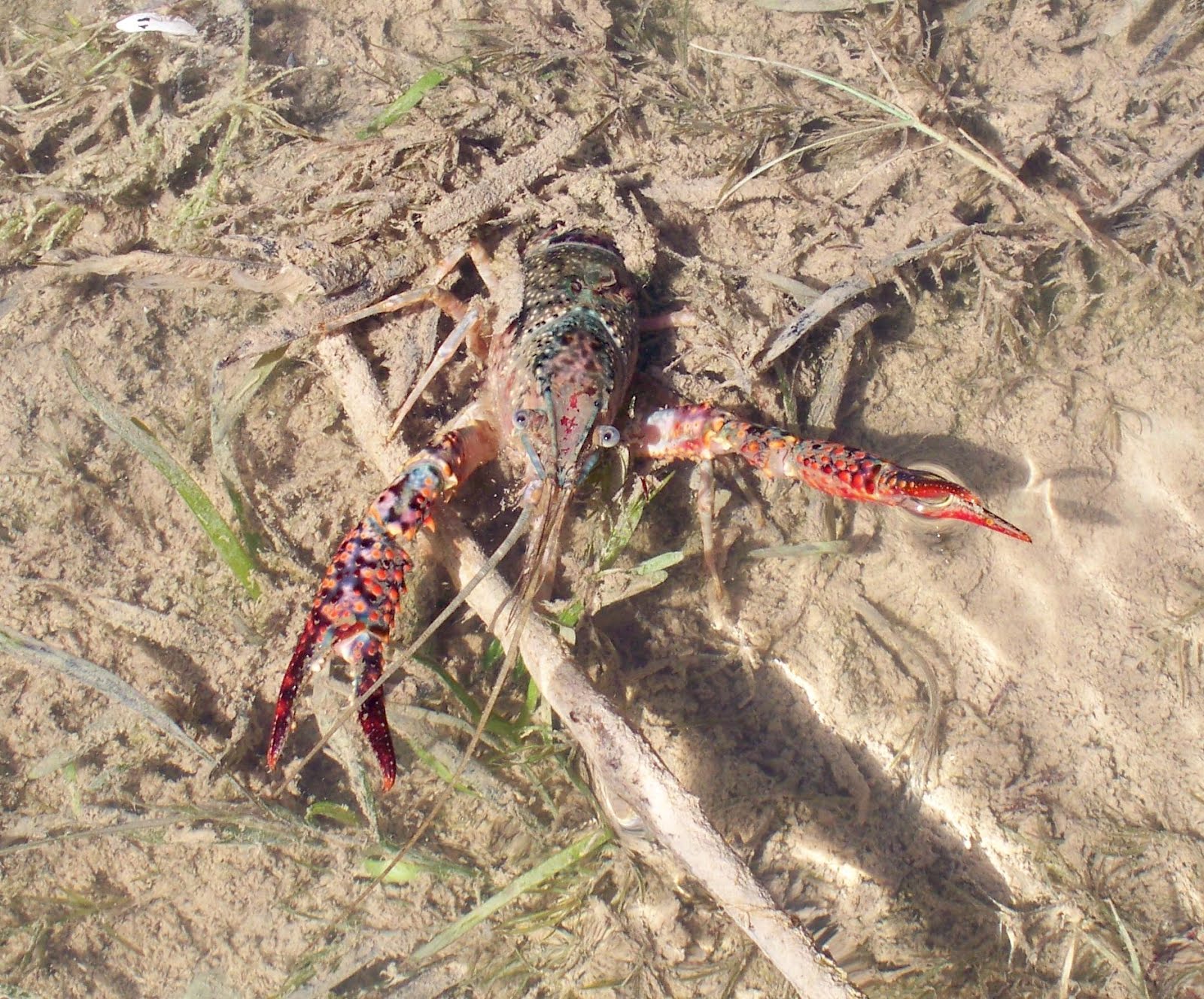
Many rivers are fed by small creeks and streams. Many of these creeks and streams originate from springs that occur naturally. Many of these springs are also a source of the fresh water that is necessary for many aquatic species to survive. One such creature that can be found in fresh water is the crayfish. 


Crayfish or “crawdads” are considered a delicacy by many people and are a staple food item at most Cajun celebrations. They are easily trapped and are often caught by hand and are also quite simple to prepare. They are an excellent source of food in a survival situation. Crayfish are found in most regions throughout the United States


In my younger days, many a “mud bug” fell victim to a stick with a piece of bacon hanging by a string.

Got mud bugs?

Staying above the water line!

Riverwalker

Sunday, August 5, 2012

Bushcraft - Central Texas Style - Natural Cuisine - Part One


There are always numerous food sources available in a wilderness setting. Finding a good meal really isn’t all that hard. The main trick is to know where to look when you need a meal. When it comes to survival, you want to thrive as well as survive. There’s really no better menu available than what nature can provide. You just have to know how to read the menu.

Can you find the culinary delight in the above picture?

Got natural cuisine?

Staying above the water line!

Riverwalker

Tuesday, July 31, 2012

Backyard Bushcraft - The Black Widow Spider


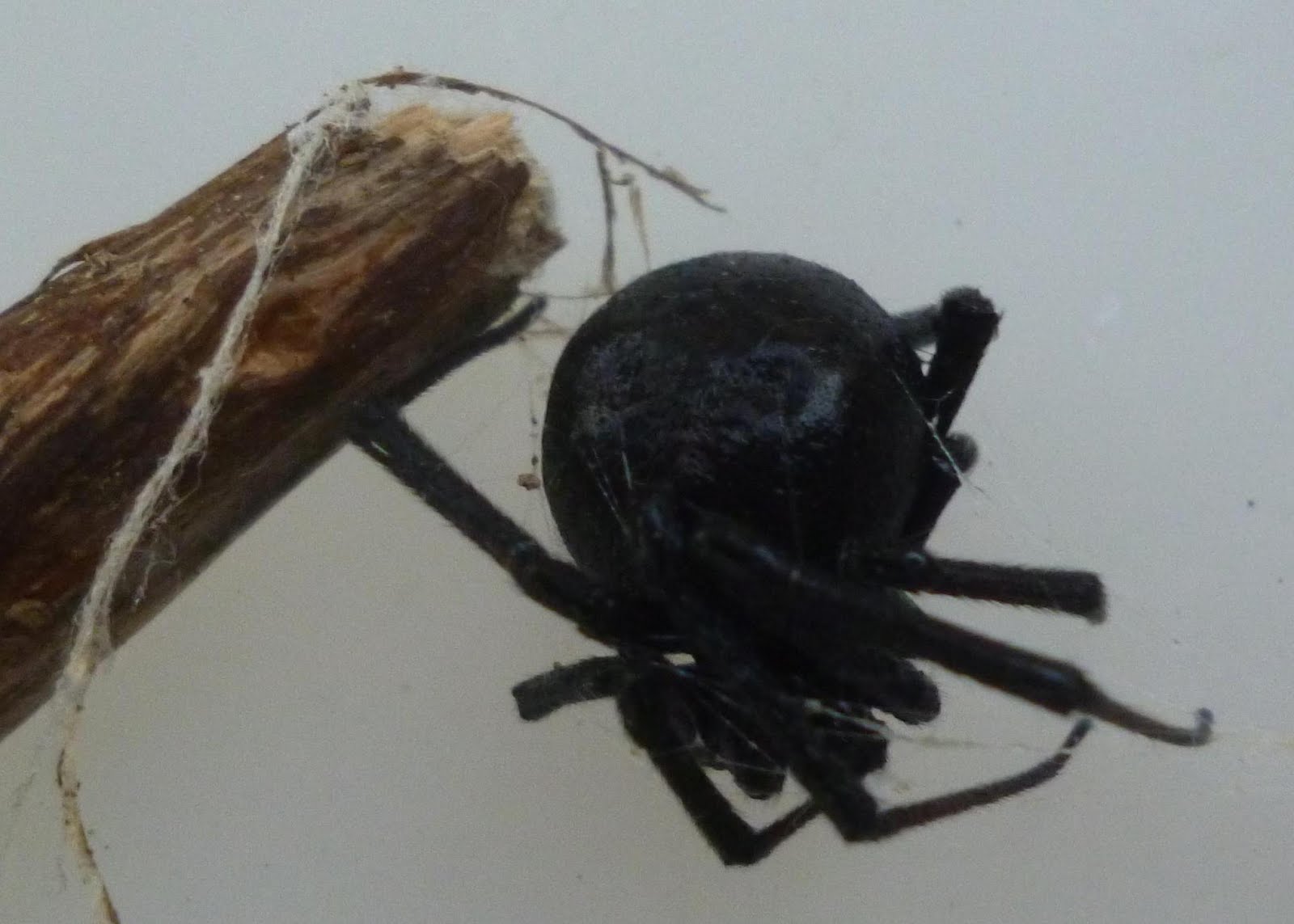
Black widow spiders (Latrodectus hesperus) are one of the most venomous spiders found in America. They are easily identified by the red hour glass shaped markings on the underside of their abdomen. Although they are relatively small when compared with many other spiders, their bites can be extremely painful.  The bite of a black widow spider seldom causes death because they normally only inject small amounts of poison when they bite. This usually lessens the severity of the bite and its symptoms. 


Black widow spiders are found in all the usual places and especially like moist areas. Garages, water meters, water wells, storage sheds, and outdoor lawn and patio furniture are just a few of the places they can be found.


They build unusually strong but irregular shaped webs that are normally found close to the ground. The strands of their webs are some of the strongest made by any spider.


If you happen to get bit by a black widow spider, you should seek immediate medical attention. The bite of a black widow spider can be extremely hazardous to young children, older persons and those with allergies or other medical conditions such as heart or breathing problems.


You can download a free information sheet on black widow spiders here:


Got venomous spiders?

Staying above the water line!

Riverwalker

Monday, July 9, 2012

Backyard Bushcraft - The Spidey Hole


Spidey Hole

While my physical activities are fairly limited right now, my powers of observation are working just fine. There's been a recent addition to my backyard. It seems that a hairy megalamorph has moved into a new area of my backyard. Most of the spidey holes in my yard are in an entirely different area which is a couple of hundred yards away. This was a fairly large hole that had an opening which was approximately an inch and a half wide. It appeared to be fairly new since there wasn't a lot of silk around the opening.


 Lil' RW, my grandson, had come across some snake sign and wanted to have me check it out. When I checked the snake sign, sure enough Lil' RW had found a fairly fresh snake skin (parts of it were still moist) but he failed to notice the new spidey hole. The snake skin (which was almost 4 feet long) was probably from a large rat snake that hangs around in my backyard. The rat snake makes an appearance every once in a while. 


A check of the new spidey hole the following day showed an increased amount of silk around the opening. Looks like there's going to be some new neighbors in the backyard.

Got spidey holes?

Staying above the water line!

Riverwalker


Monday, June 4, 2012

Backyard Bushcraft - Edible Little Critters with Horns


Texas has an edible little critter with horns. The common brown garden snail (Helix_aspersa) is found in many areas throughout the state. The brown garden snail generally feeds on most any plant that is available, whether it’s in your garden, your flower bed or your greenhouse.

This species is also edible and constitutes a good source of survival food. The appendages on the top of its head are often referred to as “horns” and the lower appendages are referred to as the feet.

Got Escargot?

Staying above the water line!

Riverwalker


Saturday, May 26, 2012

Backyard Bushcraft - Apex Predator of the Insect World - Hippodamia Convergens


Ladybugs are one of the most commonly recognized of all the beneficial insects and are considered an apex predator in the insect world. They have few natural enemies other than the carpet beetle and have an excellent defense mechanism. They can be a gardener’s best friend and an ally in controlling other insect populations.

Ladybugs have a voracious appetite for aphids and will consume a large amount of aphids during their lifetime. Ladybugs also eat a wide variety of other insects as well. They are beneficial in controlling chinch bugs, whiteflies, mites and other soft-bodied insects and larvae. This can help to reduce your reliance on chemical pest control methods in the garden.


Ladybugs also produce an offensive odor for repelling predators through a process which is sometimes called “reflexive bleeding”. They can actually exude small amounts of blood which contains a toxic alkaloid. They are also brightly colored in a manner that also helps to deter predators. There offensive smell normally doesn’t affect humans.


It’s also important to remember that ladybugs do not feed on wooden structures or any type of stored food products.

Got ladybugs?

Riverwalker

Saturday, February 18, 2012

Bushcraft - Central Texas Style - The Survival Pouch


Got pouch?

When you're struggling to survive, sometimes all you need to do is pay attention to what nature tells us. When it comes down to carrying your survival gear, you don't have to have a fancy gear bag. You may only need a pouch.

Got pouch with punch?

Staying above the water line!

Riverwalker

Friday, February 3, 2012

Bushcraft - Central Texas Style - Using Bones for Survival


Deer Mandibles


Recycling was an everyday part of the lives of most Native Americans. They knew the value of their resources and seldom let anything go to waste. They quickly realized this importance and knew that resources could sometimes become limited. As a result, they always sought a beneficial use for everything in their environment. They also became extraordinarily skillful in using bones for survival.

When resources are limited, it was important to find a beneficial use everything. Bones are one such resource. Bones have always played an important role in survival and were used in many different ways. Bones became a regular part of everyday life and were vital for survival.

One of the primary survival uses for bones was to make tools. Handles, hoes, scrapers and many other various tools were fashioned from bones. This was especially true in areas where other tool making materials such as wood or stone were scarce or non-existent.

Many times the bones that were used as tools required very little modification. Deer mandibles (see the above picture) were often used to make bone sickles by merely attaching a wooden handle. They were then used to harvest crops or to gather grasses for thatched roofs. Many times they were used “as is” to scrape the kernels from ears of corn.

Bones were also used for protection as well. Many times the mandibles were used to make crude but effective tomahawks for defensive purposes. Quite often, portions of the mandibles were used to make handles for stone knives. This was considered an important and very valuable skill.

Bones also played a significant role in ceremonial rites and spiritual beliefs. Besides being used to fashion tools for everyday use, elaborate necklaces and other jewelry were often fashioned out of these same bones. Bones also played an important role in their spiritual beliefs. Many times jaw bones were hung in their lodgings because it was believed that the spirits of these creatures would bring similar living creatures into the path of hunters in the tribe. 

Currently, the most common modern day use for deer mandibles is as a game management tool. They are mainly used to help determine the age of deer by examining the condition and wear of the teeth. This is a skill that requires extensive knowledge and practice in order to become proficient because there are a wide variety of factors involved.

Using bones for survival is just one more way in which resources can be utilized to a greater extent. No bones about it!

Got bones for survival?

Riverwalker

Monday, January 9, 2012

Riverwalker's Pics - Off the Trail


Off the Trail

Sometimes you have to get off the trail in order to see some of the natural beauty in nature. You just need to make sure you don't get lost when you make the decision to take a little detour.

Got detour?

Staying above the water line!

Riverwalker

Friday, January 6, 2012

Stealth Mode


RW, Jr. recently captured some video footage of one of the local species in action. This little critter was in "stealth mode" but was making enough noise you couldn't help but notice his presence. If he had remained still, it would have been a little difficult to spot him.

Got dillo in "stealth mode"?


Staying above the water line!


Riverwalker
Related Posts with Thumbnails