Showing posts with label Self Reliance. Show all posts

Friday, February 12, 2016

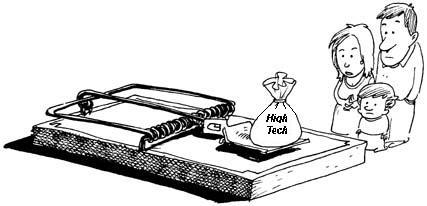
On the Grid vs. Off the Grid - The Hybrid Solution


The true costs of living off the grid are a lot more than you would imagine. While the dream of being energy independent is a worthy goal, the costs associated with off the grid living may not be a feasible solution. With limited resources and even a more limited budget, the majority of people may be better off using a hybrid solution.

While we often complain about the utility services we receive, it is easy to forget that the costs for maintaining that service comes at a higher price than we realize. When going totally off the grid, the majority of these costs for maintenance and upkeep will shift from a utility service to you. Having a backup system in place to in case your current services are interrupted may be a better option. It is also important to remember that sheltering in place will generally be your best option in all but the most extreme circumstances.

The Hybrid Solution

While I would prefer to be totally off the grid, it is not economically feasible in my case. Your income can severely limit monetary resources to accomplish off the grid goals but can be done if you use a combination of current resources with good backup options in place. The best place to start is with satisfying your basic needs.

1.) Shelter

Normally your home will be the first and best option for shelter. There is a chance that it may become temporarily uninhabitable due to storm damage or other problems. While repairs are being made, even a simple storage shed can solve your needs for temporary shelter. In my case, I have a 12 X 20 storage shed that has a simple solar setup (approximately $600) that provides light and electricity independent of the grid. It also has a couple of sleeping lofts and is well insulated. If necessary, in an emergency it could act as a secondary shelter.

2.) Water

Water will be an absolute necessity. Drilling your own water well may be impractical and extremely costly. It may also be prohibited by your local utility. Fortunately, the simple collection of rainwater can solve most of your water needs. A rainwater catchment system (approximately $500) combined with a good filtration system can solve most of your water needs. In my case, our monthly average of 3 inches of rainfall can completely fill all our water storage barrels and provide us in excess of 500 gallons each month.

3.) Auxiliary Power

There is still a need for temporary power in order to keep certain appliances properly functioning. Your refrigerator and freezer won’t keep your food adequately without a continued source of power. In my case, I keep a small portable gas generator (approximately $400 + fuel) to use for just such an occasion. If a major power outage of any lengthy duration occurs, I can keep my appliances functioning long enough to cook and eat the food items they contain.

4.) Cooking

There are several other priorities that also need to be addressed in order to have off the grid backup for your current utility services. The easiest and probably the most affordable sources for heating and cooking needs are propane and wood. Gas and charcoal grills or wood stoves are affordable, require minimal maintenance and work extremely well in an off the grid or emergency situation. Most people quite often have one or both already available for use (I have both...can’t have too many backups).

5.) Heating

Small propane heaters ($200) can also provide emergency heat if needed during colder weather and are usually extremely portable. Most can even be used indoors with proper ventilation. You may even have a fireplace in your home that can provide an auxiliary heat source.

You don’t have to live off grid but can use simple and low cost options to provide alternatives to help you maintain your lifestyle in the event of an emergency.

Got hybrid solution?

Staying above the water line!

Riverwalker


Friday, April 25, 2014

DIY Solar Shed Project


Solar Panels

With my new storage shed finally completed, it was time to power it up.  Conventional electrical power was going to be quite expensive to run electrical to my new shed because it wasn't very close to any existing conventional electrical power. Without any inside wiring, it was going to cost between three and five hundred dollars for a grid hook-up and I chose going the solar route as a cheaper alternative.

In the picture above are three 10 watt solar panels that were purchased on a close-out special for $29 each. Total cost of the solar panels was $87 plus tax. The panels also came with several additional cables that were cannibalized to wire up my system.


The above pictures show the mounting that was fabricated for the solar panels. The posts are standard chain link line posts (5 1/2 foot). The mounting frame was made from two pieces of one inch aluminum square tubing and two pieces of one inch aluminum angle brackets. All pieces were four foot in length.  The total cost for this was slightly less than $40 but did require some time and effort to put together. A Battery Tender 25' Quick Disconnect Extension Cable  was used to feed the solar panel output into the shed. The cost of the additional extension cable was about $13. A NOCO ISCC2 5-Way SAE Adapter Connector at a cost of about $5 was used to connect the solar panels together. 


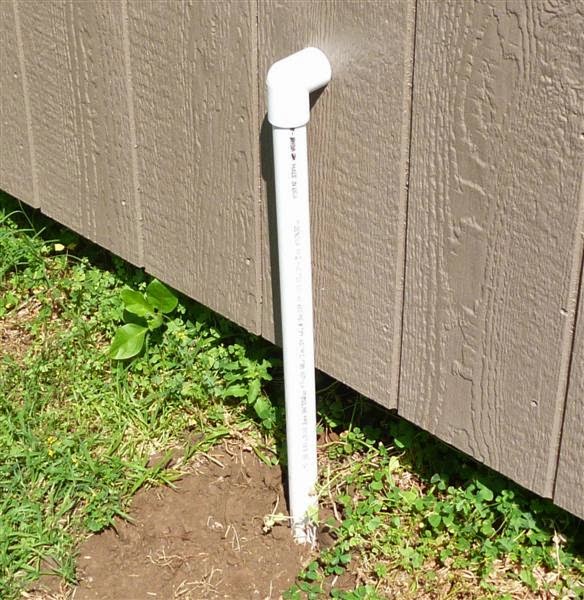
This is the underground pipe that feeds the extension cable into the shed. The cost of pipe and fittings was less than $20. The solar panels were only about ten feet from the rear of the shed. They were mounted to keep shade from the roof blocking the solar panels and to avoid rain  from the roof falling directly onto the solar panels.


The above picture shows the charge controller in operation. An HQRP 20A Solar Panel Battery Charge Controller  was chosen because the primary function of this system was to supply light to my shed and this charge controller works well for this purpose. The cost of the controller was slightly less than $30.


The above picture shows the in-line fuse of my connection to the battery from my controller. This is a Battery Tender Ring Terminal Harness with Black Fused 2-Pin Quick Disconnect Plug that connects directly to the solar charge controller. The positive cable in the picture runs to a small 400 watt inverter.


This picture shows my 100 amp battery ( Walmart brand ... $75) and my 400 watt inverter. The inverter is going to be used to power a small fan when working in the shed. The cost of the inverter was $25. It's big enough for it's planned use but a bigger inverter may be added later as money permits.


This is the Cobra 400-Watt 12-Volt DC to 120-Volt AC Power Inverter  that is being used in my system. I used larger cables than came with the unit to lessen current loss and avoid over-heating from using cables that I felt are too small to handle even the light loads that may be placed on this unit. My plans are to not exceed 50% of capacity as a safety precaution and to prevent damaging the inverter. It includes a USB charging port.


This is the charge controller during a load test. In the picture, you can see where the SAE connector to the solar panel input has been disconnected. This triggers the sensor on the charge controller which then opens current to the load connections. This causes the LED light  to turn on.


This is a SainSonic CMP12-10A Solar Charge Panel battery Controller Regulator 10A 12V/24V Auto Switcher spare controller that was purchased as a back-up unit. Just in case!


Any solar power system should be designed for your needs and in such a manner that you don't place unnecessary strain on your equipment. This will insure that it is capable of meeting your requirements. With a little time and effort and slightly more than $250, this system satisfies my needs and should give me good service for an extended period of time. It also doesn't add to the cost of my grid service.

Special thanks go to RW, Jr. who built the shelf that was used hold all the equipment (battery, inverter, charge controller, etc.) and for digging the post holes. 

Got solar?

Staying above the water line!

Riverwalker

Wednesday, February 12, 2014

Riverwalker’s Book Review - Tribes by John S. Wilson


“Tribes” is John S. Wilson’s prequel to his other survival novels Joshua and Traveler. In this latest edition, John manages to create some thought-provoking survival scenarios that are about as close to what can happen when the grid goes down and everything goes to hell. With a new set of characters, John has been able to create an entirely different set of circumstances to test his new main character, Tom, and his ability to lead a small group in his community as they struggle to survive.

From the paranoid to the psychotic to downright mean and sadistic characters, you will have a lot better understanding of what may happen should you face a similar survival situation.

Sometimes, survival isn't as easy as you may think.

Riverwalker gives ”Tribes” a thumbs up!


Got “Tribes”?

Staying above the water line!

Riverwalker


Sunday, October 13, 2013

Riverwalker’s Book Review - Home Remedies


Home Remedies

In time when everyone had to be a lot more self reliant, home remedies where often the only way to treat many minor ailments. Alex Smith in his new book, Home Remedies, seeks to provide you with a guide to some of the more basic and best known home remedies in an easy to reference alphabetical format.
                                                                                                                          
Alex Smith also provides a glossary of some of the more common terms used in home remedies to provide further understanding for the different types of home remedies that are commonly used to treat various ailments. He also provides a fairly comprehensive list of the herbs and plants that are more commonly used in the making of various home remedies.

Although it doesn't include an index, at less than 125 pages it is still easy to find the home remedy you may be looking for due to the easy alphabetical format. The remedies for some of the more common ailments are available at your finger tips.

If you are looking for a quick reference guide to help treat minor ailments, Home Remedies by Alex Smith may be exactly what you need.

Got Home Remedies?

Staying above the water line!

Riverwalker       


Disclaimer: Always consult a medical professional before using any type of new treatments,

Wednesday, September 18, 2013

Financial Survival - Stuffing the Mattress

With an economy that has been on artificial life support for the last five years, it looks like the government is finally going to pull the plug. We are probably going to be in for the ride of our lives on this financial rollercoaster and you may need a mattress to cushion the fall if you get thrown off.

Many of the benchmarks that are being considered to mark the need for the “taper” of stimulus to our economy may actually be false indicators of our true economic status. The jobless rate shows a decrease but is lead by an increase of part-time workers which is probably due in large part to the upcoming effects of the Affordable Care Act, many of which are probably as yet undetermined.

Artificially low interest rates are probably going to increase significantly and good luck in finding a bank that is willing to loan you money. Most banks are still fundamentally under capitalized and even with a rise in interest rates may be hesitant to loan money to the average individual who is likely to be reduced to part-time status in their job.

The low rate of inflation is also considerably inaccurate when you consider that food and fuel costs aren’t included in government statistics. It is hard to believe that the inflation rate can be considered to be under control when fuel prices have nearly doubled in the last few years and food costs are also significantly higher.

Let’s not forget about the significant increase of the number of individuals that now rely on some form of government assistance in order to merely survive. Many individuals have even dropped out of the workforce because the amounts of government benefits are greater that can be obtained from what used to be characterized as “gainful employment”.

The decrease in the median income of most families is not likely to improve, especially if they suddenly find themselves working part-time. A further reduction in income won’t offset the higher costs of individual healthcare that are also likely to occur. Unfortunately, it appears that our economy is still in a coma and has yet to wake up. It may turn out to be a very rude awakening for everyone.

Essentially, like any individual once removed from life support, you will be on your own and your survival will be at stake. It may be time to start stuffing the mattress to cushion the fall.

Got mattress?

Staying above the water line!

Riverwalker


Disclaimer: This is not to be considered financial advice of any kind and is only an opinion of this author.

Friday, August 9, 2013

Raising Poultry - Using Egg Shells as a Feed Supplement


While there are feed supplements that can be readily purchased from your local feed store, they can increase the cost of raising your chickens. One of the items often lacking in a chicken’s diet is calcium and this can be easily fixed by feeding your chickens crushed egg shells. It is simple to do and can save you a few dollars. It will also solve the problem of eggs with weak shells that break or damage easily.

The first thing you will need to do is thoroughly rinse your egg shells after they've been cracked to remove any remnants of the egg. Once they've been rinsed, allow them to dry in a dish or bowl. Once dried, you can crush them by hand into small pieces and mix in with their grain. This will provide your chickens with the calcium they need to give your eggs strong shells.

Many times people worry about their chickens becoming egg eaters. If your chickens are getting the necessary calcium, this should not be a problem. In fact, a lack of calcium in their diet can actually create this problem with your chickens. Like any animal, they will seek out a source of the nutrients they require.

Chickens also have a natural defense mechanism when it comes to their eggs. They will instinctively protect their eggs from possible predators by eating cracked or damaged eggs in the nest. Cracked or damaged eggs are easily honed in on by predators and could result in the loss of all the eggs in the nest. To avoid this problem, it is a good practice to pick your eggs at least twice a day. This way you will be able to remove any weak or damaged eggs as quickly as possible.

Got egg shells?   
                                                                                                             
Staying above the water line!


Riverwalker                           

Tuesday, July 23, 2013

Riverwalker’s Book Review and Giveaway - The Pocket Guide to Wild Mushrooms


Foraging for edible foods in the wild can be an important skill that everyone should learn in order to be more self-reliant. Unfortunately, many food items found in the wild can be deadly if you lack the proper knowledge about the items you are foraging. Wild mushrooms are one such item that require a good guide in order to determine if the mushrooms you find are safe to eat.

In The Pocket Guide to Wild Mushrooms by Pelle Holmberg and Hans Marklund, the authors have created a condensed version of their larger book on foraging for mushrooms. This smaller and portable version contains a guide to many of the more common mushrooms found in the wild. It includes excellent pictures of the various types of edible mushrooms that are generally found in the wild. Cutaway views of the mushrooms are also included in order to help you further properly identify your wild mushrooms.

Amazingly, this is one pocket guide that actually fits in your pocket, even if it is a little tight. This makes it a lot easier to keep handy when you are out foraging for edible mushrooms. The guide also offers some helpful tips on cleaning and cooking your mushrooms properly. There is also a small reference section for more extensive information on mushrooms in the wild along with a handy index section for quick reference.

The only drawback of this guide is there isn't very extensive information on where the different edible mushrooms can be found. The guide does reference basic regions and areas where edible mushrooms are found but you may need a larger and more detailed guide for specific varieties of edible mushrooms in your area. This guide does include a very extensive section on beginner mushrooms that can help to get you started in the proper foraging of edible wild mushrooms.

Pockets guides are not meant to be a definite source and while not all inclusive, this is an excellent pocket guide for both beginners and experienced foragers to use when hunting edible wild mushrooms.

The Giveaway

A lucky reader will also win a free copy of The Pocket Guide to Wild Mushrooms direct from the publisher. Just leave a comment about your experience (or lack of) in foraging for mushrooms or other edible food items in the wild. If commenting anonymously,  please leave an identifier in your comment. A winner will be chosen at random from the comments left on this post. The winner will be announced in a separate post on July 31st.

Got pocket guide for wild mushrooms?

Staying above the water line!

Riverwalker


Thursday, September 27, 2012

The Prepper Retreat


The need for a prepper retreat should be governed by the use of some common sense planning. The majority of times your present home would be a much better place to “hunker down” if something goes wrong. There may be those times that “bugging out” will be required but that doesn’t mean you will need a separate retreat. There are several qualities for a prepper retreat that will be needed if it is to truly serve your needs and not be an extra burden.

Important Qualities for a Prepper Retreat

1. Accessible. - It’s been said enough times that this part of developing a prepper retreat should be a “no brainer”. Any place you may be considering should be readily accessible in any type of weather. If you can’t get there, it’s not going to do you much good.

2. Affordable. - Any place you may decide to use as a prepper retreat must be affordable. If the cost of a prepper retreat leaves you on the edge of bankruptcy, you may want to consider other options. One option is a group purchase. This allows the cost to be divided amongst more than one person or family. When making a group purchase, there will be extra costs involved for separate surveys and deeds. Everyone involved in a group purchase will need their own place. This was a major cost of my own prepper retreat but it has worked out well. There will be less conflict between group members as a result.

3. Arable. - . A prepper retreat should also have a significant amount of arable land. If you decide to homestead the property, being able to grow food crops will be of prime importance. Certain conditions, like a desert or rocky area, will not lend themselves to a sustainable level of crop production to make adequate food production for your family viable. It will also make it more difficult to raise livestock.

4. Access to Water. - A good source of water or easy access to water will be another necessity. If you have to haul water, you are going to have additional expenses and be doing a lot of extra work. Sometimes even a simple water well can cause unneeded problems that could have been avoided in the first place.

5. Defensible. - This may seem like an odd quality for a prepper retreat but it is a necessary one. If things get really bad, it can become one of the most important qualities that should be considered when deciding if a certain area will make a good prepper retreat. Does it give you the ability to defend yourself properly?

An affordable retreat with easy access that affords you a proper source of water and a significant amount of arable land that is easily defended will make a good choice. The main problem is finding a retreat with all of these qualities. This may not be possible and you may have to settle for something slightly less perfect.

Got prepper retreat?

Staying above the water line!

Riverwalker

Saturday, May 26, 2012

Backyard Bushcraft - Apex Predator of the Insect World - Hippodamia Convergens


Ladybugs are one of the most commonly recognized of all the beneficial insects and are considered an apex predator in the insect world. They have few natural enemies other than the carpet beetle and have an excellent defense mechanism. They can be a gardener’s best friend and an ally in controlling other insect populations.

Ladybugs have a voracious appetite for aphids and will consume a large amount of aphids during their lifetime. Ladybugs also eat a wide variety of other insects as well. They are beneficial in controlling chinch bugs, whiteflies, mites and other soft-bodied insects and larvae. This can help to reduce your reliance on chemical pest control methods in the garden.


Ladybugs also produce an offensive odor for repelling predators through a process which is sometimes called “reflexive bleeding”. They can actually exude small amounts of blood which contains a toxic alkaloid. They are also brightly colored in a manner that also helps to deter predators. There offensive smell normally doesn’t affect humans.


It’s also important to remember that ladybugs do not feed on wooden structures or any type of stored food products.

Got ladybugs?

Riverwalker

Tuesday, March 27, 2012

Worst Case Scenario - The Failure of Personal Infrastructure


Technology can demand a high price when it fails. The failure of your own personal infrastructure can come with an even higher cost. You can endanger your own survival if you fail to plan properly for a possible failure of your personal infrastructure.

While we can’t exercise very much control over the majority of the infrastructure in our lives, we can control our immediate environment with proper planning. Being prepared to maintain your personal infrastructure will take an extensive amount of planning. That planning should take the form of one the major essentials for your survival.

What does it take to help guard against the failure of your personal infrastructure? All it takes is a simple backup plan for emergencies.
In order to have a good backup plan, you will need to know your weaknesses and prepare in advance for the problems they may create. Having a decent backup plan in place will help insure the viability of your personal infrastructure in a worst case scenario.

No matter where you live your personal environment is only as viable and safe as you make it. While there are many aspects involved in your personal infrastructure, some are quite basic and should be of prime consideration. Covering the basics should rank high on your list of priorities for maintaining your personal infrastructure.

The Major Aspects of Personal Infrastructure

1. Communication - This is an important aspect of your personal infrastructure. It is also one of the ones that experiences failure on a regular basis. Establishing a set of protocols to follow in case your personal communication system breaks down will increase your chances of survival. Do you have an alternate place to meet if you can’t contact someone directly? Do you always inform someone of your route and destination when traveling? If there is a lapse in your personal communications, you need to have clear and decisive guidelines in place for all family members to avoid the possibility of a break down in communications.

2. Transportation - Another important aspect of your personal infrastructure is transportation. Facts are facts and without viable transportation of some sort you may not get very far. Most of us have a means of transportation but if it fails you may have a serious problem. While most people can’t always afford a backup vehicle, you can keep spare parts handy and learn how to do simple mechanical repairs that might otherwise leave you stranded at the worst possible time. It’s not a good idea to put much faith in the public transportation system in a crisis.

3. Shelter - Shelter is another priority of your personal infrastructure. Your home should be a primary and essential part of your personal planning to maintain your infrastructure. It will give you both safety and security, which are the major elements of a secure environment.
Even the crudest of shelters will require maintenance to keep them viable; otherwise they may simply fail to provide any protection. While most any type of shelter will be a good thing, it may not afford the best levels of protection you or your family may require. Being prepared to perform simple repairs will help but you must also be prepared to abandon it if the main structure becomes unstable and be unsafe to occupy. It beats the alternative of being housed with persons who failed to plan ahead and are now simply refugees.

4. Security - Your security infrastructure can also be vital to your survival. If the system suffers an overload, you may need to insure your own levels of protection. Your levels of protection can take shape in the form of anything from adequate locks on your home to self defense classes or proper training and use of firearms. 

5. Personal Needs - Another integral part of your personal infrastructure is the maintenance of personal needs. You should strive to make sure your food and water supply remains viable and that proper sanitation and health needs can be sustained in the event of a system failure.  

Maintaining the integrity of your personal infrastructure is something you can control. You probably won’t be able to prevent the failure of a major infrastructure system but you can create a more secure personal infrastructure. This will allow you to be better prepared to handle such a failure should it occur.

Keeping your survival personal?

Staying above the water line!

Riverwalker


Wednesday, December 14, 2011

Preppers, Homesteaders and Survivalists - Gardens, Guns and Gear

Most people are basically gregarious in nature. Our very nature encourages us to want to be around or involved with other people. Labels are simply a way we can identify ourselves with others when we find ourselves struggling with a situation on an individual basis. It is comforting to us when we know that there are others struggling to survive in a similar manner. It is also important when we have encouragement and support from others of a similar mind to help guide us in our struggles.

While there are many paths to reach a destination, we do not always take the same one. This is not a bad thing but is due more to the spark of individualism that can found in all of us. This spark of individualism can grow if it is fed the right fuel into an enthusiasm that can help you reach your goals. The path you take isn’t as important as your intended destination. Although the paths we take may be different, our destination is quite often the same.

Have you ever stopped and asked for directions? Chances are you have done so at some time in your life. Depending upon how many people you have asked for directions, you’ll probably get an equal number of ways to get there. Some ways will be more direct, some will be more confusing and others will leave you wondering why anyone would go in that direction in the first place. You may have even got some really bad directions and found yourself more lost than you were in the beginning. Preppers, homesteaders and survivalists probably have more in common than most of them care to admit. Most all of us seek to solve our problems and reach our goals in our own and quite often unique way. It’s more a matter of the path we take having a different label.

Does it really matter that the road we take is labeled differently? It shouldn’t. There are probably several different ways that you can travel when going to work, the store or to simply  visit a friend or relative. Is one way better than the other? It’s probably not. Are some people going to be more comfortable going in one direction than another? Sure they will. This is especially true if it’s something that may be somewhat more familiar to them or seem less confusing.  The important thing is that you reach your destination and don’t get lost on the way.

Not everyone is going to be a master gardener, a gunsmith or a gear guru. Your first gardening efforts may yield little more than a dead stick in a pot. To some people, a gun may seem little more than a stick with a trigger on it. Others may wonder why someone would need all that gear that’s talked about so much. In truth, all these things have a place and their use is quite often limited only by your experience, your skills and your knowledge.


It’s the experience, skills and knowledge that we have gained as we travel our different paths that will ultimately help us to reach the same destination.

There’s a sign post up ahead...destination... self reliance.

Staying above the water line!

Riverwalker

Sunday, December 11, 2011

Prepping and Self Reliance - Limiting Your Dependence on Technology


Prepping and self reliance becomes more of a routine activity once it has become a part of your normal lifestyle. There are numerous ways you can achieve your goals but almost all will depend on you being able to survive with less technology, a greater dependence on your knowledge and skills and being aware of your own physical limitations. Many people currently live with varying degrees of technology. While a certain amount of technology will be necessary in order to survive, if you truly wish to develop a more independent lifestyle, you will need to limit your dependence on technology. Unfortunately, less technology quite often means additional work and planning is going to be required on your part.

Your lifestyle choice to be more self reliant will depend on a couple of major factors and these factors should be included in your planning. Your ability to become more self reliant will be largely determined in most cases by your skills and physical abilities. It is important to remember that your ability to become more self reliant will be affected more by what you know and can do than the items you have stockpiled.  Realizing that your skills and abilities are your most important resource is critical to becoming more self reliant and less dependent upon technology. Technology has been instrumental in making our lives easier but it has also made us more dependent upon it.

When seeking to become more self reliant, one of the most limiting factors is your physical ability. Even some of the basic tasks of everyday life can be almost impossible to achieve if you have limited physical abilities. How far can you walk if necessary? How big of a load, if any, can you carry at one time?  Or do plan to simply drag it? Limited physical abilities will mean focusing your efforts and planning accordingly to make up for any lack of physical ability on your part. Even simple chores can be labor-intensive and almost impossible to complete without a minimum amount of technology if your physical abilities are limited. Walking requires no dependence on technology but even a simple bicycle may get you a lot farther down the road. If you have physical limitations that limit your abilities, you will need to alter your plans to compensate for deficiencies in this area or increase the level of your physical fitness, if possible.

A lack of skills is another limiting factor that can affect your ability to become more self reliant. Even simple tasks will require rudimentary skill sets in order for you to maintain a self reliant lifestyle. Can you perform simple repairs on basic items or do you need to call a repairman? Or do you simply rush out and buy a replacement? Unfortunately, these options may not always be available to you and they can also be quite costly. Being able to use basic hand tools, perform simple repairs or knowing an alternative strategy to accomplish a task can make a huge difference in your level of self reliance. Quite often you can find a low-tech solution to your problem.

Less dependence on technology can mean that a lot of things will be harder to accomplish, not impossible, just harder. The trick is to remember to work smarter and not harder. A little “brain power” will usually save you a lot of “muscle power”.


Got low tech solutions?


Staying above the water line!


Riverwalker

Sunday, October 30, 2011

Survival Skills - Conserving Resources in a Crisis


Learning to be innovative in the use of your available resources can be accomplished in several different ways. Recycling is one of the easiest ways to become innovative when your resources may be limited. Learning to save those items which can still be used in a functional manner will only make it easier if you are forced into a situation where you may have limited resources.

Alternate uses for items are sometimes readily apparent when you are considering whether to discard or save an item. At other times, they won’t exhibit a functional quality for alternate use. Not because it isn’t there but more likely because the need may not be.

Perhaps it’s an empty jar that’s suitable for use in canning or it may simply be an old pair of boot laces that can be used as cordage. These are just a couple of examples of alternate uses that are easy to recognize. Many uses are not as easy to recognize. The old saying “Necessity is the Mother of Invention.” often comes into play when your needs become critical.

Giving a little extra thought to the possibilities for the use of an item will sometimes help you to see an alternate use that is totally different from its original purpose. That old t-shirt can become cordage, a signal flag, and an emergency sling for a broken arm or gun cleaning patches. That old pair of boots suddenly becomes leather for making a sheath for your knife. An empty jar or can becomes a lamp or candle holder. While different from their original use, it still allows them to be used for a functional purpose in order to solve a need.

Always take the time to ask yourself this simple question before you discard an item.

Can it serve a useful purpose in a similar or different manner to solve a need?

Got recycled items for survival?

Staying above the water line!

Riverwalker

Wednesday, September 21, 2011

The Survival Mindset - Thinking Outside the Box

It’s hard to “think outside the box” when our natural inclination is to think of things in the traditional sense. As creatures of habit, we have a tendency to follow routine thinking in many of our actions. Once our thinking has become routine and starts to follow a regular pattern, our creativity and our ability to be innovative in our thoughts suffers as a result. It will also be harder to improvise a solution to our problems.

How can you learn to effectively think outside the box? It’s not as hard as some may think. You just have to change the way you look at things in order to view things in a less conventional manner.

Most people have developed a “comfort zone” in their way of thinking and as a result they automatically view things in a “normal” or conventional manner. This comfort zone can be expanded with a little practice and your thinking can be moved outside the box. Many times it is the result of our own self-imposed limits on our way of thinking that limits our ability to “think outside the box”.

Most great ideas are actually very simple and are the result of several different factors. The first factor is simplicity itself.  How many times have you said to yourself “Now why didn’t I think of that?” Thinking outside the box doesn’t require super-human levels of intelligence but if you have a tendency to take a narrower view of things, you quite often miss the simplest of solutions. Try to look at things in simpler and less complex ways. The wheel was one of the simplest ideas to ever come about but it changed the whole world.

The next factor in “thinking outside the box” is value. Most people have a lot of great ideas everyday. Unfortunately, many lack true value and the thought is quickly abandoned. If your “great idea” makes it is harder to accomplish a task that can be done in a simpler manner, it will have little or no worth. An idea or a concept that is different from conventional thinking needs to have value to truly qualify as “thinking outside the box”.

Another factor in “thinking outside the box” is that it must be practical. This is critical in order to achieve the desired results. If it becomes more difficult to use or it takes more time to accomplish your goals, you’ll need to do a little more thinking on the subject.

There is also the ultimate way to learn how to “think outside the box”. All you need to do is observe a child playing outside for a while and observe their actions. Many children have no pre-conceived notions of how you are supposed to think. They view things in a different manner and will come up with a variety of simple and practical ways of using things that gives them value. By way of example, you need only consider one the simplest things in nature...the rock.

In the mind of a child, a rock will become many things. If it’s really big, it becomes a chair for them to sit on. If it’s slightly smaller, it becomes a hammer to pound stuff. If it’s smaller still, it becomes a weapon of miniature destruction (WMD?) and will be hurled at the closest available target...moving or non-moving. If it’s even smaller, it quickly gets checked for its edible qualities.

Got rock candy?

Staying above the water line!

Riverwalker
  

Saturday, August 20, 2011

Survival Solutions - Learning to Solve Problems


Survival is sometimes a matter of being able to solve numerous problems that may happen when you are the least prepared or when they aren’t expected. No one expects or plans to end up in a situation where their survival is at stake. The main problem of survival is finding a solution to these problems. Murphy’s Law always seems to come into play and when something happens it will almost always be at the worst possible time.

The problems that can occur in a survival situation will seem like a dark cloud hanging over you. This is where your best survival tool will be of the most value. Don’t let that dark cloud throw a shadow on your thinking or your actions.

Our main advantage in a survival situation is our brain. We can improvise, innovate and adapt to most any survival situation and utilize any and all resources and our skills and abilities by looking for solutions to our problems. Given a positive mindset and some clear thinking on our part, there is almost always a solution to the problem, whatever it may be.

The process of solving any problem requires several actions on your part. The first and main part is the ability to recognize the most immediate threat to your survival that you are facing. The very nature of the threat may require clear and concise thinking on your part to avoid a crisis that could affect your ability to survive. You may find yourself having to make a very quick decision. It is always important to deal with the most critical and immediate threat to your survival in the most efficient manner possible.

Another important part of problem solving is being able to analyze it in order to find a solution. This is where your ability to innovate and adapt will come into play. In a survival situation, you will always need to view everything as a resource with multiple uses. Your mind should be kept open to any and all possibilities when it comes to using your resources. Your brain is an amazing tool and if you don’t impose arbitrary limits, your thinking will quite often surprise you. It will quite often show you a new and different way to use something as a resource in an innovative manner to solve your problem. Just because something has never been used in a particular manner doesn't mean it can't be done. It simply indicates that no one has thought about using it in that way.

Quite often when we are looking for a solution to a problem, we find ourselves seeing only the big picture. There is an old saying that can help steer you in the right direction. They say the devil is in the details and the details of any problem can be a big obstacle. With a little clear thinking, the details can be worked out and a solution can be found. In a survival situation, it is important to remember that cooler heads will always prevail.

If you suddenly find yourself between a rock and a hard place, you may view that hiking stick in a whole new light.


Staying above the water line!


Riverwalker


Thursday, July 7, 2011

Practical Self Reliance - Cross Training for Survival

Quite often the independent nature created by developing our own self reliance leads us to forget an important aspect of self reliance. There will be times when one person may not be able to perform tasks in a normal manner due to abnormal circumstances. This is where cross training can increase your chances of survival.

Cross training is having more than one person capable of certain tasks that are a requirement to keep things working smoothly.  Even the simple act of changing a tire is something that every member of the family should know how to do in an emergency should it become necessary. Likewise, everyone in the family should be able to prepare a basic meal should the “regular” cook become incapacitated in some manner. No matter the task, you should always have someone that can function as a backup. You should also have the most capable person performing that task. In the event they are unable to do so, having a backup is going to make things go a lot smoother and more efficiently.

An injury, illness or absence due to your presence being needed elsewhere or simply becoming separated in a crisis can leave other family members at a distinct disadvantage. Cross training will not only increase your self reliance but it will also enable things to get back to a state of normal a lot quicker and faster that might otherwise possible.

It is also important to remember that in a crisis even routine and mundane tasks can add to a person’s sense of well-being and importance to the overall functioning of the family as a unit. Young children can be taught many simple tasks that would allow other family members to work on more pressing needs. This adds to their importance in the family unit and will increase your ability to maintain your self reliance.

By way of example, in my training of personnel at work, everyone generally has specialized duties which they perform. In their absence, there is always someone else that is capable of performing that task. They may not be the fastest or most efficient at that particular task but the job will get done. Thus, the unit as a whole will continue to function even though it may be at a somewhat slower pace. At least things won’t come to a grinding halt.

Cross training is fairly simple to incorporate into your lifestyle. Just take a little extra time and patience to show other family members how and what needs to be done. Whether it’s how to change a flat tire, repair a water leak, cook a meal or repair a roof, realize that you can’t impart years of experience and practice overnight to a novice. It’s also important to remember the physical and mental aspects that a task may require and make sure the individual being cross trained in that skill can manage the task on both a physical and mental level. If the task can’t be performed safely by that person you will be adding an additional element of risk to your survival that is unnecessary.

Got cross training for survival?

Staying above the water line!


Riverwalker

Wednesday, May 4, 2011

Real Life Survival - Experiences of a Disabled Prepper - The Support Group

Support groups work well for some people, but not so well for others and not very well for me personally. I can even see where it may be helpful for a group to get together to learn to prepare. This will help them strengthen their resources, as well as get the disabled out into the public more frequently. In my opinion, one of the things that causes the most problems is isolation.

 Disabled persons quite often want to keep from getting under foot. You may even find yourself feeling as if you have nothing to offer. In both cases, you find yourself isolated because you stay away from others. This creates a situation where the disabled person actually finds themselves dropping out of society. This is where a prepping group for disabled persons could be very empowering and may well create a situation for disabled persons to become more actively involved in society. If they find themselves starting to do things like volunteering in the community, this could possibly open up a whole new world for them.

My support group is me, my family, friends and some neighbors. I realized when my disability started to get worse that no one else was going to be standing in my shoes. This meant that I would have to pull myself up by my own boot straps. No one, including myself understood the true nature of what had happened in that mishap. Dealing with the day to day was my job and I tried to shoulder it, but the PTSD began to creep in and my body began to fail. In short I fell down and could not get up but I didn't ask for help. For a good long time my own brother watched and tried to help but even he didn’t have a clue as to what was going on, either. To make a long story short, I had to learn to lean on others and they had to be willing to let me fall on my own sometimes. In short, you can not be helped if you can not accept help when it’s offered.

I also believe that in society each community needs diversity of function as well as personnel. A group with only one type of training leaves big holes in what is possible from within that group. I also know that it is better to try with what you have than not try at all. The more diverse a group you have; the better opportunities for everyone that are available. That is what we are all after in life, whether normal or disabled, is a better opportunity.

My day to day activities are limited by speed. I know it sounds funny but I am very slow when I'm working out of my chair. When I’m around the house, I try to use only my cane because this helps to work on my leg strength and balance. Now when I'm out and about, I am usually in my chair and this speeds things up a great deal. My normal day is pretty much like everyone else's. The big difference is I'm retired and actually get to do what I want. Disruptions to the flow of my day can and often are detrimental to what ever I was doing. Since I am so slow, disruptions mean that something doesn't get done. If that something is critical then, “Houston, we have a problem.” The stresses and strains that are felt by everyone else is felt by the disabled person as well.

One thing that I would like to say and I want to be very clear about this point. Everyone has a really bad day every once in a while but sometimes disabled persons have a really bad day every day. To understand my point, I want you to think about pain for a moment. The normal person walks around feeling pretty good every day and doesn’t give pain very much thought.  Now think about the worst pain you have ever had and picture it fluctuating. It stays constant, then it starts to throb, then it starts to run through your whole body. THIS is where the biggest misunderstandings about disabled persons comes from and creates the most problems. The average person simply can’t understand the concept of pain 24-7. It’s hard to imagine pain that never goes away and it’s a pain you never get used to no matter how hard you try.

So the next time you are dealing with a disabled person and they are being, well a butt, think about how you would feel if you were being kicked in the groin all day long. Now I'm not saying that every disabled person is like that. Some people are just plain ornery but the benefit of the doubt should be applied in most circumstances when dealing with disabled people to avoid misunderstandings. I am constantly amazed at how often I am apologizing for reacting to the pain and not reacting to what I should be when dealing with other people.

Thanks.

Shorty

Note from RW: Once again, I would like to offer my sincere thanks to Shorty.

Staying above the water line!

Riverwalker


Sunday, May 1, 2011

Real Life Survival - The Experiences of a Disabled Prepper

Hello. My name is “Shorty” and I’m a disabled prepper.

Before I get started, a little background information might be helpful to you. While serving with an airborne unit in our military, I was involved in a parachute mishap. This mishap resulted in a compression fracture of my S-1vertabra and Post Traumatic Stress Syndrome (PTSD). Over time this injury has progressed to a point where I am now confined to a wheelchair a fair amount of time.

As a result, most of my exposure to people with disabilities comes from the veterans I come into contact with on a regular basis. The information that I wish to share with you comes from my experiences, conversations with others like me and personal observations throughout my life.

While I’ve only been studying about and working on prepping for a short time, I’ve been talking about the need to be prepared for quite a few years. The reason most of this came about was a conversation about Katrina. This really set things into motion. There were 8 or 10 of us sitting around and watching a comparison of the events surrounding Katrina. Suddenly a friend of mine said “If push comes to shove, in a situation like that we’re all going to die.” When he continued, a sudden quiet came over our group. Realizing that if something like Katrina were to happen again a very simple truth was clear to all of us. We can’t run.

We’ve all been through tough times where there were slow downs in the delivery of our medications. We’ve also managed to have a decent stash of medication for emergency purposes. We’ve also had bets to see who could push themselves to the limit of their particular disability. By way of example, one of the bets that came my way was pushing another guy in his wheelchair but it came with a little condition attached to it. I had to do it standing up and had to give it an honest try. In essence we knew each other, their disabilities and their limits. All of us had been through some rough times in the military and we we’re all combat veterans.

Hearing that one of our group thought that we stood no chance was a very sobering experience. This started a conversation that still picks up at some point whenever we get a chance to meet up. We all agreed that he was right about one point. In certain circumstances, a disabled person is going to have a tough time surviving. If you need bottled oxygen, eventually you will run out of oxygen and you will die. If you are on certain medications, you will either return to insanity, suffer a relapse or die. If you have to rely on an external source of power and that power is interrupted you will die. While all these things are all true, they are not set in concrete.

We realized that we must do a number of things to increase our own chances for survival. We have to stay in the best shape possible and we have to work at reducing the need for the types and amounts of medications that we were all using. I was on twenty different medications to treat a wide range of problems. I was being treated for a variety of problems with pain, swelling, PTSD, and stomach problems. Suffice it to say, we’re all over medicated.

Throughout my life I have noticed that most normal people generally want to help disabled people. This is a great thing but they generally don’t know the best way to offer their help. Here are some simple ways that may enable you to be more helpful.

1.) If you want to help a disabled person, ask first. It’s a simple and courteous approach.

2.) No one can stop you from walking beside someone in an awkward situation but there are some simple rules here that should be followed as well:

            a.) Do not touch someone unless you ask. It’s rude to touch others without provocation.

            b.) If you try to catch someone who is falling, don’t try to stand up, guide them down. The body is already traveling in a downward motion and trying to stand up causes a whipping motion. This creates a situation where the body now has to get inline with standing up; the more movement in different directions, the more opportunity for pain.

3.) Never approach a dog when it is on lead or is wearing a work vest. These animals are well trained and are very happy to do the jobs that they do, but they are still dogs. Do not separate or cause them to be separated from their person. I do not like the terms master and owner, as this does not correctly state the true relationship that is involved.

Hopefully this small bit of information will assist you in your efforts to help.

Shorty


Note from RW: A special thanks to Shorty for sharing his experiences with us.

Staying above the water line!

Riverwalker
Related Posts with Thumbnails