Sunday, October 13, 2013
Riverwalker’s Book Review - Home Remedies
Tuesday, November 24, 2009
Simple Survival Tips - Pine Needle Soup
Our very existence relies heavily on a foundation that is almost entirely dependent on modern forms of transportation, electricity for power, and synthetic chemicals. Should we ever suffer a major disaster or catastrophe, many people may suffer more from simple malnutrition than anything else.
One of the simplest things to help you avoid one of the basic problems of malnutrition is to have a good source of vitamin C. Most people are aware that many dark, leafy green vegetables contain significant amounts of vitamin C and usually in amounts that are 5 to 6 times that found in lemons or oranges. But where do you find a source that is available year-round, including winter, and can be procured almost anywhere in
The answer can be found in the simple pine tree. Pine trees are in a class known as “evergreens” and can be a significant source 365 days a year. They are generally resistant to the effects of drought and have few natural enemies to affect their growth. They are also very widespread throughout most parts of
By making a simple soup (or tea) from pine needles you can have a significant source of vitamin C. A small handful of fresh, green pine needles chopped and steeped in a cup of boiling water will furnish you with most of your daily vitamin C requirements. Pine needle soup is also quite tasty but the flavor will depend upon the variety of pine tree you have available in your area. You should also use the lighter colored, new growth at the end of the needles for best results. It can also be flavored with a dab of honey. It has another great benefit for you as well. Pine needle soup also makes an excellent antiseptic wound wash.
Got pine needles?
Staying above the water line!
Riverwalker
Monday, December 29, 2008
Simple Survival Tips - How to Make a Mustard Poultice
Check the poultice regularly, as a mustard poultice gets very warm and can cause blisters if it’s left on too long. Twenty to thirty minutes is usually a sufficient amount of time. This is a very basic type of poultice.
Staying above the water line!
Riverwalker
Making A Poultice
A poultice is made from a mixture of water and herbs, which usually includes dried or fresh herbs that are mixed into a paste, and then spread on or between layers of cloth. The cloth is then placed on a body surface. Poultices act by increasing blood flow, relaxing tense muscles, soothing inflamed tissues, or drawing toxins from an infected area. They can also be used to relieve the pain and inflammation associated with boils, bruises, fractures, sprains, sunburn, tumors and sores and a host of other problems.
There are two main types of poultices. An herbal poultice can be made with either dried or fresh herbs. Both types are prepared in slightly different ways. You will need to choose the best herbal poultice for your particular condition or ailment. You also need to make sure you are familiar regarding the use of the specific herbs required when making a poultice.
Making a Dried Herb Poultice
When using dried herbs, you should use a mortar and pestle to grind the herbs to as fine a powder as possible. This powder can include a number of different dried herbs depending upon the condition you are treating. Then place the herb powder in a bowl and add enough warm water to make a thick paste that will be easy to apply. Make sure you make a large enough quantity that will enable you to cover the affected area. The proper ratio of ground herbs to water will vary depending upon the herb or herbs you are using. Be sure to add the water in very small amounts until your mixture has a thick paste-like consistency.
Place a clean piece of gauze, linen or white cotton sheet (an old pillowcase works good for this purpose) on a clean surface. Make sure the material is large enough to cover the affected area you are treating completely. Spread your herbal paste out on the cloth. Clean the affected area with hydrogen peroxide and place your poultice over the area being treated. Wrap a towel, plastic wrap or some other type of protective barrier around the poultice to prevent clothes or bed sheets from getting dirty or being stained by your poultice. Use a safety pin or other type of fastener to help secure your poultice.
Making a Fresh Herb Poultice
If you are using fresh herbs to make your poultice, place approximately two ounces of the fresh, or about 1/2 cup, in one cup of water in a small pan. Simmer the fresh herb and water for approximately 2 minutes. Do not drain the water from your pan.
The next step is to either pour the liquid from the pan onto the gauze or linen being used for your poultice. You can also soak the gauze or cloth being used for your poultice in the liquid. Make sure you clean the affected area and then apply as you would a dried herb poultice.
Herbal poultices can be kept in place for anywhere from 20 or 30 minutes to as long as 24 hours, depending upon the condition being treated and the type of poultice being used. During this time period, you may experience a throbbing sensation as the poultice draws out the infection and neutralizes any toxic substances. When the throbbing sensation subsides, you will then know that the poultice has completed its job and should then be removed. Apply additional fresh poultices as they are needed until you have reached the required level of healing desired. Remember to wash and clean the skin thoroughly after each poultice is removed.
Here are a couple of links to different formulas for making poultices:
Poultice Powder
Mustard Poultice
Remember that your poultice will need to be made with the proper herbs in order for it to be effective and achieve the desired results. Many times the mixture used to make the poultice can contain substances that may be an irritant. This is especially true in the case of the common mustard poultice. Your poultice should not come into direct contact with the skin or be left in place any longer than necessary to avoid blistering the skin.
Staying above the water line!
Riverwalker
Friday, December 26, 2008
Making Non-Alcoholic Herbal Tinctures
What is a tincture?
A herbal tincture is an herbal preparation that is usually made with alcohol and dried or fresh herbs. A common proportion that is widely used is one ounce of fresh herb to one pint of liquid. It is customarily taken by mixing with tea, water or juice. One teaspoon of herbal tincture taken up to three time’s daily is the usually recommended dosage for most herbal tinctures. A tincture is one of the most effective methods of using herbal medicines.
What can I use to make a tincture?
Many herbs contain ingredients which can’t be easily extracted by water or are destroyed by heat. Making herbal tinctures can solve many of these problems. A herbal tincture can be made with several different types of liquids.
1.) Vodka and Rum are the two main types of alcohol that are most commonly used to make herbal tinctures at home. Rum when used to make herbal tinctures also helps to mask the bitter taste of some herbs. When stored in a cool, dark environment your tincture should last for approximately two years without refrigeration.
2.) Distilled water can also be used to make herbal tinctures. Do not use tap water. This can be a good alternative for those who have a low tolerance for alcohol or a preference for a non-alcoholic herbal tincture. The process is quite similar to the one using alcohol. Distilled water is merely substituted for the alcohol. You will need to let the mixture stand for a longer time period than alcohol-based tinctures. This is generally about twice as long as the time required for an alcohol-based tincture. You will need to refrigerate herbal tinctures made with distilled water. This is similar to making an infusion (or tea). The main difference is that no heat is used which may cause the loss of some nutrients from your herbs. Herbal tinctures with distilled water should be refrigerated and will have a shelf life of approximately 6 months.
3.)NOW Foods Glycerine Vegetable, 16-Fluid Ounces
4.) Apple cider vinegar or distilled white vinegar can also be used to make herbal tinctures. Vinegar will not dissolve your herbs constituents as well as alcohol. Vinegar is well tolerated by most people and helps to regulate the natural Ph balance in our bodies. For the best results when using vinegar to make a herbal tincture, you will need to warm (do not heat or boil) the vinegar slightly before using to help maximize the release of nutrients from your herbs. You can use vinegar without warming if you so desire, but you will not be getting the most benefit from your tincture. Herbal tinctures made with apple cider vinegar, this is also a good choice for herbs with a bitter flavor, or distilled white vinegar will have a varying shelf life. Tinctures made using a warm vinegar solution will need to be refrigerated afterwards to obtain the maximum shelf life of approximately 6 months.
There is also an additional way to avoid the alcohol in herbal tinctures. If you do not have a non-alcohol based herbal tincture available, you can place your normal dosage of alcohol-based herbal tincture into a pot of boiling water or tea. Simply remove the water or tea from the heat after adding your tincture and allow it to set for several minutes. This will allow the alcohol to evaporate and leave you with the full benefits of your herbal tincture.
For additional information on herbs and plants, visit the Handmaiden's Kitchen.
Check out Survivalist News for more great information.
Staying above the water line!
Riverwalker
Tuesday, October 21, 2008
Using Olive Oil to Preserve Herbs
Through the years, olive oil has been valued for its cooking uses and its medicinal value.
Olive oil contains approximately 85% unsaturated fatty acids. This means good nutrition and low cholesterol. In modern medicine, olive oil is also used to help treat cases of moderate hypertension and is a recommended dietary change to avoid unhealthy fats. It’s common knowledge that heart disease was almost unknown in many places before the advent of many refined and processed oils. A healthy and natural diet high in vegetables and herbs and plenty of olive oil were some of the reasons modern day health risks were almost unknown.
Even soap may contain olive oil as an important ingredient. The famous Palmolive detergent is named after the two main vegetable oils which made up its original formula.
It’s also quite easy to preserve many herbs, which lose their essential oils upon drying, in a good quality olive oil. If you have herbs which you would like to preserve for future use, you can do so by using olive oil.
Basil is a seasonal herb that will benefit by being preserved in olive oil. Basil is not always readily available when you may want to use it or need it for a recipe.
You can preserve basil by using the following method:
1.) Wash and dry the leaves of your fresh basil carefully. Make sure you allow the leaves to dry fully, any moisture left on the leaves can cause your olive oil to turn rancid very quickly.
2.) Place your fresh basil leaves into clean, dry glass jars and cover with your olive oil. Leaving a small amount of room at the top (this is called headspace for the uninformed).
3.) Store in the refrigerator. It should last till more fresh basil is available for use.
When keeping your fresh basil in this manner, you will have fresh basil available for your recipes when needed. The olive oil will not detract from the flavor or nutritional value of your herbs.
Chives, sage, etc. can also be preserved in olive oil in a similar manner. However, do not attempt to preserve garlic in this manner. There is an additional step that is absolutely necessary. Garlic cloves must be soaked in vinegar for at least a 24 hour period prior to being preserved in olive oil. This will destroy any botulism spores that may be present on the garlic cloves. Afterwards, you will also get the added benefit of garlic flavored vinegar that you can use on your salads and other dishes.
The shelf life can vary depending upon the quality of the olive oil that you use, the cleanliness of your canning jars, and the level of moisture of your fresh herbs. The best part is that there is no cooking involved. Merely a little prep time for the ingredients!
BTW, I forgot to mention that goat’s milk cheese can also be preserved in olive oil.
Here’s a link with pictures. Just mouse over the picture for a description.
http://www.flickr.com/photos/liuiae/1544703266/
Staying above the water line!
Riverwalker
Thursday, October 16, 2008
Survival Health - Alternate Treatment - Diabetes
A little known seed may help in solving the problem of having an alternate source of treatment is Fenugreek seeds. Fenugreek seeds are used by many different cultures in the preparation of different food items and meals. Fenugreek seeds are extremely safe to consume. The only persons who might have problems are those with nut allergies. If you are allergic to nuts you should avoid the use of Fenugreek seeds.
Fenugreek seeds might help in your search for alternatives to replace important diabetes medications should they become unfit due to a lack of proper storage conditions or simply become unavailable for use.
Here is a brief excerpt about Fenugreek seeds:
“Supplements of fenugreek seeds were shown to lower serum cholesterol, triglyceride, and low-density lipoprotein in human patients and experimental models of hypercholesterolemia and hypertriglyceridemia (Basch et al., 2003). Several human intervention trials demonstrated that the antidiabetic effects of fenugreek seeds ameliorate most metabolic symptoms associated with type-1 and type-2 diabetes in both humans and relevant animal models (Basch et al., 2003; Srinivas, 2005). Fenugreek is currently available commercially in encapsulated forms and is being prescribed as dietary supplements for the control of hypercholesterolemia and diabetes by practitioners of complementary and alternative medicine.”
Read the entire article here:
http://en.wikipedia.org/wiki/Fenugreek
You can get additional information about diabetes here:
http://www.pdrhealth.com/disease/disease-categories/disease-categories-index.aspx?diseaseCategoryID=15&diseaseCategoryName=Diabetes
As with any alternative to modern medications , you should always do your homework and to be completely safe, consult your physician before deciding on a course of action.
Read about some precautions to take here:
http://www.pdrhealth.com/drugs/altmed/altmed-mono.aspx?contentFileName=ame0071.xml&contentName=Fenugreek&contentId=234
The time to find alternatives to maintain your health and well-being is before a disaster and not afterwards. An alternative treatment may not be available if and when it is needed.
Staying above the water line!
Riverwalker
Sunday, October 12, 2008
Sunday's Tip of the Month - Making Herbal Tinctures
Herbal Tinctures Advantages
1.) Herbal tinctures are easy to make.
2.) Herbal tinctures have a longer shelf life than dried or fresh herbs.
3.) Herbal tinctures made with high-proof alcohol have an even greater shelf life due to the preservative qualities of alcohol.
4.) Herbal tinctures are more easily absorbed into the bloodstream.
Ingredients for Herbal Tinctures
1.) High-proof alcohol – corn grain alcohol is the preferred medium.
2.) Fresh or dried herbs to be added to the high-proof alcohol or vegetable glycerin.
The Process
1.) Steep your herb or combination of herbs in high-proof alcohol or vegetable glycerin.
2.) Strain the spent herb or herbs from the alcohol or vegetable glycerin. This makes a herbal tincture in a concentrated form.
3.) The correct ration of herb to alcohol is 1:1 for fresh herbs and 1:2 for dried herbs. Due to moisture content of fresh herbs, you will need more fresh herbs to get the same concentration.
After your herbal tincture is prepared, simply add the number of drops required to any liquid and this will give you a proper dose of herbal cure!
More on how to make your own herbal tinctures can be found here:
How to Make Herbal Tinctures
Learn how to make your own vegetable glycerin base here:
Vegetable Glycerin
Staying above the water line!
Riverwalker
Monday, September 8, 2008
Prepping in Plain Sight - Stealth Food Storage
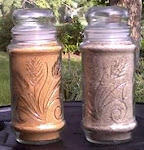
I use large decorative glass containers to store my spices and herbs and keep them on shelves in plain view for everyone to admire. Place a label on the bottom of the container that will be out of sight or tie a card with a piece of ribbon to it with the date and contents. The capacity of the decorative containers varies but you can use whatever you have handy, as long as they have viable seals on the lids. The best thing is that the average person has absolutely no clue when admiring my collection of spices and herbs that they are viewing a year’s supply or more of that particular spice or herb. You can even tailor your spice and herb storage to your own particular tastes.
As an example, I have a couple of vintage (1982) Planter’s Peanuts apothecary jars with the wheat motif. The jars are 7" tall (8 1/4" if you include the lid), and 3 1/2" in diameter. They have a 24 ounce capacity when full and look very pretty sitting on the shelf full of brightly colored spices. Hiding in plain sight is one of the most effective ways to conceal an activity while making use of all available space!
Most of my spices I get in bulk through a barter agreement with a co-worker and I usually wind up with an excess of what I need. I merely put the excess in decorative containers that I get at flea markets and garage sales and use them as holiday gifts for friends and family. Simply tie a ribbon on them and attach a card with a witty saying and you’re good to go!
Some of the types of spices I keep stored are dehydrated onion and garlic, chili peppers, and paprika, along with dill and mustard seed.
You can find additional information (spices are listed in the misc. category) about our food supply and consumption rates here:
http://www.cnpp.usda.gov/publications/foodsupply/FoodSupply1909-2004Report.pdf
Staying above the water line!
Riverwalker
Thursday, August 7, 2008
Herbs, Foods, and Medications
Everything you eat has the ability to react with your medications. Oral medications can react with food or herbs that you consume and affect the way your body processes those foods or drugs.
Some herbs, vitamins, mineral supplements, and high fiber products can increase the risk of health complications by decreasing a medications effectiveness or causing an increase of its effect that may even reach toxic levels. Alcohol consumption can lead to side effects and complications and is probably one the most recognized cause of drug side effects.
A safe practice is to always inform your health provider(s) of any items you are consuming, especially when it comes to herbal remedies. Your health provider may be aware of drug reactions and side effects that could have serious consequences for your health or the health of family members. Be aware of any symptoms that you may be experiencing, as this may be the signs of an adverse reaction to certain combinations of foods, herbs, and medications.
An excellent resource to check for drug interactions can be found here:
http://pdrhealth.com/home/home.aspx
Be informed. Be aware. Be prepared.
Staying above the water line!
Riverwalker
Monday, July 21, 2008
Lobelia - A Herbal Remedy
It is a great herb for problems with the lungs. IT IS A STRONG BRONCHIAL DILATOR. It will get you breathing easily again. It also will help you to expectorate material out of the lungs. This is the only herb that Dr. John Christopher devotes an entire chapter to in his herbal book. Currently in America the F.D.A. has cautioned us about the use of this plant, although in Europe it is an important over the counter drug sold in many modern drug stores. To begin with, alkaloids are one of the most powerful of all plant chemicals and their use should be checked carefully so as not to create new or additional health problems. Not all plants have them. Some have a few, but Lobelia has 14 different alkaloids which ranks it among the highest.
I am explaining this so you will understand that we know very little about this plant except that it can be a powerful healer if used properly. Please check the information on Lobelia and make sure it is safe for you to use in your individual case, as not all people react the same to herbal remedies or may have other conditions that could limit its use.
Information about Lobelia and its use can be found at:
http://www.christopherpublications.com/Herbal_Home.html
More specific information about Lobelia can be found in Vol. 6, 9 & 10 of his newsletters at:
http://www.christopherpublications.com/Newsletters.html
The cost of the newsletters is $4.25.
If you or someone in your group has breathing problems or difficulties, you may want to check this out and see if it could possibly be of use to you. As in all things, check to verify that you can use it safely and that it will help in your case, as there are many individual differences to allow for when using an alternative herbal remedy. There is always the possibility that more common prescription medications may be unavailable in an emergency situation and alternatives can be important to your health.
*edit* Lobelia inflata (the more commonly used variety) is also known as Indian Tobacco.
This idea for this post came from a reader who expressed an interest in any herbal remedies that could be used as bronchial dilators. I sincerely hope this information can be of value to them and others as well.
Stay above the water line!
Riverwalker