Showing posts with label Knives. Show all posts

Saturday, January 12, 2013

Fixed Blade Alternatives - The Lock Back Folder


Most fixed blades can be rather conspicuous when carried on your person. They can be difficult to carry in a way that makes them less obvious and threatening to those persons you might encounter. There is an alternative that can give you similar dependability and strength. This alternative is the lock back folder.

Lock back folders have been around quite a while and are sometimes referred to as folding hunters. This style of pocket knife was popularized by various companies but most notably by Buck Knives and the term “Buck” knife became a popular reference for the lock back folder.


While similar in some respects to a traditional pocket knife, the lock back folder incorporates a blade locking mechanism that usually has a hook or lug on the backspring which locks the blade in place. This gives you a very stable platform when compared with a regular slipjoint style of pocket knife. There is an increased safety factor as the lock back design requires an additional action by the knife user to release the tension on the blade before it can be closed. The release mechanism is most often incorporated into the rear bolster.

Larger style lock back folders with blade lengths of 5 inches or more are generally carried in a belt sheath but there are smaller lock back folders with blade lengths of 3 inches or less that are ideal for pocket carry. This style of knife gives you a dependable alternative to a fixed blade that is ideal for urban environments where a more traditional fixed blade knife may be a little too conspicuous.

Got lock back?

Staying above the water line!

Riverwalker

Saturday, November 17, 2012

The Survival Kit Fixed Blade


When consideration is given to your options for a fixed blade in your survival kit, there is really only one clear choice. Since size and weight will be primary factors in building any type of survival kit, you will want to keep these to a minimum. The clear winner in this department will be the single edge razor blade.

With its small and relatively compact size, negligible weight and extreme sharpness, the single edge razor blade is an ideal choice to give you a cutting edge in your compact survival kit. They’re also flat...which is a good thing.

Single edge razor blades also make a great addition to your first aid kit.

Got survival kit fixed blade?

Staying above the water line!

Riverwalker

Tuesday, November 13, 2012

Types of Knives - The Whittler


The traditional pocketknife still has a large following among those persons who like the feel of an old-fashioned style of knife in their pocket.  Many people grew up with these old-fashioned pocketknives and appreciated the ability of many of these simple knives to help them complete a wide variety of everyday chores. There were also knives that had a non-working use that served as a type of entertainment and as a way to showcase the talents of a person skilled in the use of a knife. One of these knives was the whittler.

The whittler is an all-time favorite amongst many knife enthusiasts. A whittler is basically a three blade pen knife that uses a split-back spring construction. This type of construction is a basic characteristic of whittlers. A whittler will normally have a large master blade on one end and two smaller blades on the opposite end. The two smaller blades are generally the same size and usually include a small clip blade along with a coping blade. When closed, the master blade will normally rest between the two smaller blades.


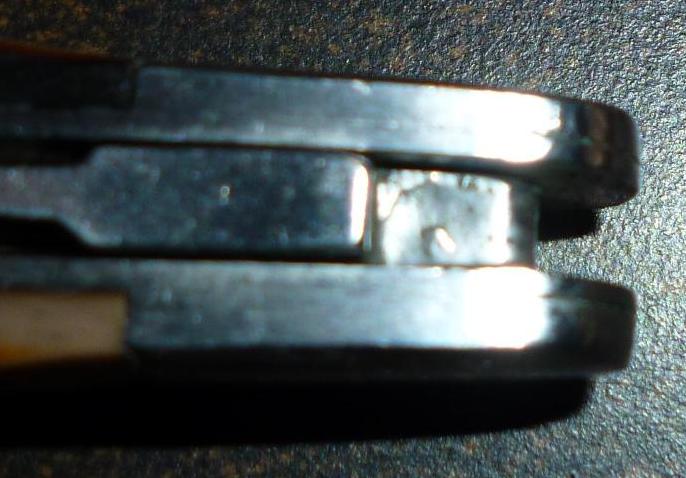
A whittler normally has two springs. There will normally be two smaller blades that work off of separate springs, while the larger master blade works off of both springs. The master blade generally has a thicker tang which allows it to use both springs at one time. There are some whittlers that have three springs and these are known as three spring whittlers. The three-spring type of whittler is quite rare.


Larger versions of whittlers were often referred to as carpenter’s knives and a fairly large number of whittlers actually derived their name from the style of handle used. One of the most familiar styles was the “cigar” whittler. This particular type had unequal bolsters and had a distinctive “cigar” shape. The scales on this type of whittler were generally made from amber bone with a burnt jig which made it further resemble a “cigar”.

Used to pass the time, as well as by many to showcase their talents, whittlers remain popular among knife enthusiasts wishing to display their carving and whittling skills with a knife.

Got whittler?

Staying above the water line!

Riverwalker

Saturday, November 10, 2012

Pack Knife Options - The Camp Cleaver


Here's a great tip from a reader!


Anonymous said...

Another possibility for pack knife - small meat cleaver. Very inexpensive when purchased at a 2nd hand store, and will definitely do a good job chopping wood for fire as a mini hatchet. Provides more edge for slicing too. The back and leading edge makes for a decent shovel spade.


Got camp cleaver?

Staying above the water line!

Riverwalker

Friday, November 9, 2012

Fixed Blade Knife Options - The Pack Knife


While there are many choices when it comes to a fixed blade, not many present themselves as a viable option for EDC (everyday carry). Their size and bulk along with normally lengthy blades are just not well-suited for EDC purposes on an everyday basis. This is where what is sometimes referred to as a “pack knife” can play an important role. Think of a pack knife as a sort of knife insurance. Having a few pack knifes will assure that you always have a fixed blade handy.

I normally consider a pack knife as something that is used to prevent damage to a good knife when the need presents itself. It should also be cheap and inexpensive. And because it is usually a cheap knife, it’s also one that can be put in a pack and forgotten about until it’s needed. A good pack knife will usually be a short (4 to 5 inch), full tang fixed blade and usually be one with a cord-wrapped handle. This is what you will use as a screwdriver or to pry, hammer or chop with in order to prevent needless damage to one of your better blades. It also won’t be the end of the world (or your budget) if it gets broken or lost. 

An inexpensive fixed blade with a full tang of moderate length that is kept tucked away in your various packs can help prevent the needless risk to your good blades by “inappropriate” use.

Got pack knife?

Staying above the water line!

Riverwalker


Tuesday, November 6, 2012

Fixed Blade Knife Options - Mora Scout Knife with Black Composition Handle


This is a good fixed blade knife that comes razor sharp and holds an edge quite well. The Mora Scout Fixed Blade Knife is well-suited for most camp chores other than splitting or chopping wood. You’ll need your camp axe for that chore. Its light weight and short blade make it easy to work with around camp and it can even be worn as a neck knife.


With its short blade, this knife is very easily controlled and has a very strong stainless steel blade. It will stand up to a fair amount of use without any problems. 


The sheath is inexpensive plastic but it does hold the knife well. This is also a nice size knife if you’re looking for a decent sized fixed blade knife suitable for concealed carry.

Specifications for Model FT-440B:


Sandvik cold-rolled special stainless steel blade

3 3/4" clip point blade with total length of 8 1/4"

Black composition handle with lanyard hole

Black composition sheath with lanyard hole and rubber belt attachment

This knife gives you excellent quality at a decent price that can fit even the most limited of family budgets.

Got Swedish steel?

Staying above the water line!

Riverwalker


Saturday, November 3, 2012

Types of Knives - The Toothpick


Quite often this type of knife is referred to as a switch knife. The toothpick is basically a clasp style jackknife that comes in a very compact package. This particular style of pocket knife is found in sizes ranging anywhere from 3 to 5 inches in the closed position. The larger toothpicks are considered to be the most collectable and generally will have a greater value. The smaller versions should not be confused with a “Texas” toothpick which often referred to a large “Bowie” style knife.

The toothpick was a knife that was easily carried in your pocket and it was also characterized by a long clip blade with a distinct curvature of the blade’s spine.
There were also two bladed models and both types were mainly used as “fishing” knives and quite often found themselves residing in someone’s tackle box or as a part of their regular fishing gear. The long, narrow clip blade was well-suited for detailed cutting chores such as filleting fish.

There is also some debate as to their use as a fighting knife but this may have been more of a marketing ploy that was created to sell more knives of this type. Unfortunately, many people carried a wide variety of pocket knives. If an altercation developed, the type of knife that may have been used would almost certainly have been one that was carried on a regular basis and wouldn’t have necessarily been a toothpick.

The popularity of toothpick knives has declined mainly to the large quantity of filet knives now available on the market which were better suited to the task. Many people now collect toothpicks and this has generated new interest in this style of pocket knife.

Got “Texas tickler”?

Staying above the water line!

Riverwalker

Wednesday, October 31, 2012

Types of Knives - The Clasp Knife


The clasp knife is a traditional knive pattern that has its origins in Germany where they were commonly known as “folding butcher’s” knives. This also accounts for the characteristic blade shape of the clasp knife which was ideal for use in the butchering of animals. They were simple knives that usually had no bolsters and were made from easy to obtain handle materials such as wood or bone, all of which made these knives very inexpensive and quite common. This also contributed to the naturally curved shape of the handle on most clasp knives. These were a true “working man’s” knife that would be fairly easy to replace if lost.

Modern day clasp knifes are known by many different names.  The most familiar name is the “sodbuster” which was popularized by Case in the early 1960’s. It has also been called a rangebuster, dirtbuster and a bullnose depending upon the manufacturer. In some early Sear’s catalogs it was listed as a “horse castrating” knife. No matter what they were called, all are a basic clasp knive pattern. The traditional style of clasp knife had a handle that fit the hand well and made this knife easy to use all day. This was important as to prevent injuries when cutting meat all day in a butcher’s shop. The traditional blade design whose straight edge generally has a pronounced upward curve towards the point was ideal for this purpose.

While the term “sodbuster” probably originated with the Homestead Act in 1862, this may have been the origin of the term for this style of knife that was made popular by the Case Knife Company. The real popularity of this type of clasp knife was probably more a direct result of its notoriety as part of the kit carried by the legendary Davy Crockett.


This classic knife pattern survives today as an inexpensive and easy to use utility knife that can serve you well on a daily basis.


Got "Notschlachter"?

Staying above the water line!

Riverwalker

Saturday, October 27, 2012

Types of Knives - The Trapper


The trapper is a basic knife pattern that rivals the popularity of another popular knife pattern, the stockman. Since the early 1900’s this particular type of pocket knife has been a must carry item for many outdoorsmen. The combination of a clip blade and a spey blade made it extremely useful for a wide variety of tasks but was more popular as a hunting and skinning knife, especially where the processing of small game is concerned.

Standard trappers are normally about 4 inches long and large trappers generally run a bit larger at around 4.5 inches. There also “baby” trappers available which are found in lengths of about 3 inches. The “baby” trappers came into use in the early 1970’s as a wide variety of traditional pocketknives were once again gaining popularity among many knife users. The smaller versions of this knife pattern were often considered the "gentleman's" version of a trapper.

Trappers are a basic jack knife pattern of American origin which has both blades located on one end. They are most valued for their versatility and are considered an essential piece of gear for those persons who hunt and trap small game animals. It is this versatility that has made them one of the more popular styles of traditional pocket knives in use today.

Got trapper?

Staying above the water line!

Riverwalker

Tuesday, October 23, 2012

Types of Knives - The Sunfish


One of the most popular styles of pocket knives among collectors is the sunfish. While often referred to as a rope knife, the sunfish pattern is actually an early nineteenth century American pattern that was favored by many carpenters in the southern parts of America. Most sunfish patterns have a very wide back and a thick blade that is similar to a sailor’s rope knife. Most sailor’s knives or rigging knifes had a “hawk bill” style of blade and quite often had a bail or hole for a lanyard. The majority of sunfish patterns do not have a bail (metal loop).

While sunfish patterns were produced in various lengths, they commonly had the same thickness and width. The sunfish is normally a straight handle design with two bolsters but there are some that have a swayback type of handle. The blades are fairly short and are usually less than three inches in length. The main unique characteristic of a sunfish is their handle and their blades are usually quite wide.  Sunfish knives normally have two blades: a spear and a pen blade. There are some single blade patterns but these are not very common.

The sunfish pattern is based on a double-ended jack knife pattern and has many different names that have been associated with it over the years. It’s been called an elephant toenail, a vest pocket axe, an oyster shucker and most certainly was not what could be considered a “gentleman’s” knife.  This pattern was most likely marketed with a wide variety of uses and this probably gave rise to the various names that are now associated with this style of pocket knife.

One characteristic of the sunfish that is not commonly mentioned is the strength of its backspring. Due to its wider width, the backspring of a sunfish is amazingly strong for its size and it takes a modest amount of effort to open the blade as a result. It also takes some very careful maneuvering on your part when closing the blade. It is a very strong design for a “working” knife that comes in a compact package.

Got sunfish?

Staying above the water line!

Riverwalker


Saturday, October 20, 2012

Types of Knives - The Doctor’s Knife


Early pocketknives were the multi-tools of their day. Many were named because of their specific use in certain occupations. One such knife is the doctor’s knife. They had a characteristic shape that was easily recognizable and had very specific uses to the physician’s profession.

Back when doctors routinely made house calls, they usually carried a knife as one of their main tools in their bag.  This particular type of knife was based on a jack knife frame with very characteristic flat bolsters. This flat rear bolster was quite often used as an aid to grind pills into a powder.

Most doctor’s knives have a spear and pen blade, sometimes referred to as “baby docs”, while other larger versions had a “spatula” type blade instead of the pen blade. This spatula blade was often used as an aid in the mixing of poultices. The spear blade was quite often used as backup for their scalpel.

Got “baby doc” in your FAK?

Staying above the water line!

Riverwalker

Tuesday, October 16, 2012

Types of Knives - The Congress


The congress knife usually has a convex front with a straight or very shallow concave back. Congress knives can have two or more blades and they are normally found in a four blade configuration. A six bladed congress is slightly less common. A congress knive will generally have two master blades which are generally a sheepfoot and a spear blade and four-bladed models will also include a coping and pen blades. The four blade congress is the most popular style of this type of knife and is the pattern commonly seen and used.

With their characteristic back-bent handles, congress knives are fairly easy to spot. The main blades of a congress (sheepfoot and spear) are normally substantial enough that they can be used as a replacement for larger single blade folders. The additional pen and coping blades are of a size that makes them excellent for use in more delicate or intricate knife work.

For much of its history the congress knife was used mainly in the south as a tobacco knife even though it was originally intended to be a pen knife for use in making quill pens. It eventually became less of a regional type knife and was probably made infamous by the fact that President Lincoln was carrying a congress knife the night he was killed. This makes the congress knife rather unusual and quite unique among the more traditional knife patterns since it was originally a regional knife pattern more commonly found in the southern parts of the country.


Got congress?

Staying above the water line!

Riverwalker

Sunday, October 14, 2012

Knife Carry Options - Fixed Blade or Folder


When choosing the basic type of knife for your carry needs, it usually comes down to the choice of a basic folder or a fixed blade. Both types of knives have their advantages and disadvantages and your choice will most likely be decided based upon two main factors: your environment or the intended use of your knife.

The Environment

It is quite obvious that the need for a knife will be different depending upon your environment. In most urban environments, a folder will be a better choice for the majority of practical uses. The quality and dependability of many folders has increased to the point that many are solidly constructed and can function almost as well as a fixed blade knife. It will also be less likely to raise the level of concern by your neighbors or local LEO’s that could arise with the sudden appearance of a large fixed blade. 


While the more serious outdoorsman or hunter will probably be better served by a good fixed blade, the average hiker or camper can probably survive most situations with a good quality folder. Many knife-makers even realize the advantages of both types of knives and are now offering combo units that allow for the carry of both a folder and a fixed blade in the same sheath.

While easier to carry because of its compact nature, a folding knife, unlike a fixed blade, can also be harder to keep clean and be more susceptible to the effects of dirt and debris which could affect its functional qualities.

The other area in which a fixed blade would also be more advantageous would be in a combat situation. This is a very specific use and generally wouldn’t be of concern to the average person that is not involved in a combat situation.Those who are involved in stressful situations including combat or self defense situations on a more regular basis might be prone to remain more calm when found in a dangerous situation such as this. Because of this, it might be a good idea for the average person who is interested in self defense and being prepared for anything to practice hand-to-hand combat and the use of their knife of choice. Whether you practice with a folder or a fixed blade it can always prove to be an excellent form of stress management not to mention the numerous situations it can come in handy in the real world.


The Intended Use of Your Knife

Most cutting chores of a routine nature can be safely and adequately fulfilled by a good quality folding knife. Most non-routine cutting chores will be more likely to require a decent fixed blade knife to get the job done. Obviously, a folding knife won’t be as efficient as splitting kindling as a fixed blade in an outdoors or wilderness environment. On the other hand, a large fixed blade probably won’t be necessary to open a bag of charcoal in an urban environment. While most people give little thought to a farmer carrying a machete, it will seriously upset your neighbors if you try carrying one around in an urban neighborhood.

If you are apt to find yourself in a combat situation on a regular basis, you may want to consider a fixed blade as your main carry option. A fixed blade will generally be, but not always, easier to deploy in a defensive manner. The type of sheath that your fixed blade is carried in and the style of clothes you are wearing will affect the deployment of your blade. A folder will quite often require one to two additional steps before it can be effectively used in a combat situation. These two steps generally include the release of your folding blade and quite often a shift in your grip to obtain better control after removing it from your pocket.

While the choice of whether to carry a folder or a fixed blade will be largely a matter of personal preference, it doesn’t hurt to consider the effects of your environment or the intended use of your knife before making that choice.

Staying above the water line!

Riverwalker

Monday, October 8, 2012

Riverwalker’s Knife Review - The SOG Seal Pup


The first thing that needs to be said about this knife is that it’s sharp straight out of the box. The excellent sharpness of this knife can be directly tied to the special cryogenic heat treatment that SOG uses in their blade-making process. It’s also a lot lighter than expected at only 5.4 ounces and has an overall length of only 9 inches which makes it ideal for your EDC needs. 


It has an extremely comfortable handle which affords a very secure grip under all conditions with its finger grooves and GRN (glass reinforced nylon) handle. Even with gloves on, it still affords a secure grip.


The handle also includes a lanyard hole. A lanyard is not included and will need to be added if desired.


The weight will increase some when you add a multi-tool or folder to the accessory pouch on the sheath but this shouldn’t create a serious difference in the amount of weight being carried.


It has a comparatively thick blade at .16 inches and an overall blade length of 4.75 inches. It also has a convenient thumb rest. The blade is made of AUS-8 steel.


The knife comes with a TiNi powder coating on the blade which provides excellent corrosion resistance. The blade also has a partially serrated edge.


The SOG Seal Pup also comes with a ballistic nylon sheath (Kydex or leather sheath is also available) that is designed to protect your knife from the elements. This is one of the additional features of this knife that comes in strong in all categories.


The sheath has a very sturdy nylon insert for the blade to protect the sheath. 


The sheath also has very good reinforced stitching. You won’t have to worry about this sheath coming apart at the seams.


The sheath is also Molle compatible which gives you a wide range of carry options.


The sheath also includes a combination snap fastener with a Velcro attachment to secure the knife in the sheath when not in use.


It’s easy to tell when you have a really good knife by the logo on the blade or just ask a Seal which one they prefer.

With a suggested list price of $98.50, it may seem a little pricey but there are several available sources where it can be purchased in a more affordable price range of $50 to $60. Either way it’s an excellent knife for the money.


Got SOG?

Staying above the water line!

Riverwalker

Sunday, September 30, 2012

Types of Knives - The Peanut


The peanut knife is an old fashioned pocket folder. The peanut knife is usually a very small knife which may come with one or two blades that are generally a high quality stainless steel. The main blade will almost always be a clip blade and the secondary blade will generally be a spey or pen blade. The clip blade is normally about 2 1/8 inches long and the secondary blade (if it has one) is generally about 1 1/2 inches long. In either case, the blades usually work off a single spring mechanism. They also come with a wide variety of available handle materials.


Peanut knifes are not large knives but are extremely useful in performing delicate cutting chores. You won’t be chopping any trees down with this one. You will be able to accomplish many tasks that a heavier and more cumbersome knife with a heavy blade would make difficult, if not impossible.

Although it isn’t designed for heavy duty chores, the peanut knife can offer a good choice for EDC. If you don’t want to look like a “Rambo” wannabe, the sudden appearance of the peanut from your pocket will definitely be less threatening and not as intimidating as a large tactical folder. With its extremely light weight (usually less than two ounces), you will barely notice it’s there.

Like most pocket folders, the peanut knife has what is commonly referred to as a half stop. This is quite different from the liner and frame locks found on most tactical folders. When closing the knife, it will catch at about a ninety degree angle. This basically prevents the knife from accidentally closing on your fingers.

If you are looking for a functional, lightweight and easy to carry knife, the peanut will be an excellent choice. They are usually available at a very affordable price. It is also extremely well-suited for use as a backup for your main EDC knife.

Got peanut?


Staying above the water line!

Riverwalker


Thursday, September 20, 2012

Riverwalker's Gear Pics - Hog Hunting Accessories


Just some pics of hog hunting gear.

 Staying above the water line!

Riverwalker

Thursday, September 13, 2012

Types of Knives - The Stockman Knife


Stockman Knife

The stockman knife normally has three different types of blade. These include a clip blade, a sheep's foot and a spey blade. The sheep’s foot is useful for making long straight cuts or any other cutting task that requires extra control. The spey blade is good for making what is generally referred to as a “pushing” or motion cut. The clip blade is a general type of blade that is useful for slicing.

Stockman knives are generally medium-sized knives that allow them to be easily carried in your pocket. There are generally two types of handles that are found on stockman knives. These are the straight handled versions and the sowbelly version in which the handle has a distinctive curvature.

Like most traditional folding knives, stockman knives are opened using nail nicks. These are slots where your fingernail can be used to pull the blade out of the handle. The stockman knife pattern is one of the more useful types of traditional knife styles. It contains different types of blades that were well suited to a wide variety of tasks.

The stockman is an amazingly versatile knife. With its combination of three different blade types, it is capable of handling virtually any task you may need to accomplish. The stockman remains one of the most popular styles of folding knives currently in use to this day.


Got stockman?

Staying above the water line!

Riverwalker


Friday, September 7, 2012

Riverwalker's Knife Pics - The Dive Knife


Dive Knife in Sheath

 Dive knives usually have a more practical than tactical use. While their primary use is by divers, they can also be considered a practical choice where corrosion or exposure to wet conditions may be a concern. This makes a dive knive an excellent choice for boaters. Whether you are using a canoe, a kayak or a regular fishing boat, a dive knife can be an effective tool, in and out of the water.


Many dive knives utilize a stainless steel blade material to help resist the effects of corrosion in a working environment.


Many dive knives will also have a secure locking mechanism that will keep your dive knife securely in its sheath when not in use.


Many dive knives will have rubberized straps on a hard sheath that allow the knife to be carried securely on your leg or your arm. 

The overall construction of most dive knives make them extremely water-resistant gear.

Got boat knife?

Staying above the water line!

Riverwalker


Friday, August 31, 2012

Riverwalker's Knife Pics - Rescue Folder


Rescue Folder

Features

This is a folding knife with a 3.5 inch modified Tanto-style blade that is also partially serrated.It has a spring assisted opening mechanism with a liner lock and includes a glass breaker and seat belt cutting blade which is incorporated into the handle. This type of knife can be extremely handy in a rescue situation.

Got rescue blade?

Staying above the water line!

Riverwalker

Saturday, August 25, 2012

DIY Survival Gear - Sheath Mod for Pack Knife


Many times inexpensive gear items can be turned into a quality piece of gear with a simple modification. When using inexpensive gear items such as a pack knife, one of the items that can cause a lot of problems is an inferior sheath. After putting a good edge on it you sometimes find out that the point is sticking out of the sheath. This is not a good thing. A simple gear mod can usually fix this problem and turn an inferior piece of gear into a reliable piece of equipment.


Sheath Mod for Pack Knife


There are only two basic items required for this simple gear mod to the sheath.

1. Pack Knife


2. Empty Plastic Vinegar Jug


There are only a few simple household tools required for this simple sheath gear mod.


                                       Tools Required

                                      1. Kitchen Shears

                                      2. Ruler

                                      3. Pencil


Once you’ve assembled your equipment and tools, it’s time to take some measurements. For the purpose of this type of gear mod, you’ll need to measure the inside of the sheath for the plastic insert that will act as our sheath protector. On this particular sheath, the ruler itself was used to get a measurement of the width. The length was easy to figure also.


Once your measurements are done, you can then use the plastic shears to cut a strip of plastic from the vinegar jug for the protector that will be inserted. This particular sheath has a square cut design so the strip of plastic will need to be equal to twice the depth of the sheath. Once your strip is cut, just bend it over in the middle and insert into your sheath. The shape of the plastic strip you will need and how the strip needs to be cut will depend upon the shape of your sheath.

The cost of this simple gear mod involves only a small amount of your time and a few simple tools. It is recommended that you use plastic vinegar jugs when making a plastic insert for your pack knife. The plastic is a lot thicker and stronger than the plastic from a milk jug or soda bottle.

Got DIY gear mods for your pack knife?

Staying above the water line!


Riverwalker
Related Posts with Thumbnails