Showing posts with label Food. Show all posts

Tuesday, January 28, 2014

Survival Food Test - Off the Shelf - Instant Refried Beans


Having food items that can serve a variety of purposes can help increase your level of efficiency of your food storage. A simple can of beans works great for home storage. If you have to bug out, something a little lighter and easier to carry make be more suitable. This is where having dehydrated food can save you time and effort.

RW, Jr. and I are always looking for backpacking food that is convenient and easy to fix. Unfortunately, most dehydrated meal packets contain enough servings to feed a small army because of their larger portions. It also helps if you don’t have to violate the storage integrity of the larger food packet that is normally intended for long term storage. 
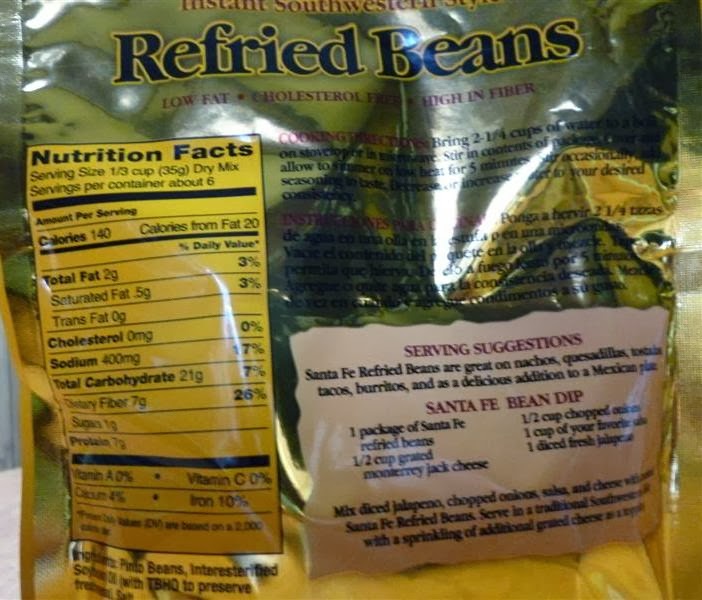


Many times there are products that can be found sitting on the shelf at your local supermarket that will solve these problems. For the purposes of this test, we will be using a small package of instant (dehydrated) refried beans straight off the shelf for our survival food test.

The package of dehydrated refried beans we used weighed a total of 7.25 ounces and came packaged in a Mylar pouch that can be resealed. The single serving size was 1/3 cup dry mix (or about 4 heaping teaspoons) combined with 1/3 cup of water (about 3 ounces). This makes a serving (or two) easily prepared in a GSI cup that many backpackers use. The contents do provide a sufficient quantity of product that will make a total of six servings. This would be more than sufficient for a single meal that would provide enough for a family of four. 


With 140 calories per serving that include 2 grams of fat, 21 grams of carbohydrates and 7 grams of protein, this a pretty powerful serving of food that includes vitamin C and iron. This is a pretty well balanced serving as far as simple nutrition is concerned.

It was easily prepared by just adding hot water, stirring the ingredients and then letting it set for a few minutes to allow the beans to rehydrate. It really doesn’t get much easier than that.

When the size and weight was compared, it would take two 16 ounce cans of refried beans to get the same number of servings that were in a single pouch of instant refried beans. The cost of the instant pouch is about twice the cost of two cans of refried beans. You do need to remember that you can buy these packages individually and don’t have to buy a big bucket all at once. This could work in your favor if you are on a tight budget.


Summary of Test Results

The instant refried beans win in the number of servings (6 in a pouch versus 3 in a can) and also save a lot in the weight department (7 ounces versus 2 lbs.) but are more costly (about twice the cost of the canned version). The instant refried beans have a shelf life similar to the canned product and they actually taste very similar to each other. I personally could not tell a difference between the canned version and the instant refried beans.

As a long term storage food, this product works well. It also works great as a backpacking food and could be easily added to your bug out bag as a simple to prepare meal that is also a nutritious food item. It also doesn't add a lot of weight to your bug out bag.

Got instant food?

Staying above the water line!


Riverwalker

Tuesday, November 26, 2013

Survival Food Test - Spam 411


Invariably some food items in your pantry will somehow manage to sit around in the cabinet and avoid your best efforts at proper rotation until their “Best By” date expires. Fortunately, this doesn't mean it’s unfit for consumption but will still be perfectly palatable. There are still a few things you need to check to insure that it is safe for consumption.

For the purposes of this survival food test, we will be using one of the favorite food items of survivalists everywhere...spam. Spam is a very versatile food that is rumored to have an indefinite shelf life when properly stored. It is now going to be put to the test.

We will be using a can of spam with a “Best by” date of 04/11, which makes it slightly out of date by more than a couple of years. Here is the manner in which it was checked to see if it was still a viable food source.

The first thing checked was proper storage conditions. Having been stored in my pantry for well over three years under proper conditions this was not a concern. If the storage conditions can’t be verified, you will need to exercise additional caution and be a lot more critical of the next steps in determining it’s viability as a food source.


The second thing to check was the overall condition of the can. It appeared in good shape and had no dents, leaks, swelling or bulging areas and had no rust.


The third item checked was the presence of any visible deterioration of the food product in the form of mold or mildew that might be present. The spam was also sliced to make sure there was no interior contamination. None was evident.

The fourth item checked was the smell of the food item. It actually had a very fresh smell and reminded me of spam that I had been eaten on previous occasions. No problems with the spam in the smell department.


The final check was the taste test. After frying up several slices of the spam, it was supplemented with some eggs. It made for a very satisfying meal.

When using canned food items that may have passed their “Best by” date, a few simple precautions can help you avoid problems.

1. If possible, always check that proper storage conditions of the food product were maintained.

2. Examine the container for any visible damage that could affect the food item.

3. Examine the contents for any visible signs of deterioration.

4. Use the smell test...if it smells bad, it probably is.

5. Finally, use the taste test on a small sample before consuming the food item.

There is an old saying that is easy to remember and applies in this type of situation.

When in doubt, throw it out!

Got spam?

Staying above the water line!

Riverwalker


Friday, June 28, 2013

The Advantages of Raising Poultry - Hunting Eggs


Empty Nest

One of the advantages of raising poultry is you don’t have to wait until Easter to hunt eggs. When your chickens are allowed to free range in the backyard, they don’t always return to the nest to lay their eggs. More often than not they will find an alternate place to lay their eggs and you will have to do a little hunting to find where they are laying their eggs.

Unfortunately, there isn’t an egg detector available to help you find them. Just keep checking the bushes and you’ll probably come across a stray egg or two.

Got eggs?

Staying above the water line!

Riverwalker

Thursday, June 6, 2013

Survival Food Review - MRE’s from Meal Kit Supply


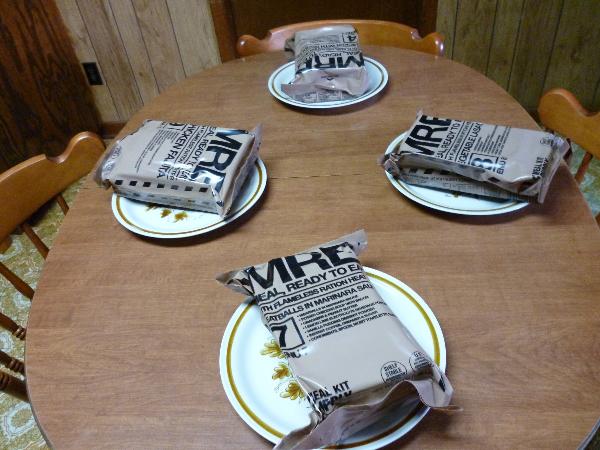
During an emergency or a crisis you never really know what kind of meal is going to wind up on your plate. While there are many types of long term storage food options, few can beat the simplicity and ease of use of an MRE (Meal, Ready to Eat).


While they may not be quite the same as a “home-cooked” meal, MRE’s do provide a total meal and include beverages and a snack as well. The different menu plans do offer a decent amount of variety for your diet that normally includes breakfast and the “veggie” option. While there really is no “wow” factor when you consider the taste of the entrees in an MRE, they do furnish an adequate amount of calories and the necessary nutrition for your survival.

One distinct advantage of MRE’s is that they come with condiments, as in sugar, salt and pepper. With the right amount of seasoning, anything on your plate or in your MRE is going to taste a whole lot better. 


There is also an important note about MRE’s to remember. You will need water to properly prepare your MRE and also to make your beverage. 


The MRE’s from Meal Kit Supply were shipped in a sturdy container that contained 12 individual units that included 4 breakfast entrees and a couple of “veggie” options. All the individual packages were in excellent condition and suffered no damage in transit. They also arrived promptly in just a few days after being ordered. Variety is an important consideration when considering an item for long term food storage.


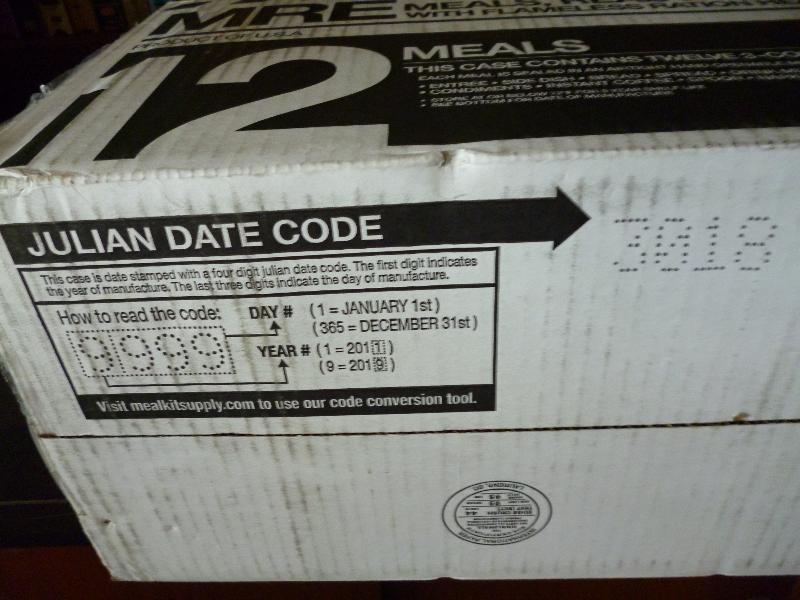
There are also very clearly marked date codes on the bottom of the case with instructions on how to read the date code properly. This makes it easy to keep a proper rotation of your storage food items. Clearly marked date codes are a must when considering an item for long term food storage.


Individual MRE’s from Meal Kit Supply come in a sturdy package that is almost identical to the regular government issue MRE’s. The actual wording on the MRE’s from Meal Kit Supply was a lot easier to read. Sturdy packaging is a must when considering an item for long term food storage.

The pork sausage patty MRE was a nice change of pace from some of the usual breakfast entrees. This also helped enhance the variety of the menus offered in these MRE’s. It’s really nice when they include something besides oatmeal for breakfast.


The chicken fajita MRE was a pleasant surprise in the taste department and adds a lot to the menu variety. On a scale of 1 to 10, I give this meal an 8 (with 10 being reserved for homemade fajitas). The tortillas were actually quite good. This puts it right up there in the taste category and is probably one of the better meals that came in the case of MRE’s from Meal Kit Supply.
The chili and beans MRE was my next favorite item and it tasted as good as, if not better, than the canned versions available in the grocery store. On a scale of 1 to 10, I give this meal a strong 7 only because I’m very picky about my chili and beans. I really prefer my own “homemade” version but wouldn't have any trouble eating this MRE on a regular basis.
  If you want a long term food storage product with sturdy packaging, easy to read date codes, a wide variety of menu options and that is simple and easy to prepare, then MRE’s from Meal Kit Supply  may be just what you are looking for to solve your long term food storage needs. You’ll also be pleasantly surprised by the taste and quality of these MRE’s.

Got MRE’s?
Staying above the water line!
Riverwalker

Saturday, April 13, 2013

Mrs. RW’s Cooking Tips - The Hard-Boiled Solution


One of the advantages of having chickens is the availability of fresh yard eggs. Since they are a lot fresher, they have a better flavor but can cause you some difficulty if you happen to like hard-boiled eggs. Here’s a simple solution to that problem which should help you.

Fresh yards eggs that have been hard-boiled can be extremely difficult to peel. You can literally destroy your egg when trying to get their shell off. Quite often you find yourself digging the egg out with a spoon. Thankfully, there are two simple things you can do to simplify the egg peeling process.

First you need to add two or three tablespoons of salt to the water in which you will boil the eggs. This doesn’t make your eggs salty. It just makes them easier to peel. The next thing you need to do is peel the eggs while they are still warm. This should make it easier for you to peel your hard-boiled yard eggs with less difficulty.

Got hard-boiled yard eggs?

Staying above the water line!

Riverwalker

Saturday, March 30, 2013

Computers, Coops and Chicks


Things have been pretty busy this last week. Lots of computer issues that finally got resolved. There was a problem with my ISP for several days but that’s fixed now that the server of my ISP is working properly. Mrs. RW also has quite a few new additions to the flock and is going to need a bigger chicken coop. One more thing on my to do list.


This is also going to be a great project for me to show everyone some tips on building a lightweight but strong coop for your chickens. There was only enough time to build the coop gate today. We have a big family get-together planned for Easter Sunday and there are beans to cook and guns to clean. The plan is to do a little plinking with the twelve gauge. Now it's time to get back to the coop building.


The first tip for building a strong but lightweight chicken coop is to use what I call the sandwich technique. Simply put, you just sandwich your wire between your boards (1X2's). This makes it stronger and there’s less chance of a possum or coon getting in your coop...which it seems we have more than our share of both. The wire is almost impossible for them to pull apart when fastened to your framework in this manner. In this case, I’m using welded wire fabric with the small squares (1/2 inch) to attach to the framework.

I’ll include some later updates as the coop begins to take shape.

Have a Happy Easter!

Staying above the water line!

Riverwalker


Friday, February 15, 2013

Food for Survival


Natural disasters are no mystery to everyone and we know they happen. They are inevitable and the only thing we can do is to be prepared for whatever these might bring. When disaster strikes, the first thing that comes into mind is how you and your family would survive the onslaught of calamity. Surviving means staying alive and to do this, you need food to keep you going.

Anything can happen whenever there is a disaster. The government may ask you to evacuate your house stay somewhere else safer for the meantime or you might be prompted to stay at your house without leaving its comfort. Both situations pose a problem when it comes to food and water supplies: when you evacuate, will your family be given enough food and water? When you have to stay in, will your supplies last until it’s safe to go out? Whichever situation comes beating down your door, both call for preparation for long-term food storage. You may bring well-stored food items with you if you have to evacuate your home, and if there’s no other option for you but to stay, a well-stocked food storage bin will keep you and your family from starvation.

Counting food for your family

If you consider your family to be a big one, you should also consider that a large amount of food supplies is needed to sustain everyone for at least two weeks: that’s 42 meals for each family member if you will be eating meals three times a day. Not only your family size but also your eating habits will tell you how much food you need to store for the ‘rainy’ days that may come your way. Families who prefer cereals for breakfast would have different preparation activities from those who prefer eggs and sausages (who may have to do without eggs during disaster time). A disaster is not the time to indulge in food you like to eat; more often than not, you have to stick to canned food and ready-mixes that can be easily prepared, even without cooking. You may take individual needs in mind and work it into your disaster meal plan. Consider your family size and diet restrictions when planning meals. The meals should be simple but still nutritious, easily prepared, and are able to keep well even without heating and refrigerating. Schedule “fresher” food for the first week and leave the canned food for the second.

Food basics for survival

You might think that canned foods are the only choices you can stock when disaster comes. Sure, canned goods get high marks for long term food storage but you don’t actually have to stick to them entirely. Pasta, powdered milk, sugar, beans, honey, wheat and several other recipe ingredients are actually good choices for long-term food since they don’t expire quickly, and if properly stored should keep for a span of 10 to 30 years. Non-perishable goods also make the list, like freeze-dried or dehydrated food like fruit preserves and even candies. Biscuits and cookies may also be a good choice. Just make sure that you seal them in re-sealable bags or airtight containers to keep them fresh even if they have to stay in your survival food bag for two weeks (unless they already get snacked on during the first couple of days!). Ready-to-eat, complete meals are also available in grocery stores.

Just remember not to wolf down all of your food provisions at once. Moderate your food consumption; strictly follow your disaster meal planning. Conserve your food especially when you are not sure when you will be able to replenish your stocks. Don’t forget to keep enough supply of fresh water as your body would need it more than food. Having food for your family amidst a disaster ensures that you’re a step ahead to survive any calamity that may happen at any time.

About the Author
Adeline is a writer who specializes in food preparation and long term food storage.


References

The Epicenter: How to Prepare for an Emergency;


Family Survival Planning: Survival Planning – Emergency Supplies – Survival Tips;


The Daily Beast: 10 Ways to Prepare for Disaster;


 Thanks Adeline for an excellent guest post.

Staying above the water line!

Riverwalker

Saturday, February 9, 2013

Survival Food Test - RW Tests Freeze Dried Meals from DailyBread


Daily Bread is a sister site of foodinsurance.com and offers freeze dried meals with a 25 year shelf life. A decision was made that it was time for Riverwalker to check out their freeze-dried food products. After receiving a free sample from my friend Jeff at dailybread.com, Mrs. RW and I had a nice lunch of Beef Stroganoff with noodles and Lasagna with meat sauce. The results were a pleasant surprise.

The first thing that impressed me was the quality of the packaging. The packages were clearly labeled with nutrition information, contents and very clear and concise preparation instructions. They also featured an easy open tear notch on the package that worked as it was intended. There was also an inner zip lock inside the pouch that is used to seal the pouch while waiting for your meal to heat up after adding the required hot water. All the features of the packaging worked as intended. Riverwalker gives the packaging thumbs up!


The next thing that impressed me was that the meal was easily prepared in the pouch. This eliminates the need for a separate cooking container. It also means there won’t be any dirty dishes to be washed. This is important if water sources are at a premium during a crisis. You will need to remove the oxygen absorber from the pouch (the little blue packets in the pic) before adding the hot water. Preparation gets a thumbs up from RW!


Even though the contents showed a higher sodium content than I normally prefer, the meals were not too salty and the seasoning was adequate and not overdone. Mrs. RW said she was quite surprised at how tasty the meals were and offered to help me finish off my beef Stroganoff and noodles. I also sampled her lasagna with meat sauce and found it to be very tasty as well. While only being around 300 calories each, they did alleviate my hunger and left me with a very satisfied feeling. Taste gets another thumbs up from Mrs. RW and myself.


These freeze dried meals would also be great for camping and backpacking. They are lightweight and require only the ability to heat water to prepare. They also mean you don’t have unnecessary cleanup chores or extra cooking containers to haul around. A dozen or so empty pouches would weigh significantly less than the average cooking pot.

You can experience the taste of Daily Bread products by visiting dailybread.com
where you can sign up for your own free sample of Daily Bread.

The Glock Lady, my daughter, is a big fan of their products and also recommends you check out their Emergency Supplies.


Staying above the water line!

Riverwalker

Saturday, December 1, 2012

Food Storage Alternatives for the Beginning Prepper on a Budget


When giving advice to those who are just getting started in their preparedness efforts, we often forget that changes in lifestyles can have a dramatic effect on the family budget. Fortunately, there are alternatives to breaking the proverbial piggy bank in order to be better prepared.


Food storage is one of the main parts of becoming better prepared. We all have to eat and sufficient food items are going to be a basic requirement. This is where intermediate food storage items can play a vital role in your family’s long term food storage program.

There are many items available that come pre-packaged in serving amounts that will meet the needs of most families. They can be purchased as single items or in multiple units depending upon your budget and your family's needs. They also have shelf lives that range from 6 months to a year. This makes them ideal for an intermediate long term food storage program. All you need is a couple of food grade buckets or storage containers.


Instant mashed potatoes, gravy mixes, cornbread mixes, biscuit mixes, small packages of rice, beans, dried soups or most any type of pasta can be easily stored in a bucket to provide a variety of food items that are easily prepared without a lot of prior preparation. They will also fit into your families current dietary preferences without causing the need for a big change in their diet. Fill a food storage container with a variety of items and  mark a use by date on the outside of the bucket once it’s been filled. Then set it aside till needed or when it becomes necessary to use it in your food rotation before it reaches its expiration date. 

At a later date and when your budget permits, you can expand your long term food storage with additional longer term food storage items.

Got intermediate food storage?

Staying above the water line!

Riverwalker

Saturday, August 11, 2012

Riverwalker's Pics - Survival Stew


Got stew?

Staying above the water line!

Riverwalker

Thursday, August 9, 2012

Food Storage: The Do’s and Don’ts of Storing Food Safely


Storing food can be a dangerous game if food becomes contaminated and is ingested. Whether you are storing your leftovers overnight, keeping food safe for a week of camping, or storing food for months or years to stay prepared for an emergency, you need to know the basics. Storing food incorrectly can allow harmful bacteria, viruses, parasites, toxins, or other contaminations like mold into your food. If you or a family member is unlucky enough to come down with a case of food poisoning the effects should be temporary, but in some cases can be devastating. Pregnant women, the young and old, and those with chronic illnesses are at the most risk when it comes to getting sick or dying. Let’s explore the basics for storing food for short or long term situations.

Refrigerator and Freezer Basics

Every food you might want to store in the refrigerator or freezer has its own time limit. For example; hamburger or other ground meats can be in the refrigerator 1 – 2 days and 3 – 4 months in the freezer safely. For information on specific types of foods simply look them up online to get an idea about storage times.

The factors you need to keep constant consist mainly of the temperature. The expiration dates on your food assume you are storing them at the correct temperature. The freezer should be kept at 0F (minus 18C) or lower and the refrigerator should be at 40F (5C). Pick up a good thermometer at your grocery store for a few dollars and you can get your exact temperature. If you need to make a temperature adjustment give the appliance 24 hours and then retest.

Outdoor Tips for Food Storage

Summer is in full swing and many of you may like to spend your time outdoors eating. It’s not hard to keep you food safe while barbecuing in the backyard but what do you do when you venture a little farther? A few hours at the park for a picnic or maybe a few days at the campsite can present some food storage planning challenges.

The easy way to remember this rule is that cold food must remain cold (below (40F) and hot food must stay hot (140F) there is no middle ground here. Temperature ranges between 40F and 140F is a dangerous zone where bacteria and other critters can grow. Use freezer ice packs rather than ice cubes because they don’t turn into liquid and stay much drier. Keep the cooler out of the sun whenever possible. Bring a thermometer to place in the cooler so you can remain aware of the internal temperature.

Longer outings like hiking or camping trips may require you to plan a little better about your food choices. Eat all the perishable cold items in the first few days and then spend the other time using canned meats and soups, jerky, peanut butter, bread and dehydrated foods.

Long Term Food Storage

There are lots of things to consider when thinking about starting a long term food storage system. So much so that it is impossible to cover the bulk of concerns here. Let’s address the first issue you should have when it comes to food storage, how long do you want to store your food? Try thinking about long term storage in 72 hours, 3 months, and 1 year increments.
A 72 hour kit should include a 3 day emergency food supply  containing both food and water when no cooking is available. Think emergency! Dried fruit, nuts, jerky, candy and juice are simple and tasty.

The 3 month kit should be made of food you eat regularly. Snacks, treats, cereals, powdered milk, canned fruits and vegetables and any other food items you eat at breakfast, lunch or dinner and include a couple of snacks. There really isn’t a big secret on how to store these types of food. Keep it in a rotation so new food heads to the back of your pantry and the older food items are eaten first.

The 1 year food storage requires lots of planning and effort to accumulate. Remember these tips. Keep a variety of foods for nutrition and to break the mundane of eating the same thing every day. Canned foods can be stored for 2 years in the pantry. A Mylar bag can keep food useable for up to 5 years. Simply add the dry food and an oxygen absorber and remove the air with a pump. Keeping your long term food storage free of invaders requires rotation. 

We are just scratching the surface when it comes to food storage ideas but I hope you have some new ideas to get going on make a change in your storage. Keep your food safe and eat well regardless of your circumstances and don’t forget food for kitty.

ABOUT THE AUTHOR: 

Lee Flynn is a freelance writer and expert in emergency food preparedness and food storage.

Thanks Lee for a very informative guest post.

Staying above the water line!

Riverwalker

Thursday, July 12, 2012

The Hidden Dangers of Long Term Food Storage - Part Two


Not all food items are packaged equally and this can create a problem for your long term food storage. Your long term food storage must be able to satisfy the daily needs of your family with a sufficient amount of calories to sustain required activity levels. The calorie content of your food storage items is one of the most important factors in having a proper food storage program.

Many people will consume close to 2000 calories in an average day. While performing strenuous activities in a stressful environment, there can also be an even greater need for additional calories in order to maintain necessary activity levels.

As an example of the difference, let’s look at a couple of simple food items for a comparison of calories that are available. A small 5oz. can of tuna which has been packed in water will normally have about 100 calories (2 servings of 50 calories...this is slightly higher if it is packed in oil). That’s not a whole lot of calories. On the other hand, a 15 oz. can of chili normally has around 400 calories. At this rate, you would have to eat 4 cans of tuna packed in water to get the same number of calories in the average can of chili. You would also be consuming approximately 20% more food by weight (20 oz. of tuna vs. 15 oz. of chili).

While activity levels may not always require a meal with high calorie content, it will be necessary to make sure you do have sufficient stocks of high calorie food items available if needed to supplement the energy needs of your body.

While having a variety of different food items is also important, you also need to make sure that you have food items with sufficient caloric value to satisfy the energy needs of your body. You need to keep a check on the amount of calories in your food storage program because calories are a direct measure of the fuel available to feed the energy needs of your body.

Got calories?

Staying above the water line!

Riverwalker
Tuesday, May 22, 2012

Mrs. RW's Potatoes from the Garden


Mrs. RW recently harvested a couple of rows of potatoes from the garden. She said it was comforting to know that she could at least grow a little something to eat. She usually grows a couple of different types of potatoes for variety. She's also starting to harvest a few ears of corn from the garden but usually tries to pick the ears of corn straight off the stalk before a meal.

Gardening is one of Mrs. RW's best survival skills. 

Got potatoes from the garden?

Staying above the water line!

Riverwalker

Saturday, May 19, 2012

Dealing with Appetite Fatigue - The Common Sense Approach


Appetite fatigue can actually overpower your feelings of hunger. Your mind and your body may simply refuse to eat if you develop appetite fatigue. This simple fact could cause some very serious issues with your ability to survive. If food supplies become severely limited, you will need to have a plan to avoid appetite fatigue. It is a problem that can be dealt with if you use some common sense. Your meal planning, your food storage and your cooking techniques all play an important role in avoiding the dangers of appetite fatigue.

Meal Planning

Planning your meals can be a critical component of the ability to maintain a diet that is effective for your survival and helps to avoid appetite fatigue. One of the main areas where you should focus your efforts is in portion control. Proper portion control actually deals with two major areas of your meal planning.

The first area of concern deals with cooking too large a portion of a single food item. This can create a condition that is aptly called “left-over syndrome”. This is most often exemplified by the annual Thanksgiving turkey dinner. We prepare a bountiful feast that couldn’t possibly be consumed in a single day. In the process of trying to avoid wasting excess food, we continue to eat that food item in the form of “left-overs”. We often try to consume what’s left before it can go bad in order to avoid waste. This is quite often an unsuccessful attempt. In the process of cooking too much, we actually risk developing an avoidance of that food item.   

The second area of concern usually deals with individual portion control. By controlling individual portions of a food item, you avoid the risk of consuming too much of a particular item. This could lead to an avoidance of that particular food item. It’s much easier to serve smaller portions and then serve a snack or dessert item to give the meal a little additional variety and added calorie content.

Food Storage

A commonly overlooked part of a well-stocked food pantry is comfort foods. Comfort foods can be a wide variety of items from chocolate to hard candies. It can also include dehydrated fruits or nuts. While quite often these are not the best item in terms of shelf life, they are an important factor in keeping morale high and stress low. In the stress created by a survival situation, the positive effects of these foods will become very important. Comfort foods will also be vitally important when young children may be a part of the equation. Even simple things like canned fruit can be a big appetite enhancer and help you to avoid appetite fatigue. Comfort foods may even help to increase your awareness and your energy levels.

Cooking Techniques

People are guided by their senses. We use our senses of smell, sight, touch and taste in our environment on a daily basis. Our senses form the foundation for our reactions to everything we do, including eating. This can be an important consideration when preparing meals that will help you avoid appetite fatigue.

We like to touch our food almost as much as we like to eat it. This is something every young child has demonstrated time and again. It’s always a lot better if they can push it into their mouths with their stubby little fingers, especially if they’ve had a chance to squeeze it a little first. This can also be seen in the popularity of the simple sandwich. We not only get to eat it but we get to hold it in our hands and may be a direct result of our younger days. This also accounts for the popularity of certain “finger foods” like French fries. We then derive an almost symbiotic pleasure from its consumption. The touch factor can become almost as important as the taste.

The taste factor is also important. Any meals you prepare must also satisfy our taste buds. Seasonings will make all the difference in the world in satisfying this aspect of our appetite. Properly seasoned food can make a big difference but only if it is done correctly and in the proper proportion. Too much seasoning can also ruin a meal, especially where basic seasonings like salt and pepper are involved.

The smell factor can also play a significant role. We have an automatic defense reaction to things that smell bad. This reaction is a part of our basic survival instincts. We automatically think in terms of illness or death prior to the consumption of anything that smells bad. Any meals we consume must have an appealing smell or we may find ourselves automatically rejecting that food item.

Meals must also appeal to our sense of sight. If it looks good, we tell ourselves it should taste good also. We have even developed conditioned responses to many food items because of their appearance. A pile of plain mashed potatoes is much more appealing to our sense of sight when they're smothered with a little brown gravy.

All of these factors can play a significant role in providing meals that allow you to avoid the problems associated with appetite fatigue. It’s important to remember that some people tolerate a lack of variety better than others. Having a plan to deal with appetite fatigue will help you avoid its problems.

Got appetite?

Staying above the water line!

Riverwalker

Wednesday, April 18, 2012

Survival Super Foods - Cucumbers


Cucumbers are a member of the gourd family and are also considered a fruit.  Cucumbers are quite easy to grow, can be eaten raw as a snack by themselves, on sandwiches or in salads and are easily canned for long term storage.  Cucumbers have many beneficial qualities that put them in the class of survival super foods.

Cucumbers contain the vitamins A and C, have high fiber content and also contain the minerals magnesium and potassium.  Cucumbers also have a very high water content which makes them important as a food source that will help keep the body properly hydrated. Cucumbers also contain silica. This is an important factor in maintaining healthy muscle and cartilage.

Cucumbers are very sensitive to heat and should be stored in a refrigerator in either a sealed container or tightly wrapped to preserve their freshness. When properly canned and pickled, they can last a very long time.

Cucumbers have many qualities that make them a survival super food.

1. They can be eaten raw and require no cooking.

2. They have a high fiber and water content.

3. They are excellent for long term food storage when properly processed.

4. They have excellent vitamin and mineral content.

5. They are easily grown in a small garden.

Got cucumbers?

Staying above the water line!

Riverwalker


Monday, April 9, 2012

Riverwalker's Pics - Buckets of Chicken


Buckets of Chicken

The little ladies have taken nicely to their coop renovations. The clear winner is bucket #1. 

It seems to be the favorite and is clearly the bucket of choice.

Got poultry?

Staying above the water line!

Riverwalker
Related Posts with Thumbnails