Search Stealth Survival

Loading...

Thursday, June 30, 2011

DIY Survival Gear - The Brass Firesteel Holder


Many times there are simple modifications that can be made to your gear to make it easier to use. One of the handiest and most inexpensive pieces of gear is a firesteel. They are compact, lightweight and virtually indispensable when it comes to starting a fire. This makes them a great piece of gear for your first aid kits, survival kits or your BOB. They also make a great EDC item that fits easily in your pocket.


Larger firesteels often come with a handle to allow you a better grip. The smaller plain firesteels normally don’t have anything to give you a good grip on your firesteel. The medium size firesteels which are pretty inexpensive and are just a couple of dollars over at Firesteel.com and are small enough to fit in almost any kit. By doing a simple DIY modification, you can add a brass firesteel holder to your firesteel. Using spent .22 cartridges, a little J-B weld, Gorilla glue, etc. and a small firesteel is all it takes. Simply add a little J-B weld mixture, Gorilla glue, etc. to the spent .22 cartridge and insert one end of your firesteel into the cartridge case. Let it set for a while and you are done. You now have a brass holder on your firesteel.


This gives you the ability to hold your firesteel between your thumb and forefinger without it slipping. It doesn’t add any significant weight to your firesteel and won’t affect its performance.

Got brass grip on your firesteel?

Staying above the water line!

Riverwalker

Wednesday, June 29, 2011

The Enemy of Survival - Fatigue

When it comes to your survival, fatigue is your enemy. It is very probable that in a survival situation you will experience many of the effects of fatigue. All of these effects can be a very real threat to your survival. Fatigue affects not only your body but also your mind. Any of the effects of fatigue can severely hinder or reduce your chances for survival. If you learn to avoid the problems caused by fatigue, you will be able to increase your chances of survival.

Fatigue is simply a feeling of being very tired or sleepy. This can be a result of inadequate rest or extended periods of physical activity beyond what you normally experience. Unusual amounts of stress or anxiety in a survival situation can also cause fatigue. The effects of fatigue can cause a number of serious problems. These problems will be both physical and mental and additional problems are the last thing you need in a survival situation.

Fatigue hinders the brain’s ability to function in a proper manner. When your # 1 survival tool isn’t functioning correctly, your ability to survive is definitely at risk. Fatigue can reduce your decision making ability, your alertness levels, your ability to remember details and lead to increased errors in judgment. As a result, you may fail to respond properly to changes in your environment or fail to process the information that may be available to you. It is important to remember that your brain needs rest in much the same manner as your body. Taking a little time to relax and gather your thoughts will help to fight off the effects of mental fatigue that will hinder your survival efforts.

Fatigue also affects the body’s ability to work properly. The effects of fatigue on the body can be just as devastating. It reduces your reaction times, your productivity and can also lead to an increased risk of accidents. Your body needs water, food and proper rest in order to handle even normal routine activities. Without the proper amount of rest, food and water, your body will be subject to fatigue. In most cases, your body is accustomed to eating and resting at regular intervals. You should make an effort to maintain a regular schedule that is as close to normal as possible. Working for periods longer than you are normally accustomed to without the proper rest will only hinder your survival. 


Fatigue is often increased by boring and repetitive tasks beyond what is normally experienced. If food and water supplies are limited, you should still make an effort to eat, drink and rest on a regular schedule in order to lessen the chances of your body becoming fatigued.

Most of the effects of fatigue are generally of short duration and can be avoided by taking a few simple steps to reduce its effects.

Got R&R?

Staying above the water line!

Riverwalker

Tuesday, June 28, 2011

Simple Survival Tips - Snake In A Can


Sometimes there are certain pieces of gear you may need to carry that can pose unique problems if they are not stored properly. Sometimes your gear may need to be kept dry and clean to insure you get the best possible use out of that gear item when needed. It may also need to be carried in a manner that makes it portable as well.

A bore snake for your .22 or .223 caliber rifle can be easily carried in an old snuff can. Old snuff cans are easily procured and offer a great way to store your bore snake. This helps to keep it from snagging on other items, keeps it clean and dry till needed and makes it easy to store in a gear pouch or your pocket. When you need to clean your rifle, it will be readily available for your use. Secure it with some tape around the outside and it’s fairly water-tight as well.

Got bore snake?

Staying above the water line!

Riverwalker

Saturday, June 25, 2011

Riverwalker's Pics - Six Striped Race Runner


Six Striped Race Runner

The Six Striped Race Runner is a very common lizard found in many parts of the country. They are very wary little creatures that are amazingly fast. When making their get-a-way, they can approach speeds close to 20 miles per hour.

Mrs. RW's dog, Lady, loves to chase them but so far hasn't had much luck catching one.

Staying above the water line!

Riverwalker

The Power of Observation - Part Two

When testing your powers of observation, a little time and patience will help you see things that might be missed if you give an area just a passing glance. If in the previous post, you found all the items...congratulations! If you found at least three, you're pretty darn good. 


Pill Bug

The pill bug was the easiest thing to spot because it was actually moving. Although you couldn't see movement in the picture, you should have spotted this little critter easily.


The Can


The can was the hardest thing to spot because it was almost buried. The perfectly rounded edge and seams gave it away after taking a really good second look at the area.


The Egg

This is more than likely a snake egg. There is a king snake that hangs out in this general area.  I was searching around for it in order to take a couple of pics.


The Key

The key should have been the easiest thing to find because man-made items usually have very definitive shapes that give them away.

Of course, I did make it a lot easier because you knew what to look for in the picture this time. 


Got time for a closer look?

Staying above the water line!

Riverwalker

The Power of Observation


The power of observation can be a very important skill. It allows you to see what others do not. Developing that skill takes time and patience if you want to be really good at seeing even simple things that are right in front of you. Here's a little test to check your power of observation.


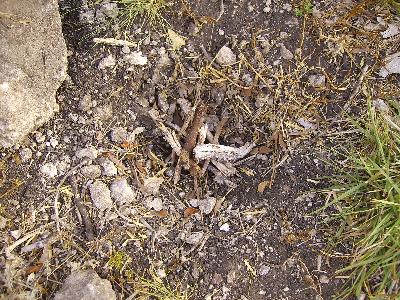
Quite often even a simple pile of debris will have numerous items hiding in plain sight. With a little practice, you will notice a number of different things, both natural and man-made, if you look a little closer.There are several very distinct objects In the picture above. There is an egg, a pill bug (the little ones that roll up into a ball), a key and a rusty can that should be fairly easy for you to spot. 


Test your skills and see if you can find them in the above picture (1.04 MB).


Got the power of observation?


See the items here: The Power of Observation-Part Two


Riverwalker

Friday, June 24, 2011

Riverwalker's Pics - Full Moon of Summer


If you do try to travel at night when outdoors, traveling during a full moon is one of the best times.


When the moon is full, the night sky is usually clearer and normally there will be very little wind. Without the harsh glare of sunlight, your visibility levels will also be better than you might expect. If you are also enduring high temperature levels, traveling by moonlight can also help you conserve water supplies that could be depleted rapidly if you are traveling during the heat of the day.


Got moonlight?

Staying above the water line!

Riverwalker

Simple Survival Tips - Leave A Note

A failure to properly communicate with others about your intentions can often have disastrous consequences. The simple act of leaving a note that explains where you are going, how long you expect to be gone, and when you plan to be back can be the difference in whether or not you survive should something go terribly wrong.


It can also help you to establish a goal for for survival. If someone knows when to expect you back, they will know to come looking for you. You will be able to set a goal for how long it will be necessary for you to"go it alone" until help will arrive. A short note left in your car or at home explaining your travel or hiking plans can make a big difference. Your odds of rescue on a desolate back country road or a wilderness hiking trail go up dramatically by the simple act of leaving a note.


If nobody knows where you are, how you plan to get there, where you are headed once you reach your destination and how long you plan to stay, you could find yourself in a very dangerous situation.


Got note pad?


Staying above the water line!


Riverwalker

Wednesday, June 22, 2011

Backyard Bushcraft - The Backyard Assassin


 These bugs are very aggressive and are not afraid to attack creatures which are much larger than themselves. They can also inflict a very painful bite if they are not handled with extreme care. This can cause a somewhat severe reaction in some people but usually will not have a lasting effect. They are an extremely beneficial bug that helps in controlling the insect population. 


Assassin bugs are ambush predators that lay waiting for their prey to come within range and attack their victims with a long proboscis that impales their prey and is then used to inject a powerful toxin that dissolves the tissues of their victims.

The above photo is an assassin bug that has not yet fully matured. Most assassin bugs are found in late June to early August and are quite common in the southern parts of the United States. 

Even simple little creatures like assassin bugs can inflict serious pain upon you if you aren't careful. Assassin bugs can occasionally be found in your home around bathtubs, sinks, and drain pipes.

Got backyard assassins?

Staying above the water line!

Riverwalker

Riverwalker's Pics - Barn Swallow Hatchlings In Nest


Barn swallows are very good nest builders. They use a combination of sticks and mud to make extremely sturdy nests for their young that are usually located in an area that is well protected from the elements. Amazingly, they accomplish this without the use of hands.


Got mud?


Staying above the water line!


Riverwalker

Monday, June 20, 2011

Bushcraft - Central Texas Style - The Stealth Campfire


There are times when you may want to leave as few traces of your presence as possible. The remains of a campfire are one of the things that will leave behind evidence of your passage through an area that is easily recognizable by even a novice to the outdoors.  There is a simple solution you can use to make a stealth campfire that will make your presence even harder to detect, even for a more experienced person who may spend a lot of time outdoors.


The first thing you will need to find in order to build a stealth campfire is a fair sized rock that is halfway buried in the ground. You may have to keep a sharp eye out for one that will be suitable for this purpose. You’ll also want to find one that can be pulled up by hand without a lot of effort or one that is easily dislodged by kicking it with your boot. A rock that is partially buried in the ground will have a nice hollow depression underneath and this makes a decent ready-made pit for a small fire. The area should also be fairly clear of grass or brush. The rock in the picture above was slightly bigger around than a football and left a nice sized impression in the ground when it was dislodged from its resting place.


You can then add some tinder and kindling to make a small fire in the depression. You probably won’t be able to build a huge fire in the depression but it should be more than enough to cook an egg or warm up water for a cup of coffee. 


When you’re through with your fire and it has burned down to pretty much nothing more than a few ashes, just douse it with some water and place the rock back into the original depression. Make sure you keep it oriented with its original position. By doing this, it will be pretty hard to tell you built a fire in that spot.

Making a small campfire in this manner is not a new trick and is one that is used quite often by many people. Just like a Dakota fire pitit can be used to make your presence a lot harder to detect.


If you think you are going to need a really big campfire, you may need to find a really big rock. Just don’t kick it with your boot to try and move it!

Special Note: Due to the extreme drought conditions and a current fire ban being in effect, an actual fire was not started in the pit.

Got stealth campfire?

Staying above the water line!

Riverwalker

Saturday, June 18, 2011

Happy Father's Day - June 2011

Hope everyone has a great Father's Day! I plan to spend some quality time with the family for a couple of days and encourage everyone to do the same. There may even be time to head over to one of the box stores to get a little surprise for Father's Day after our special Father's Day meal.


Hopefully, I'll get some nice gear for Father's Day!


Staying above the water line!


Riverwalker

Friday, June 17, 2011

Backyard Bushcraft - The Rabid Wolf Spider in Texas


In Texas, things have a tendency to be really big, both literally and figuratively. The Texas Rabid Wolf Spider is just one example of a really big spider. It is one of the largest and most common spiders found in Texas. The female, which is much larger than the male, can have a body length of almost an inch to as much as two inches in larger specimens. The males are usually much smaller with a total body length of about half an inch. This is without including their very long legs.

The Texas Rabid Wolf Spider (Rabidosa rabida) is often confused with other wolf spiders. Although there are over 60 different species in Texas alone, there are numerous differences in the appearance of wolf spiders. The rabid wolf spider can be easily identified by the stripe pattern on its body. As seen in the picture above, the thorax or front body section usually has two dark stripes. The abdomen or rear body section has one dark stripe surrounded by two smaller and paler stripes. This particular rabid wolf spider was a very large female. Yes, things really are bigger in Texas, including our spiders.

Rabid wolf spiders depend on their eyesight and blazing speed to catch their prey and don’t rely on webs like most spiders. The rabid wolf spider hunts down its prey using its eyesight and amazing speed (they are very fast and can cover several feet in a matter of seconds) to catch or ambush its prey. It then crushes them in its strong jaws (cheliceraes). Although they generally have good vision (for a spider anyway), wolf spiders still have difficulty distinguishing your fingers from an insect.

As a result, they can inflict extremely painful bites which are venomous and can be a very unpleasant experience. If a bite penetrates your skin, it can cause painful swelling and itchiness. Normally, only the very large wolf spiders are capable of inflicting a bite that will penetrate the skin. While many people only experience symptoms similar to a bee sting for a short period, it can affect some people quite differently with a bite that may take several days to heal. Generally, you won’t have a problem with these spiders since they are very shy and will run away quickly if given the chance.

 These spiders are very beneficial in helping to control the insect population and like to hang around in all the wrong places. Most people usually encounter these spiders around doors and windows in homes, basements, garages and sheds where their prey is normally found. As a result, you are much more likely to encounter one of these amazing creatures. They can also be found in backyards around rocks, leaf litter and debris.

Got blazing speed and strong jaws?

Staying above the water line!

Riverwalker

Wednesday, June 15, 2011

Bushcraft - Central Texas Style - Close Encounters of the Stinging Kind


In Central Texas, insects aren’t the only thing that will sting you. The plant life is also waiting to make your life completely and utterly miserable if you aren’t careful. Certain plants can and will ruin your day in a serious way. They wait patiently for you stumble into them unaware of their presence and by then it’s too late. You have just experienced a close encounter of the stinging kind. You have also seriously messed up and will now be paying the price for one of nature’s survival lessons.


The stinging nettle (Urtica dioica) is named for the intense stinging sensation that is encountered if you happen to be unlucky enough to make contact with it. This plant has numerous hollow stinging hairs that inject a powerful histamine that causes a skin irritation that results in a redness and a burning sensation that you won’t soon forget. The severe burning and itching sensation caused by a stinging nettle can last for 12 hours or longer depending upon your exposure. The picture above gives you a close up view of the hairs and the bulb-like structures at the base of each hair that contains the chemical that causes all the problems when you come into contact with a stinging nettle.

It’s also an equal opportunity plant. It affects everyone on an equal basis because it causes what is known as irritant dermatitis. This is in contrast to poison oak or poison ivy which causes an allergic dermatitis and may not always result in an allergic reaction from exposure.  

The major problem with stinging nettles in Central Texas is that it grows just about all year long and numerous plants can be found growing within a few feet of each other. Stinging nettles are also found in moist areas around creeks or rivers. 


Not exactly the best thing if you happen to be a Riverwalker.

Got that burning sensation?

Staying above the water line!

Riverwalker

Tuesday, June 14, 2011

Seeds for Survival - The Emergency Seed Bank


True self reliance relies on a very important factor...sustainability. Gardening is one of the best ways to maintain a sustainable supply of food for a number of years. Having a supply of seeds for your garden will help you maintain a supply of food that will be essential to your long term survival.

One of the best solutions for maintaining a sustainable supply of food is gardening. The basic requirement for a garden is having plenty of seeds available. One of the best ways to achieve this is with a supply of seeds in an Emergency Seed Bank .

An Emergency Seed Bank can provide you with everything you need to keep your gardening efforts sustainable for a long period of time. It has all the important qualities necessary in a seed bank required for growing a sustainable garden for your survival.


One of the basic requirements for any seed bank is protection. This seed bank is packaged in a compact storage case that is 6” High x 8” Wide x 14” Long and doesn’t require a large amount of storage space. Storage space can be critical and being very compact is a definite plus. It is also water-tight and offers the added feature of lockable storage to provide additional protection and security for your seeds.


Another basic requirement is a wide variety of seeds to fit your needs. With a numerous variety of seeds, you can plant a garden that will provide the variety of food necessary for maintaining proper nutrition and healthy food for your family. This seed bank also offers high quality seeds that are non-genetically modified and are non-hybrid heirloom varieties.


Proper labeling of the seed packets is also a basic requirement and this seed bank satisfies that requirement nicely. With clear and definitive labeling on the package, you will have no problems in this area and will be able to keep track of the types and kinds of seeds in your seed bank. The packaging also provides the best storage possible for your seeds to maintain their viability and also offers the option of being re-sealable even after being opened. There won’t be any need to re-package your seeds once they have been opened.

Cost is another important quality when considering a seed bank and Mrs. RW checked out this department and being the ever so reliable family accountant gave this package a green “thumbs up” when it comes to value for your money. 


Almost as important as the seeds are the instructions necessary to plant and save your seeds successfully. Not everyone has a green thumb and having guides to help you achieve success with your gardening efforts is a big plus in any situation. This seed bank also includes a Growing Guide and a Seed Saving Guide. A definite requirement if you don’t have a green thumb.

With value for your money, secure and protected seed storage in a compact package, a wide variety of seeds in a more than adequate quantity and a capability of supplying the nutritional needs for you and your family, makes this seed bank an excellent addition to the basic items needed to make your survival gardening efforts a success.


There is only one negative thing that was experienced with this seed bank. Mrs. RW is now looking at my ammo storage boxes in a whole new light. Looks like there will be a definite need for more ammo boxes to keep her from confiscating mine for her own use.

Your long term survival will require long term solutions and having an Emergency Seed Bank will help you achieve that goal.

Got Emergency Seed Bank?

Staying above the water line!

Riverwalker

Sunday, June 12, 2011

Riverwalker’s Bushcraft Pics - Changing Colors


In order to ensure the survival of many species, nature gives different species some very unique characteristics. One such creature that has this special ability is the caterpillar. Many caterpillars will change color just prior to pupation.


 Normally bright colored creatures are a sign to predators to stay away because it says “I am dangerously toxic or taste really bad if eaten.” This particular caterpillar was fairly exposed among the leaf litter and debris but was fairly safe from the exposure by its coloration. Its bright coloration was used as a deterrent to predators and worked to keep it safe, even though it was in a highly exposed situation.  Had this caterpillar been his normal green color, it would have been highly visible to predators and it would have wound up being a quick meal. The picture above shows an Imperial Moth caterpillar that is orange colored.

While these caterpillars are usually green in color, when starting to pupate these caterpillars can be found in a variety of colors. Sometimes you will see them as a bluish green, brown or an orange color depending upon their environment. Imperial Moth Caterpillars are also unique in that they pupate in the soil. This caterpillar was busy searching for some nice dirt in which to pupate. 

Nature teaches us a very valuable lesson from this example.

Sometimes it’s necessary to be able to make a change in order to survive.

Got bright colors?

Staying above the water line!

Riverwalker

Friday, June 10, 2011

Survival Semantics - Food for Thought


While many survival sayings refer to attitudes and mindset, some sayings have a very direct relation to our survival. Anyone can cross certain boundaries when faced with the critical decisions in a survival situation. It is important to remember that some boundaries serve a definitive purpose for our survival and violating these boundaries can have deadly consequences.

Hunger can be a simple but very real threat to your survival. It is an almost automatic response of our bodies. When we feel hungry, we eat. We do this without giving much thought to our food or how we would satisfy this need if situations were to change.

We sometimes eat to excess without any real need but merely because it is there. The problem arises when it is not there. We will still get hungry and we will still need to eat but it may have to be at a vastly different level than that which we are accustomed to doing.

Having a long term food storage program is one of the best solutions to this problem. A long term food storage program can also create problems of its own. This is the problem of food that has gone bad and is no longer useful or safe to consume. In a survival situation where resources may be limited, this can be a dangerous problem for survival. We have a tendency not to waste our resources and often take chances by doing things we shouldn’t.

Whether you are facing a real survival situation or just struggling with surviving on a day to day basis, there is a simple saying that relates to the safe use of food to prevent it from becoming what may be a serious threat to your survival.

When in doubt, throw it out!

Got food for thought?

Staying above the water line!

Riverwalker

Riverwalker's Gear Pics - S&W M&P 15 with Gear and Case


Tactical Rifle Case Contents:


1 - Smith & Wesson M&P 15 in .223 Caliber


5 - 30 Round Magazines


1 - Bushnell 16X32 Binoculars


1 - Pair of Safety Glasses


1 - Pair of Shooting Gloves


1 - Protective Ear Muffs


1 - Accessory Pouch with S&W Tactical Knife, Gun Cleaning Kit


Tactical Rifle Case with Magazine Compartments and Zippered Front Storage Pouch:


Case holds 5 thirty round magazines, rifle, accessory pouch and hearing protection


Front zippered compartment holds shooting gloves, protective eyewear, binoculars, 50 feet of paracord (not pictured), cleaning rods and  1 box of 20 rounds .223 caliber ammo.


Got S&W?


Staying above the water line!


Riverwalker

Tuesday, June 7, 2011

Riverwalker's Pics - Trioria Interrupta


Trioria interrupta is better known as the robber fly. It is the ultimate aerial predator of the insect world. It will swoop down on its unsuspecting prey and literally knock them out of the air. They readily attack insect prey which is much larger than themselves, including wasps, grasshoppers, dragonflies and horseflies. They will then inject a toxin that will create a gelatinous goo for their consumption.


The large, gray pattern with dark patches on the abdomen is an easily recognizable and distinctive pattern among many robber fly species in the United States. They range from the Carolinas as far west as Arizona and south to Florida. They do have a painful bite but have a preference for nice, juicy horseflies.


The photo above shows a close up view of a female robber fly with a large ovipositor that is rounded at the tip. 

Got aerial predators?

Staying above the water line!

Riverwalker

Backyard Bushcraft - Walking With Ants


You don’t need a special place or setting to practice bushcraft. All you need to do is enter your own backyard. There are numerous creatures and plants in your own backyard that can teach you some of the true secrets of nature. You need only take the time to learn the lessons of survival that nature provides for us. When you take the time to study the creatures of nature, you will begin to understand just how amazing they are and realize that nature will show you the way to survive.

Although ants are one of nature’s smallest creatures, they can also teach us some of the most valuable lessons about how to survive. There’s a simple way to discover these secrets and all you have to do is learn how to walk with the ants.  

Ants have a definite way of getting your attention, especially if you get in their way. Put your foot on or next to the wrong place and you will get a serious amount of attention from ants. In no time at all, these small creatures will get you to move that big foot of yours that has become a threat to their survival. Perhaps you’ve already learned this lesson about group survival and the strength in numbers. This can quite often be a painful lesson but its nature’s way of teaching us. Most of the lessons nature teaches us can be a rather shocking experience if you aren't paying attention to what nature is trying to tell you.

Learning to walk with the ants can teach us an even more valuable lesson. Ant trails are normally quite small but you can easily walk alongside them without much trouble. Now try to stop them as they move along this path towards their destination. Place a rock, a pebble, a leaf, a stick or any other object in their path and you will discover an amazing secret of nature. Despite the fact that this huge obstacle (to the ants anyway) is in their way, the ants will find a way past that object and continue on their journey with a fierce determination to get where they are going. They quite simply will refuse to be swayed from their goal. They will go over, under or around objects placed in their path. And if that doesn’t work, they will gather together as a unit and simply move it  completely out of their way.

Ants realize what is necessary in order to survive. It's a simple lesson taught by nature.


You never quit and you always seek to reach your goal...regardless of the obstacles in your path.

Staying above the water line!

Riverwalker 

Sunday, June 5, 2011

Bushcraft - Central Texas Style - Nature’s Engineers


When it comes to building a natural shelter, you can learn a valuable lesson from some of nature’s smallest creatures. Birds are capable of building elaborate nests for their young and their survival is dependent upon their ability to build a nest that will protect their young. The amazing thing about birds is they build these nests using only their beaks. They are the true engineers of nature.


Birds can build very elaborate nests from a wide variety of materials and place them in some very inaccessible locations. Leaf fibers, grass, and twigs are the usual components but also can include other items. They also use natural adhesives to help keep their nests together. These adhesives can be mud, spider webs or various other naturally occurring adhesives often found in certain plants. Their choice of nesting materials is an important component for proper nest construction. Their nests will also vary in size, shape, the type of materials used and construction techniques depending upon the species of bird. Sometimes you have to go out on a limb. so to speak, in order to get a decent picture. See if you can spot the natural adhesive used by many birds in the picture shown above. 


They also make use of other items to provide additional protection for their nests. Many birds include the scat from natural predators in the construction of their nests. The major reason for this is more than likely the fact that the smell will usually provide a deterrent for predators and make their nests much safer. They will quite often include fibers, leaves and twigs from certain plants and herbs to give additional protection to their nests from disease caused by bacteria or other harmful germs that could create a risk for their young.

So the next time you get a little frustrated when you need to build a natural shelter for your own protection, remember that you have two distinct advantages over one of nature’s best engineers...hands.

Got dexterity?

Staying above the water line!

Riverwalker

Saturday, June 4, 2011

Survival Semantics - The Best Survival Tool

The best survival tool is the one that is always with you and can be applied in any situation in order to make it possible to survive a variety of threats. It doesn’t matter if you have nothing in your pockets or anything in your hand if you learn to rely on your best survival tool.

What is the best survival tool? It’s your brain. It allows you to make or improvise tools that may be needed. It makes it possible for you to learn new skills or adapt to changing conditions. It controls your emotions so that sound judgments can be made or possible threats can be evaluated. Your brain makes it possible for you to survive almost anything with the proper mindset.

By expanding your knowledge, you can increase the benefits of your best survival tool. Your brain will give you the ability to improvise, adapt and overcome most obstacles. It will feed your creativity and imagination with endless solutions to a variety of problems that may threaten your survival.

There is a simple saying that will remind you of this most valuable survival tool.

Know more, carry less.

Got brain power?

Staying above the water line!

Riverwalker


Thursday, June 2, 2011

Riverwalker's Gear Pics - High Tech vs. Low Tech


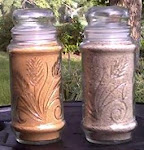
High Tech Waterproof Lighter


Low Tech Waterproof Lighter

When it comes to different forms of survival gear, there is always a tendency to choose high tech gear for many people. This is usually the more expensive option but not always necessary choice when considering different types of survival gear. If you are on a budget, sometimes it's a lot easier to use a low tech option.

Take the example of just one type of gear used by many for their fire starting ability...the lighter. There are a number of high tech waterproof lighters available in the marketplace but sometimes a low cost option is just as effective.

Got low tech gear option?

Staying above the water line!

Riverwalker


Wednesday, June 1, 2011

DIY Toys for Survival - Thor's Hammer


A disaster or a crisis can create an extremely stressful situation for children. One of the best ways to help them cope with a crisis is to have some sort of simple toy for them to play with and occupy their time. The good thing is you don't really need to spend a lot of money in order to do this. All you need is a little imagination and some creativity to make a toy.


In the picture above is Lil' RW's new toy made by RW to keep him occupied. It's simply a block of wood with a wrapped handle that resembles Thor's Hammer. It seems that this is the current "in" toy for most young boys. Since being presented with his "new" Thor Hammer, the two have become virtually inseparable.


Toys can also be used to teach valuable skills to young children.  Lil' RW has found that his "Thor Hammer" is a great tool for pounding ants, snails and other things that need pounding in his estimation. It has even taken favored status over his "bear stick". You just need to make sure they aren't pounding the wrong thing or throwing it at something that's not as sturdy.


Simple toys can be improvised from a number of items and sometimes they work better than the ones that come in a box and last a lot longer. 


It's important to remember that children get stressed during a crisis and being able to improvise a simple toy that will occupy their time and allow them to learn new skills at the same time can be a valuable skill.


Got Thor's Hammer?


Staying above the water line!


Riverwalker
Related Posts with Thumbnails