Tuesday, March 29, 2011

Stealth Landscaping - The Stealth Gate


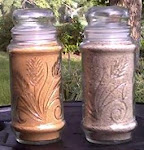
Now you see it!


Now they don't!


There are many ways to incorporate landscaping into your efforts that will give you additional security. One of the simplest things you can do is to create a “stealth” gate with some creative landscaping. This can be used to create the element of surprise for any unwanted guests who may arrive on your doorstep.

When using a little “stealth” in your landscaping you will need to utilize the element of disguise along with a little distraction. This will help to enhance the element of surprise while creating a more secure situation for you. There’s nothing quite like a little surprise to throw someone off their game and add a little bewilderment to their thought processes.

To create a distraction sometimes it’s easiest to use a little direct subterfuge. In other words, you need to be a little sneaky! Most people don’t expect the unexpected, especially when something appears rather obvious and not the least bit unusual in any way. They will see what you allow them to see and in the manner you choose for them.

Now to create a little subterfuge, let them see what they expect to see. The less they have to think about; the greater your element of surprise will be. One of the front doors to my home is rather obvious. Located just a few feet away is a gate into my backyard which is “real” obvious and stands out like a sore thumb. This is also where someone will “expect’ me to appear. It also has a large and very obvious sign saying “Beware of Dog” to create an additional distraction to focus there attention in the wrong direction. Located some forty feet away (a fairly safe distance to be if someone’s intentions aren’t known) in the opposite direction is my “Stealth Gate”.

Imagine someone’s surprise when they approach your front door and suddenly you step out from behind the bushes forty feet away saying “Can I help you?” There have been quite a few salespersons, delivery guys and others completely caught off guard in this situation.

A little distance and a little surprise will give you the additional time to size up the situation without endangering your security. Opening your door directly to what may be unwanted guests won’t give you much time to react if it becomes a hostile situation. It’s always better to keep a little distance between yourself and what may be a threat to your survival. 


Got stealth gate?

Staying above the water line!

Riverwalker

Sunday, March 27, 2011

Riverwalker's Pics - Death in the Forest


Staying above the water line!

Riverwalker

Saturday, March 26, 2011

Stealth Prepping - Hiding in Plain Sight During a Crisis - Part Two


Stealth is the act of proceeding furtively (i.e., secretly) and becoming almost imperceptible to others in the process.  This can be an invaluable skill in a survival situation. When attempting to avoid having your activities being noticed or attracting what may be the unwanted attention of others, people are usually motivated by a firm belief that there is a high probability that the discovery of their actions or movements will lead to the possibility of further trouble. In a survival situation, additional troubles are the last thing you will need.

The practical application of stealth in your prepping activities is going to require some effort on your part but doesn’t necessarily have to become a burden. During normal times, most people aren’t very attentive and will pay little heed to you or your activities. The exact opposite is likely to occur during a crisis. Many people will panic and start to act irrationally and will be capable of acts that they wouldn’t ever consider during a normal situation. It is important to remember, that in the majority of cases, the less people know about you and your activities; the safer you and your family will be during a crisis.

There seems to be quite a number of people who are currently interested in the different things preppers are doing to get prepared. This is especially true in light of some of the weird things going on in the world right now. And while their interest in your activities may be sincere, it may not be in your best interest to give out too many details. With a little effort and some common sense, there are several simple things you can start with to increase the amount of stealth in your prepping activities.

One of the easiest ways to incorporate stealth prepping into your lifestyle is to start paying cash for needed items. Cash transactions are extremely difficult to trace and don’t leave traces of you and your activities. Although only a partial number of your credit or debit card usually shows up on your receipt, your signature will often be quite easy to read. That credit or debit purchase will also leave a record of what, where and how much you purchased for anyone that may become interested in you or your activities.

Another simple thing you can do to maintain a little stealth in your prepping is to split big purchases into smaller ones by simply using two shopping carts instead of one. You can use one cart and another family member can use a second cart. Depending upon the number of family members available to help, you could even use additional carts. Don’t forget to go to different registers when checking out and remember to pay cash if possible. You should also shop at random times and stores whenever possible to avoid unwanted attention. You should probably avoid making large purchases at places where you may already be known.

You can also have a handy excuse available if asked about your purchases or activities. Keep the answer simple and uncomplicated so as not to arouse their curiosity and in most cases they won’t give you or your activities a second thought. The “I’m in charge of the meal for the family reunion this year.” seems to work very well in most instances.


In the words of Sun Tzu:

"Let your plans be dark and impenetrable as night, and when you move, fall like a thunderbolt."


Things seem to be changing quite rapidly nowadays… 

Are you ready to practice a little "stealth" prepping?


You can read Part One here:


Staying above the water line!

Riverwalker

Friday, March 25, 2011

Riverwalker's Pics - Eye See You


Eye See You


Staying above the water line!

Riverwalker

Thursday, March 24, 2011

Stealth Prepping - Hiding in Plain Sight During a Crisis - Part One


During a crisis or a disaster, people who are unprepared may literally find themselves battling each other for what few resources may be left. They will also seek out any resources they may become aware of in order to increase their own chances for survival. Being aware of this fact is important in order for you to maintain and secure your own resources during such an event.

Now there are times when a crisis may be short-lived and lasts for only a few days. This can have disastrous effects if you start to utilize any long term resources too early in a crisis. Gradually phase in the use of your available resources so as not to appear unaffected by the crisis. This is something that may get you the unwanted attention of others affected by the same crisis.

One of the best ways to do this is by using a little deception. It’s much better to have them thinking you are in the same boat and suffering the same effects of the current crisis in much the same manner as they are. You want to appear to be like them. After all, misery loves company!

There is an old saying that “Actions speak louder than words.” This holds true in a crisis or a disaster. Don’t let your own actions send a message that will be heard loud and clear by those seeking to utilize any and all resources they can find when they realize that they were caught unprepared.

One of your first considerations is the noise factor. People are attuned to sight and sound. They are two of our basic senses. Cranking up your emergency generator too early is a simple example. Believe me there is nothing ordinary about the sound of a portable generator, chainsaw, etc. running if you want to attract someone’s attention. Someone is going to hear it and realize there is something going on. Their curiosity alone will lead them to check out the source. They will also realize that there may be other resources available as well. Maybe they need fuel and it will suddenly occur to them this may be a place get some, especially when you may have obviously indicated you have plenty.

Consider using other options first in the early stages of a crisis which may turn out to be of short duration. It’s better to remove enough frozen items from your freezer for a couple of day’s worth of meals and by placing them in your refrigerator you can maintain fairly decent refrigerator temps. Use your frozen food items in much the same manner as you would a block of ice. This will help minimize the need to open your freezer which will usually hold or maintain it’s temperatures for a day or two if not opened on a frequent basis. Save the generator for when things start to reach the critical stage and the loss of your resources becomes imminent.

Another consideration you should be aware of is what people see. Simple acts like having someone see a shed or garage door open at the wrong time which may allow someone to see something you don’t want them to know about. Avoid someone seeing things or activities that may make you vulnerable. Quite often it’s the little things that will cause you the most problems.
Things like hunger, thirst or a need for more security are great motivators. People who aren’t normally very observant will suddenly be paying attention to you and all of your activities. They will be listening for changes in their environment and if you make the wrong kind of noise they will hear it. They will suddenly view you as the solution to all their problems. And just as day follows night, others will follow. Avoid activities that may reveal your strengths or your weaknesses.

If you appear to be suffering as much as everyone else, you will draw less attention to yourself. If you fail to exercise a little due diligence, you might as well put a sign in the front yard saying “I’m a prepper!”  In the battle for survival, a little deception goes a long way.

In the words of Sun Tzu -


 “All warfare is based on deception.”


In a war for survival, this is a battle you can't afford to lose.

Staying above the water line!

 Riverwalker

Wednesday, March 23, 2011

Simple Survival Tools - Weather Gauges


Weather Gauges

A set of weather gauges is perhaps one of the best survival tools you can have. Knowing the current status of weather conditions without having to rely on weather forecasts, which are quite often regional in nature, will help you be better prepared. Many times there can be a drastic change in the weather in areas that are only a few miles apart. 

Now you don't have to be a meteorologist in order to keep track of some fundamental weather conditions but you will need a few basic items to give you an accurate picture of the weather conditions in your immediate vicinity.

The first basic item you should have is a simple thermometer. This will help you keep track of temperature changes both inside and outside your home. Next a good barometer will help warn you if there is stormy weather on the way. A humidity gauge will also help you keep track of moisture levels. Knowing your humidity levels is important for maintaining your food storage items. A few simple weather gauges will also help you in your gardening efforts as well.   Weather has a huge effect on our homes, our gardens and our lifestyles.

Don't forget one of the best weather gauges that is an absolute essential item. This is a simple rain gauge that will help you monitor the amount of rainfall you receive.


It will also help you to keep... 


Staying above the water line!

Riverwalker


Monday, March 21, 2011

Stealth Prepping - The Invisible Prepper

You may not be able to see them but they are out there. Many preppers are largely invisible to the average person during normal times. They live a fairly normal and routine lifestyle not unlike many of their neighbors. The major difference is that they are prepared for most disruptions to that lifestyle while remaining basically invisible in the eyes of the people around them.

Now this scenario can change rapidly when times get tough. When people are searching out resources for their survival, they can and will notice all the little differences in their surroundings. Many will also be quite desperate and willing to do things that they wouldn’t even begin to consider appropriate behavior under normal circumstances.

Even the most insignificant detail might attract unwanted attention. This can and will be a major challenge for most preppers. If you’re the only house on the block with the lights still on, you might as well put a sign in the front yard telling everyone. They will notice you and this may not be a good thing. Remember to keep and use your essential prep items where they are less likely to attract the attention of the average person.

There are quite few things that can be done to help minimize these differences so that they will be less likely to attract unwanted attention. There are even some extreme measures that may be necessary or required in a worst case scenario. You need to remember that when things get really bad, they are going to get even worse for those who aren’t prepared.

Staying invisible during a crisis is going to be a lot harder than you may realize. It will require taking some extreme measures and not so extreme measures in order to avoid unwanted attention in a crisis.


Staying above the water line!

Riverwalker


Sunday, March 20, 2011

Natural Camouflage - The Vines Have Eyes


When studying bushcraft, one of the most necessary skills you need to develop are your powers of observation. This will allow you to see what many people do not. You will also do well to remember that even if you don't see them, the creatures in nature will be watching you. If you hone your powers of observation, you will have a better chance of knowing they are there.


The creatures of nature are all around us and sometimes... the vines have eyes.


Staying above the water line!

Riverwalker

Friday, March 18, 2011

Simple Survival Gear - The Original Bug-Out Bag

Hobo Carrying A Bindle

You have probably seen a picture of a bindle without actually realizing it. A bindle is that little bag carried on a stick by hobos. This is the bag they normally carried their relatively few and most important possessions in as they moved about the country looking for work. It was a simple piece of gear that they used for their survival. Since the economy seems to be suffering quite a bit now lately, there’s a good possibility that a few of us may need to be able to make a bindle for our own survival.

Now in the absence of a ready to go BOB (bug-out bag), a bindle just might save your bacon.

Bindles were normally about 3 foot by 3 foot but some were smaller and others slightly larger. Many times it was necessary for them to gather their belongings quickly in order to make a quick exit (i.e., bug-out). This was one of the best attributes of a bindle. They simply gathered the corners of their bindle after throwing their belongings inside, tied off the corners and they were packed and ready to go at a moment’s notice.

You can use most any type of strong, lightweight material to make a good bindle. You could use anything from a bandana to a small towel or even a sheet (don't use one of the wife's good sheets unless it's a "real" emergency or you won't survive long enough to get out of the house!). Just spread it out and throw your important items on it and tie off the corners securely (You don't want to lose any of your stuff!). Grab it and go! 


 If you are going to be attaching your bindle to a stick (i.e., a bindlestiff)  hobo style, you need to make sure it’s properly tied so it doesn’t slide down your stick. If your sticks got a hook on it, you can just hang your bindle on the hook.

If you find yourself in a survival situation and need a quick way to carry some extra items that may be needed, a bindle is a great way to make an expedient bug-out bag when needed.

There’s also another type of simple bindle that is used by a lot of people, but you’ll need to learn how to become a forensic scientist in order to properly use one of those.


Got an original bug-out bag?


Staying above the water line!


Riverwalker

Thursday, March 17, 2011

Riverwalker's Pics - A Diffrent Kind of Gator


Road Gator

Sometimes life is more about everyday survival. Try to avoid "road gators" because they can seriously ruin your day!

Staying above the water line!

Riverwalker

Tuesday, March 15, 2011

Riverwalker’s Gear - The Compact Survival Shovel


There’s usually only one way to dig yourself out of a mess in a survival situation and that’s by having a good shovel handy. The main problem is that it’s pretty hard to carry a full size shovel with you all the time. While a full size shovel can be easily carried in a pick-up or a trailer, they don’t fit very easily into the trunk of your car or on a backpack.


Whether you find yourself stuck in the snow, the mud or a bunch of loose sand, a compact shovel may be just thing to dig yourself out of a bad situation.


Having a military-style folding shovel and a folding pick version is great but carrying both can be a little awkward and a little heavy when added to the rest of the gear that you may be carrying in your pack. Been there and done that! This is where the real versatility in a lightweight and compact shovel comes in handy. You get the versatility of both a shovel and a pick with this survival tool and don’t have to carry the added weight.


 At slightly less than 2 pounds, this compact survival shovel folds up easily into a 6” pouch that can fit easily under your car seat, in your trunk or your bug-out bag. You could also carry it on your belt but even at less than 2 pounds that’s a lot of weight to added to your belt.


This particular compact shovel assembles easily with only two main components and has a very sturdy steel handle with oversize rubber grips which allow you to easily get a good grip on the handle. 


It also allows several different configurations for use as a shovel only, pic only or a combination of both by merely loosening and tightening the adjustment knob on the handle.


At a mere 16 inches in length it will also allow you to get into some pretty hard to reach places. Although a longer handle will give you more leverage, sometimes they can also get in your way if it’s needed in a tight space.


Saving weight and space with your survival gear will lighten your load and give you additional room for others items you may need as well. With a relatively low cost, it won’t dig a big hole in your pocket either!

Got digging tool for survival?

Staying above the water line!


Riverwalker

Sunday, March 13, 2011

The Survival Mindset - Positive Thinking

When faced with the adversity of a disaster or a crisis, one of the best tools you can use for your survival is positive thinking. The right frame of mind will take you a lot further along the path to survival. Your chances for survival will only increase if you learn to use positive thinking in a survival situation. Positive thinking will not only allow you to overcome obstacles to your survival more easily but will also allow you to return your life to a state of normal faster.

There are a couple of things that you should avoid in a survival situation. These things won’t help your survival mindset or your ability to think in a positive manner during a crisis.

Make every effort possible to avoid wishful thinking. It’s not very realistic. Wishful thinking may make you feel better about your situation but it won’t help your chances for survival. You should learn to recognize every life-threatening situation and act accordingly to overcome it. Don’t develop a tendency to see things with a false sense of reality and you will be better able to handle a crisis if it occurs.

You will also do well to avoid negative thinking. Negative thinking will only allow your emotions to take control of your thought processes and hinder your ability to deal with a crisis or a survival situation. You will need to maintain a “can do” attitude at all times.

If you think positively, you will avoid being discouraged by the obstacles and challenges you may be facing in a survival situation. You will also be less susceptible to irrational behavior caused by emotions which can cloud your thinking. Keeping a clear head will help you to avoid mistakes which could be costly.

Treat every challenge to your survival in a positive manner.

Staying above the water line!

Riverwalker


Friday, March 11, 2011

Survival Cooking - The Non-Volatile Solution


The temperature of water will quite often determine how long it takes to cook your food. Water is also one of the main ingredients used to cook many food items. It is also known as a non-volatile liquid. It is one of the main components when making a solution which can be used for cooking our food.

You need two main components (ingredients) to make a solution.  You will need a solvent and a solute. In the majority of cases, especially when cooking, water in its liquid state is the solvent (but not always) and solid substances like sugar or salt are the solute.

Salt and sugar are both what is commonly known as "non-volatile" solutes and readily dissolve in water to make a solution. In general terms, the volatility of a substance refers to how quickly it turns into a vapor (i.e., changes from a liquid to a gas). In most cases, substances with a boiling point below 212°F or 100 °C (the boiling point of water) are considered volatile and all others substances are referred to as non-volatile. Alcohol (rum, cooking sherry, beer, etc.) is an example of a volatile solute used in cooking, while sugar and salt (sodium chloride) are considered non-volatile solutes.

Essentially, when your water is boiling at a higher temperature whatever you're cooking in that water is going to cook faster. You're simply cooking at a higher temperature. This means that whatever you're cooking in the water will cook faster than it normally would. It is important to remember that the boiling point of water only increases slightly with the addition of salt to your pot of water and this is one of the reasons for adding salt to your pot of water when cooking food items such as pasta or potatoes.

The main purpose for the addition of salt continues to be to enhance the flavor of your food. If you really want it to cook faster, you'll generally need a bigger fire.
                                                

Got cooking solution?

Staying above the water line!

 Riverwalker

Thursday, March 10, 2011

Chickens Don't Sweat


Chickens don’t sweat. When chickens get overheated, they pant. This innocent little fact can lead to a serious loss off egg production from your chickens, especially during hot Texas summers. In hot weather, chickens quite often lay eggs that have very thin shells which are easily broken.  This can happen very frequently and often have disastrous effects on the amount of usable eggs you will get from your chickens. This is a consequence of a disturbance in their systems caused by a loss of calcium carbonate from their systems.

So what causes that loss? When a chicken pants, they are rapidly exhaling carbon dioxide and this seriously affects their bodies. This usually causes a loss of calcium carbonate in their systems which ultimately results in thinner and weaker egg shells. This is not a good thing!

There is a relatively simple solution to this problem. It's cost effective and quite simply accomplished. All you need to do to solve this problem is to make some carbonated water available for them to drink during periods of hotter temperatures. The addition of carbonated water helps reduce the loss of calcium carbonate by their bodies and will help to keep their eggshells stronger. This will help to maintain their egg production during hotter temperatures. This quite simply means you will get better and stronger eggs.

This is due to Chatelier's Principle which can be stated in more general terms as:

“Any change in the status quo prompts an opposing reaction in the responding system.”


Staying above the water line!

Riverwalker

Riverwalker's Pics - More Gators


More Gators

Got gators?

Staying above the water line!

Riverwalker

Wednesday, March 9, 2011

How to Manage Your Money Like A Man

Like it or not, it's a fact: Men and women really do face different challenges when it comes to successfully managing money. This is not to say that either gender has superior skills – rather, that each brings specific abilities to the endeavor. Here are 13 savvy tips for men to follow in beating gender-based obstacles to financial success.

Earnings:

  • Think inside the box. Men lost twice as many jobs as women during the recent economic meltdown. Formulate a contingency Plan B for the possibility of losing your job, and avoid trying to “start fresh” in a new career field. Think of jobs that are similar to the one you're doing now.

  • Make new friends. Most big-money jobs are garnered through networking. Whether it's casual or professional, start doing it now – and keep expanding your horizons.

Savings: 

·        Stash that cash. Remember that old rule about having three to six months worth of income on hand for emergency living expenses? Average unemployed time now is at eight months; that goes up to a year if you're in management, or if you're 50 or older. Plan ahead.

Investing:

  • Curb your impulses. When everyone around you is screaming “Buy! Buy!” or “Sell! Sell!”, exactly how do you make level-headed investment decisions? First, don't trade while the market's open. Second, don't take every word you hear from Bloomberg as your financial gospel. Finally, go out on the patio to read your account statements – don't read them while sitting at your computer. You need a place free from distractions where you can really focus on the numbers.

  • Impose limits on yourself. Decide how often you're going to buy and/or sell during a specific time period. Then stick to your decision. You may settle on once quarterly, or even once semi-annually. Men have been shown to trade 45% more than women no matter how the market's doing, and have had greater losses as a result.

  • Isolate your 'mad money.' Investment advisers often suggest that men set up a separate account to 'play' with – money available when a friend gives you a great tip that's sure to make a killing. This provides a sense of freedom, while maintaining discipline with one's core investments.

Assets:

·        Skimp on long-term care. Think twice before spending big bucks on this kind of coverage. Most men spend an average of one year in long-term care, as compared to four years, on average, for women.

  • Stop to smell those flowers by yourself for a while. About 40% of husbands urge their wives to retire when they do – and couples frequently pay a hefty price for that shared time. If your spouse continues working, you can put off (or slow down) tapping your savings. Better yet, you may retain access to her health insurance. Best of all, both of you may be able to postpone going on Social Security, meaning bigger benefits when you do apply.

  • Extend your pension. Take the default (joint and survivor) benefit, instead of the single-payer plan. If you die before your spouse, they'll still receive that income.

Men and women alike know that a little smart planning today means a pleasant, comfortable future. By learning to think – even if just a little – like the opposite sex, you're sure to find your financial management skills enriched, with the ultimate payouts far more rewarding than you might ever have imagined.


This special guest post was brought to you by CareOne Credit Counseling.They are an organization that provides debt help services to consumers.

Staying above the water line!

Riverwalker

Tuesday, March 8, 2011

Riverwalker's Pics - Enjoying the Sunshine

Enjoying the Sunshine
         
                                                           
Ready for a little sunshine?

Staying above the water line!

Riverwalker


Stealth Prepping - Op-Sec and Your Preps

There’s an old saying that it pays to advertise but when it comes to your preps this may be a very bad idea. Everyday life is often a battle between the “haves” and “have-nots” and if you doubt this reasoning just trying making a list of all the entitlement programs that are presently available out there. During a disaster or crisis this difference will only be multiplied and become even more obvious. Those persons who have prepared (the haves) in advance of a crisis or a disaster may become an even bigger target of those who didn’t prepare (the have-nots).

Now there are many people in the prepping community that are extremely proud of their efforts and the security and peace of mind it affords them. But unlike the proud parents that can’t wait to tell everyone about their new little family member, too much talk about your preps can be a dangerous thing in a true survival situation. The “have-nots” will be looking for the “haves” to provide for them when things get bad. This is a simple fact of nature as there will be a large number of people who are unprepared and will be looking for any way to survive that they can. While you shouldn’t be totally against helping your friends and neighbors, they should also be willing to help themselves.

Now you can still have a proper conversation about your preps with your friends and neighbors without giving away too much information. You just need to avoid the tendency of going into too much detail. As is frequently said, “The devil is in the details.”

Now sometimes the best way to hide your preps is in “plain sight”. People rarely see things for what they truly are and don’t always realize their purpose or their intended value unless you give them the specifics. Although you may want to establish “bragging rights” about your preps, it may not be in the best interest of your security.

So let’s take a look at a simple example of one type of prep that everyone has (or should have). Water is an absolute necessity in a survival situation and having an adequate means of filtering and purifying water is critical. Now a Big Berkey sitting on the counter in your kitchen is going to be pretty obvious to most anyone who happens to stop in or come by for a visit and they are probably going to have a few questions concerning it. This will be especially true if they aren't actually preparedness minded. If they are of the preparedness mindset they may actually know as much or more about it than you do! While you may have a tendency to want to tell your visitors about how great your water purification and filtration system really is, sometimes it’s better to leave out the details if they don’t exemplify a preparedness mindset. Keep your explanations simple and uncomplicated when they ask questions about something. Even though you may have the “biggest and the baddest” water filtration system in town, you probably shouldn’t stress the point to your neighbors or friends, especially if they aren’t “preparedness minded” sort of folks.

So keep things simple by keeping your explanations simple. If someone notices part of your preps, keep the explanation simple and leave out the extra details. In this case, just tell them you didn’t like the taste of your water and are trying to eliminate the problem. The main thing is not to bring too much attention to your preps by giving out too much information or too many details. Save the details for later or wait until they show a genuine interest in being prepared.

Staying above the water line!

Riverwalker

Monday, March 7, 2011

Riverwalker's Pics - Friends in Low Places


Got friends in low places?


Staying above the water line!


Riverwalker

Sunday, March 6, 2011

Mrs. RW’s Cooking Tips - Tip #1 - Cooking Corn on the Cob


Boiling is a common means of preparing many food items but it can be extremely tough on your food. While many foods are prepared by boiling, a lot of nutrients, especially the soluble vitamins, can be lost in the process of boiling your food items. There can also be a loss in the flavor and texture of your food.

One of the staple food items consumed by many people is corn on the cob. It goes with just about anything or is simply great when eaten by itself, usually with a little butter added. Now the majority of corn on the cob is cooked by boiling which can affect the taste of your corn on the cob. Boiling corn on the cob causes a loss of some of the natural sugars present in your corn. There is a simple solution to help you solve this problem.

Just add a pinch of sugar to your pot of water that you will be using to cook your corn on the cob. This won’t actually sweeten your corn on the cob but it will help prevent the natural sugars in your corn on the cob from being released during boiling. This helps to preserve the natural flavor and sweetness of your corn on the cob.

Got pinch of sugar?

Staying above the “boiling” water line!

Riverwalker

Saturday, March 5, 2011

Saving for Survival - The Part-Time Job

When it comes to economic survival, a part-time job can help defend you from economic hard times. With the rate of savings by most Americans under 4%, the extra income generated by a part-time job may be the only way for you to increase your savings or maintain your emergency fund. These extra savings may be what saves you from the effects of inflation or a sudden job loss due to lay-offs or cutbacks.

There are some drawbacks to having a part-time job, especially if you are currently employed. The main one is finding a part-time job that can fit into your current work schedule. To do so will usually require you to work those times when you are usually off or at times others don't want to work (such as nights, weekends and holidays). You'll be giving up some free time but gaining in the cash department. This will allow you to save some extra money that can help to cover the numerous little expenses that tend to eat away at your regular income or your emergency fund.

So where do you find the time? Let's consider some hard facts that many people fail to realize. First, there are 168 hours in a week ( 24 hours X 7 days = 168 hours). That's a lot of time and if managed properly can allow you to do a lot more than you realize. Now let's figure where it goes!

The average person normally works a 40 hour week and this leaves you 128 hours a week (168 hours - 40 hours = 128 hours) to do other things. Figuring you would like to get a little sleep each week that's going to use up another 56 hours (8 hours X 7 days = 56 hours) on average. It could be a little more or a little less...depending on your sleeping habits. This leaves 72 hours.

Figuring in some average travel time for the commute to work of 10 hours ( 5 days X 2 hours daily), this leaves 62 hours (72 hours - 10 hours). Another area to cover is the time spent eating meals and figuring 1 hour per meal and 3 meals a day will use up another 21 hours (3 meals X 7 days = 21 hours). this leaves a grand total of 41 hours. Figure another hour per day for the necessary hygiene practices and this leaves 34 hours.

That's 34 hours of free time each week. Using just a small part of that time for a part-time job can help you during tough economic times. It's a lot easier to give up a little free time (i.e., less TV time for most people) than it is to do without something you may need more.

Consider the positive effects of using only 8 hours a week for a part-time job. Even at minimum wage, this could be as much as $50 to $60 a week ($2500 to $3000 a year) extra to go into savings or to cover miscellaneous expenses while still leaving you 26 hours a week to do other things.

Got part-time job for survival?

Riverwalker

Friday, March 4, 2011

Shooting Practice - Correcting Shooting Errors

The most important thing about practice with your firearms is learning what you are doing right and what you are doing wrong. While not everyone has the time or the money (ammo is expensive) to become an expert marksman, you can learn to make your first shot count.

RW, Jr. and I did some plinking the other day and we both have some problems that we need to work on some more. We both suffer different kinds of shooting errors and practice is the only way to help correct them.


We were shooting at 8x12 printed paper targets from a distance of slightly more than 20 feet from a standing position. We were using .40 S&W Hi-Point JCP automatic pistols with a ten round magazine and 100 rounds of Winchester .40 S&W 165 grain FMJ for our practice. Our results were fair as far as our first few shots were concerned but subsequent follow-up shots showed us our main shooting problems.

My main problem is tightening my grip when pulling the trigger which causes my follow up shots to trail down and to the right. Although my first shot was on the money and my second shot was fairly close to the bullseye, my subsequent shots trailed off badly. RW, Jr.’s first shot was a little high and to the right but his second shot was dead-on and almost in the exact place as mine. His subsequent shots trailed down and to the left indicating that he has a tendency to jerk the trigger a bit. We both have a tendency to push forward a bit as well.

Practicing with your firearms will help you learn what your problems are and what you need to do to correct them. Knowing your own abilities and the handling characteristics of your firearm are important in order to be able to use them safely and properly when needed.

Here is a link to a free shooter's correction target for you to download:

Free Shooter's Correction Target Download

Remember to practice safety at all times when using your firearm.

Got shooting practice?

Riverwalker

Thursday, March 3, 2011

Riverwalker's Gun Pics - Forty Caliber Firepower

RW, Jr. and myself spent some time doing a little target practice yesterday. We had a couple of Hi-Point .40S&W JCP pistols that we were checking out. It had been a while since we've had a chance to do any shooting practice. It seems like work has a way of taking up most of our free time. We did have a pleasant surprise with these inexpensive little(?) pistols. We ran about sixty rounds through each pistol and then had to go put some blades on the lawnmower so RW. Jr. could cut the grass.

Got ugly gun?

Staying above the water line!

Riverwalker

Wednesday, March 2, 2011

The Domino Effect


It appears we may be seeing what is generally referred to as the Domino Effect. This is basically where numerous events are linked together and occur over a very short period of time. One of the most relative factors about the Domino Effect is that it actually involves two main theories. The Domino Theory requires basically two things to start the Domino Effect in motion. That is an independent action of some sort that will lead to the destabilization of its neighbors (the other dominoes). Surprisingly, it only takes a very small amount of energy to start the dominoes falling, but once started, that force becomes multiplied with each successive event until all the dominoes fall.

All one has to do is take a look at current events around the world to realize that we may be seeing a classic example of the Domino Effect. This is just one of the dangers of a global economy that many people may fail to realize. It could be the simplest of events that has put the dominoes in motion and could very well be related to a rise in the price of food or fuel or the amount of unemployment people are experiencing. Whatever the original cause may have been, once the dominoes start to fall it will take a major event to break the chain (i.e., some of the dominoes refuse to cooperate and therefore don’t fall stopping the chain of events).

Cooperation of its neighbors is the primary energy source that powers the Domino Effect and without it all the dominoes may not fall. When considering current events now happening on a global basis, there are a lot of dominoes, so to speak, that may have already fallen. Hopefully, they may not all cooperate.

Staying above the water line!

Riverwalker

Disclaimer: The context of this post is a personal opinion expressed by this author.

Related Posts with Thumbnails