Monday, October 31, 2011

Riverwalker's Pics - More Fast Moving Water


Staying above the water line!


Riverwalker

Sunday, October 30, 2011

Survival Skills - Conserving Resources in a Crisis


Learning to be innovative in the use of your available resources can be accomplished in several different ways. Recycling is one of the easiest ways to become innovative when your resources may be limited. Learning to save those items which can still be used in a functional manner will only make it easier if you are forced into a situation where you may have limited resources.

Alternate uses for items are sometimes readily apparent when you are considering whether to discard or save an item. At other times, they won’t exhibit a functional quality for alternate use. Not because it isn’t there but more likely because the need may not be.

Perhaps it’s an empty jar that’s suitable for use in canning or it may simply be an old pair of boot laces that can be used as cordage. These are just a couple of examples of alternate uses that are easy to recognize. Many uses are not as easy to recognize. The old saying “Necessity is the Mother of Invention.” often comes into play when your needs become critical.

Giving a little extra thought to the possibilities for the use of an item will sometimes help you to see an alternate use that is totally different from its original purpose. That old t-shirt can become cordage, a signal flag, and an emergency sling for a broken arm or gun cleaning patches. That old pair of boots suddenly becomes leather for making a sheath for your knife. An empty jar or can becomes a lamp or candle holder. While different from their original use, it still allows them to be used for a functional purpose in order to solve a need.

Always take the time to ask yourself this simple question before you discard an item.

Can it serve a useful purpose in a similar or different manner to solve a need?

Got recycled items for survival?

Staying above the water line!

Riverwalker

Saturday, October 29, 2011

DIY Survival Gear - Making an Improvised Oil Lamp


1. Use an empty can with the lid removed. This works best if you use a safety can opener that removes the rim and lid in one piece.


2. Punch a hole in the center of the lid to insert an improvised wick for the oil lamp.


3. Fill the can with used cooking oil.


4. Roll up a piece of old cotton material to make a wick (a piece of an old t-shirt works good for this) Dip the cotton material in the used cooking oil. Insert the corner of the cotton material through the hole in the lid.


5. Place the lid with improvised wick back on top of can and light.


Got improvised oil lamp?

Staying above the water line!

Riverwalker

Survival Resources - Innovative Thinking for Survival

Limited resources are always a problem during a crisis or disaster. Existing supplies always seem to vanish quickly no matter how well you work to conserve them. Finding replacement items can be a difficult and sometimes seemingly impossible task. A little innovative thinking on your part can make this task less difficult.

Unfortunately, innovative thinking has two enemies that work against it. Those enemies are change and routine. It is a well known fact that most persons become quite comfortable with things in their life and any change is not readily accepted. If you have to change jobs, move to a different area or take a different route to work due to construction, these are changes that can affect the normal routine of our daily lives and any interruption in our normal routine can be difficult to adjust to in a proper manner. This is where innovative thinking can help you prevail in a crisis.

Because of the “comfort factor” accepting change can be a difficult thing, especially if it causes us to vary from the “normal” routine of our daily lives. Changing the way we look at things will require a little innovative thinking on our part in order to restore normalcy in our lives.

One of the major changes in our normal routine during a crisis is the lack of resources. Resources are often severely limited by a number of different factors which we have little or no control over during a crisis. Transportation of goods may be interrupted, water sources may become contaminated or emergency services may be limited. You will need to find other means to accomplish things in order to restore your normal routine and minimize the effects of that change.

Changing the way you look at your resources is quite often a very simple process. Keeping things simple is one of the easiest ways to avoid making a task into something that may be almost impossible to accomplish with limited resources. Don’t allow your thinking to create arbitrary limits on your resources. Here are some simple survival tips to assist you in being a little more innovative in your thinking process during a crisis.

Survival Tips for Innovative Thinking


1. Think of everything as a resource.

 Although the need for an item may not be readily apparent, you don’t want to find yourself in a position where you could have used that item to serve a useful purpose. Even the smallest and most insignificant item may be needed in a crisis to meet your needs.

2. Think of everything as a multi-use item.

Many times items can be used in a different manner to achieve the same or similar results.  Sometimes they can be used in a different manner to achieve different results. Items can often be used to serve a similar purpose that is comparable to their original intended use.

3. Think of everything as the last one in existence.

Respect your resources. With limited resources, you will need to be extremely conservative in their use and avoid abusing your current resources that are available.


Innovation is simply a new way of using something that you have been previously using in a routine manner.

Got innovative thinking?

Staying above the water line!       

Riverwalker                                   

Friday, October 28, 2011

Riverwalker's Pics - Fast Moving Water


Although many claim that fast moving water may be safe to drink, it's always best to filter and purify any source of water before you consume it. 


Better to be safe than sorry.


Staying above the water line!


Riverwalker

Thursday, October 27, 2011

DIY Survival Gear Mods - Maximizing Candle Power - Using The Power of Reflected Light


One of the most common items used for survival to provide light are candles. You can find candles in some form in almost every household. They come in all shapes and sizes and are generally quite cheap and are very affordable. Unfortunately, they don’t normally produce a very effective amount of light. In a survival situation, candles during a power outage can be an extremely useful item and are also one of the easiest items to modify in order to increase their light output to make them more effective.

The easiest way to make your candles more effective is to use the power of reflected light. Now this is not a new concept. Almost all flashlights and outdoor lights have a highly reflective surface to focus the light output. Many kerosene lamps (also known as “hurricane lamps”) had reflective mirrors positioned on the backside in order to reflect their light output to increase their effectiveness and many earlier versions had simple polished metal reflectors. 


You simply need some sort of reflective surface to increase the light output from your candle. This reflective surface can be anything from a mirror to a simple piece of cardboard covered with tin foil. It can also come from a non-functioning (broken) outdoor light fixture. In my case, the reflective panel from an old outdoor light fixture is going to be used to make a reflector that will hold a small to medium size candle and increase its effectiveness. A simple wooden frame will be added to give it stability and the means to fasten a handle on it to make it portable. It should provide sufficient light to read by or to see with when moving about in the dark.

Got recycled reflectors?

Staying above the water line!

Riverwalker

Wednesday, October 26, 2011

Riverwalker’s Top Ten Survival Tips

While it is virtually impossible to be prepared for everything that could happen, there are a few simple and basic things that can be done to help you be better prepared. When combined with a little common sense, you will be able to deal with a crisis or a disaster in a more effective manner.

Riverwalker's Top Ten Survival Tips

1. Don’t Panic - Remain calm and don't make an already bad situation worse.

2. Maintain a Positive Attitude - Positive thinking will create positive results.

3. Establish Priorities - Realize that certain things will require your immediate attention.

4. Stay Organized - Maintain an efficient plan to conserve your energy and your resources.

5. Stay Informed - You don’t need any last minute surprises during a crisis or a disaster.

6. Keep Others Informed - This will help limit others anxiety about the situation.

7. Be Aware of Your Surroundings - Things can and do change rapidly in a crisis.

8. Know Your Limits - You may require assistance to achieve your goals for survival.

9. Conserve Your Resources - It might be a while before more resources can be obtained.

10. Failure Is Not An Option - If you give up, you lose.


Staying above the water line!

Riverwalker

Monday, October 24, 2011

Riverwalker's Pics - Stepping Stones


Stepping Stones


Just another way to keep....

Staying above the water line!

Riverwalker

Sunday, October 23, 2011

Survival Resources - Broken Blades - Part One


In a survival situation, it will be important to utilize every item that may be available. One of the major items that will be needed is a blade. Unfortunately, different types of blades are sometimes required to cut different types of materials. One type of blade that can be added to a survival kit, a GHB or a BOB is also one that breaks frequently.
                                                                                    
A simple hacksaw blade can be extremely valuable if you find yourself in a situation where you may need to cut a piece of metal, pipe, cable, etc. While carrying a full-size hacksaw will solve this problem, it’s not very efficient because of its odd shape. The good thing is you don’t need to carry a full size hacksaw when a broken piece of a hacksaw blade will get the job done but may take a little bit more of your time to accomplish the same task.

Hacksaw blades have a tendency to break quite easily. Even though a broken hacksaw blade won’t be of much use in its normal role, the broken piece can still be a valuable asset for your survival. That broken piece of hacksaw blade can still serve a purpose and can be easily included in your survival kit or BOB.

Got broken blades?

Staying above the water line!

Riverwalker

Saturday, October 22, 2011

Survival Gear Bargains - Advanced Eye Protection - Advancer V12 Goggles


Quality survival gear can be expensive. If you keep a sharp eye out for bargains, sometimes you get really lucky. Here is a piece of survival gear that was found at a bargain price. At the time, it seemed like a pretty good deal for the price. After all, another pair of safety goggles might come in handy. As it turns out, this was a super good buy on a piece of high quality gear.


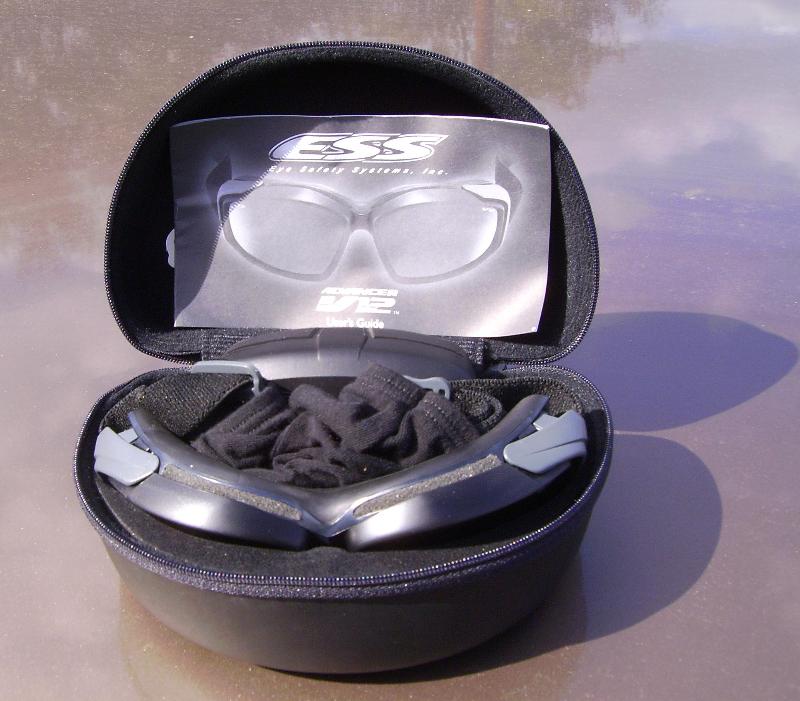
While browsing a fairly non-descript yard sale (they all look pretty much the same), there was a simple looking case sitting on a table that was partially covered by another item. A closer check revealed that it was a new looking case with a pair of goggles inside and a spare set of lenses.  The little tag said it was only five dollars ($5) and was quickly purchased by yours truly. The next thing was to find out if these goggles were a bargain or just another addition to my pile of survival stuff.


Now it was time to Google for goggles and find out what my $5 purchased. To my surprise, these turned out to be military grade ballistic eyewear that runs $100 or more when purchased new.

Here are some of the features of these goggles:


Standard Features of the ESS Advancer Series

Extra-wide field of view

Optically-correct polycarbonate lenses for distortion-free vision

Lenses are extra thick with 100% UVA and UVB protection

Premium Clear Zone anti-fog / anti-scratch coatings

Goggle lenses have very high impact resistance that is beyond the ANSI Z87.1 requirements and above the level of the US Military spec: MIL-DTL-43511D

Clear and Smoke Gray lenses included with all military products

ESS Modular Technology allows for easy replacement of all product components

ESS eyewear features high-impact polycarbonate lenses, which can stop a shotgun blast from 35 feet.

Here is a link to the product:


There are bargains out there and if you look closely, sometimes you’ll get lucky and find a great piece of survival gear.

Got goggles?

Staying above the water line!

Riverwalker


Thursday, October 20, 2011

Survival Philosophy - The Ripple Effect


Your survival is heavily influenced by your reaction to a crisis or a disaster. This creates a “ripple effect” that will quite often determine the outcome. Just like the calm waters of a pond can be disturbed by a single stone, your life can also be disturbed by the smallest of events.

Quite often we fail to realize that even the simplest of actions on our part can create either a positive or a negative effect on our lives. The old saying “the devil is in the details” reveals a serious truth about our chances for survival should the worst happen. Our failure to maintain a proper focus on the simple things in our life can often lead to a situation that will create a catastrophe of our own making.

A failure to properly rotate your food storage, perform simple but routine maintenance on your vehicle or forgetting to leave a note to keep others informed of your whereabouts could all lead to bigger problems. It’s important not to place yourself in a situation where your own actions can create a “ripple effect”.

If you need to “bug-out”, it’s a lot harder if you have to change a flat tire first. Wishing you had left someone a note when you find yourself stranded in an unfamiliar place won’t help your situation. Even a first aid kit with expired medications isn’t going to be very helpful either if you find yourself with a minor medical emergency and a lack of the proper means to handle it.

You should realize that even the simplest of things can have a serious effect on our lives if left unattended. Avoiding the “ripple effect” will only make you better able to handle a major crisis. Sometimes it’s the little things in life that create the biggest problems.

Got ripples in your pond?

Staying above the water!

Riverwalker

Wednesday, October 19, 2011

Riverwalker's Pics - Bubbles


Just one more thing that is...


Staying above the water line!


Riverwalker

Monday, October 17, 2011

Guns and Gear Test - Part Two - 7.62x54r Ammo - Quantity vs. Quality


In a check to see if using quality ammo in my Mosin-Nagant M91/30 rifle would make a significant difference, here are the test results. First off this was by no means a professional test and was a very simple comparison of ammo for my own purposes.  Depending upon your own skills and abilities, you may have different results. 


The rifle used was my Mosin-Nagant M91/30 rifle and some 7-62x54r 180 grain FMJ ammo which was obtained from Bulkammo.com. The source of the bulk ammo was a local gun dealer. The rifle had iron sights which were set at 100 meters (110 yards). This was also the distance to the target.
Five rounds of bulk ammo rounds were fired at the target and the results checked after each set. This was followed by five rounds of quality ammo. The rifle was also cleaned after each set of five rounds (the magazine capacity) were fired. A total of 20 rounds, 10 rounds of bulk surplus ammo and ten rounds of quality ammo were fired during the test.


All test shots were fired with iron sights from the kneeling position using the bipod on its shortest setting. There were no additional aids used other than a small table (see pic) as a gun rest. It was a clear day and the temperature was in the low 90’s with little or no wind.

A new paper target was placed on an old corrugated plastic sign after each set of rounds were fired.  Here are pics of the different targets with the results of the test rounds.


The first five rounds of quality ammo. All five rounds were on target but no direct hits.


The second five rounds of quality ammo. Four rounds were on target with one near miss (lower left which is not circled).


The first five rounds of bulk ammo. Two hits on target and two near misses (one low and one to the left of the target).


The second five rounds of bulk ammo. Two hits on target and two near misses (both low).


Here are my thoughts on the results:

1. There were no failures or jams with the quality ammo.


2. A total of nine hits were made on the target at 100 meters out of the ten rounds of quality ammo that was used.

3. A total of four hits were made on the target out of the ten rounds of the bulk ammo used.


4.There were a total of four cartridges with split necks from the bulk ammo. This was a bit unusual and was not previously experienced to this degree.


5. One jam was experienced when the primer cap separated from the cartridge and caused the bolt to hang up. 


6. A quarter-sized target is a lot harder to hit at 100 meters with iron sights than you may realize. 


7. My  Mosin-Nagant will need a scope to take full advantage of its capabilities.


8. Your son doesn't mind doing a little "plinking" with your rifle and your ammo afterwards.

9. The custom stock makes the recoil a lot more manageable. 

10. Sometimes you have to pay a little extra to get more.


The fact this ammo was reliable and had shown itself to be fairly accurate in this simple comparison test makes this 7.62x54R ammo a good choice for use in my Mosin-Nagant. While the cost is somewhat higher, the reliability and accuracy of the rounds fired more than compensate for this factor. The rifle was also significantly easier to clean because the quality ammo was non-corrosive.

Hopefully, there will be time in the near future to repeat this test and see if similar results are obtained after a second test.


Got 7.62x54R?


Special thanks also go to RW, Jr. for his help with this gear test. Thanks Jr.!


Staying above the water line!


Riverwalker


Sunday, October 16, 2011

Riverwalker's Pics - Riverwalkers


Riverwalkers


Staying above the water line!


Riverwalker

Saturday, October 15, 2011

Backyard Bushcraft - Natural Body Armor


          Nine-Banded Armadillo Foraging

                                                                 
The art of bushcraft involves many things. Learning about those creatures in nature that we share our surroundings with is an important part of the process. Many creatures have developed special abilities that are unique or have adapted in special ways to their environment. One such creature is the nine-banded armadillo which is found in many parts of the southeastern United States.


Nine-Banded Armadillo at Dusk

The most unique characteristic about the nine-banded armadillo is that it has natural body armor. This characteristic combined with their surprising speed and the ability to quickly dig a hole to hide in can make it virtually impossible to catch them. Once they get dug in, it is extremely difficult to dislodge them and most predators will quickly give up and search for an easier meal. Many armadillos also have numerous burrows throughout their territory that they inhabit on a frequent basis.

They generally feed at dusk or in the early evening hours and forage mainly for insects, grubs and worms. Their grubbing can cause extensive damage at times and they have an appetite for eggs. If you are raising chickens, this can be a problem if you have armadillos around your area.

Their meat is edible and the taste is somewhat similar to pork and even though they have natural body armor, they are not “bullet-proof”. They are also quite often hunted for their meat. Nice to know that you can have a little variety in your "survival" diet.

When searching for armadillos, it’s best to wait for them to show themselves. Abandoned armadillo burrows are often used as homes by skunks and rattlesnakes. If you aren’t careful, you might find yourself encountering something altogether different than you expected.

The nine-banded armadillo (the actual number of bands can vary) has another very unique ability. It has the ability to inflate its intestines which allows it to simply float across rivers and streams. This makes it one more of nature’s creatures that are...

Staying above the water line!

Riverwalker

Riverwalker's Pics - Wheel in a Tree


Looks like nature wins this time!


Staying above the water line!


Riverwalker

Friday, October 14, 2011

Survival Gear - The Survival Vest - Part Two - Body Armor


Depending upon its rating, a “bulletproof” vest or in more correct terminology, body armor, will help to protect you from the risk of injury or death from a majority of ballistic threats that you may encounter. While normally not a requirement for everyday use, in a worst case scenario body armor may give you an additional safety factor. It is important to remember that there are many cases in which the amount of protection derived from using body armor may be limited due to various other factors. 


These factors may include, but are not limited to:

1. Rifle ammunition.

2. High velocity pistol ammunition.

3. Pistol ammunition fired from a rifle.

4. Armor piercing ammunition.

5. Objects with sharp edges or points.

6. Injuries due to ricochet or deflection.


7. Exposure of body parts not protected by the armor.

It is also important to remember that any unusual type of ammunition or other special situation can defeat body armor. There is also the distinct possibility that you will suffer some form of blunt trauma or internal injury as a result of being shot. Even with body armor, there is always a risk that you will suffer some type of serious injury or death if you are shot.

Body armor reduces the risk of injury or death. It does not make you invulnerable.

The concealable body armor in the above pictures is from Point Blank Armor and is Level 111A and is a type commonly used by many law enforcement and corrections officers.

The link below lists the threat protection for different levels of body armor:


Got body armor?

Staying above the water line!

Riverwalker

Wednesday, October 12, 2011

Riverwalker's Pics - Stealth Riverwalker


Riverwalkers can be hard to see at times...especially if they are standing still.


Staying above the water line!


Riverwalker

Tuesday, October 11, 2011

Survival Gear Test - The Lifestraw Personal Water Filter


Water is necessary for your survival. Although you can go an extended period of time without food, you won’t last long if you fail to stay properly hydrated. Severe dehydration is one of the most common dangers in survival situations that people are not prepared for properly and as a result, many people become victims of the devastating effects of dehydration. Even if you find a small puddle of water, you still have a serious problem if the water is unsafe to drink.


Even if you find a source of water, the safety of that water for drinking purposes may be questionable and the Lifestraw can help solve that problem. At a filter rate of .2 microns, it will handle most anything except for waterborne viruses. Recent rains left a few places that made an excellent source of water for my test of the Lifestraw.


In order for it to be considered a fair test, a waiting period of three days produced no ill effects from my use of the Lifestraw. No effects from dysentery, diarrhea or nausea were experienced. It worked and worked as designed to filter and purify a questionable water source. The water source looked fairly decent but was still questionable.

It does require some effort on your part but works quite simply. To use it requires only that you suck water through it like a straw but it does require a little effort to get it started. It reminded me of one of those thick milkshakes that takes a while to get it started but eventually gets sucked up the straw. Just insert the bottom into the water source and suck through the mouthpiece. That’s all you have to do to make it work. 


It’s comparable in size to a small Streamlight Stinger Flashlight but weighs significantly less than the flashlight.


To clean your Lifestraw simply blow through the mouthpiece to flush the excess water out and give it a good shake or two. It would also be a good idea to flush it with properly treated water before storing. It has a shelf life of three years (per the manufacturer) and will safely filter and purify over 250 gallons of water. It also has caps that cover both ends of the Lifestraw and comes with a safety lanyard. The lanyard comes off easily if it becomes entangled or hung up. All it takes is a slight tug to remove it completely.


Its light weight (only 2 ounces) was impressive but also makes it somewhat vulnerable to rough handling. You will need to be careful not to bang it too hard against other objects in order to avoid breaking the plastic filter enclosure. There are also no moving parts or items that need to be replaced. It comes in a sealed package with a complete set of instructions for its care and use. Both my Lifestraws shipped quickly and arrived as stated by Eartheasy.com from which they were obtained.  At a cost of less than $20 (USD) per Lifestraw , this is a great piece of survival gear for everyone.

Staying above the water line!

Riverwalker

Riverwalker's Pics - Point Bolivar Lighthouse


Here's an aerial view of the Point Bolivar Lighthouse at Galveston Bay.


Staying way above the water line!


Riverwalker

Saturday, October 8, 2011

Survival Gear - The Survival Vest - Part One


The clothes you wear can often make a difference in your ability to survive. It is often the first line of defense for your body from the elements of nature. Most survivalists know that the proper clothing can make a big difference. It can also allow you to carry extra items in a simple and easy manner. These extra items may also be critical to your survival. One such item of clothing is the survival vest.


Vests vary in their type and use and there are certain conditions that need to be satisfied if you are considering making a survival vest. You will want it to have certain basic qualities in order for it to perform the necessary functions that will help you to survive. Many vests if utilized properly can serve additional needs as well. While many vests are quite specialized (i.e., tactical vests), there are many vests that can be used to serve in a multi-functional capacity.


In most situations, a full-out tactical vest is not very stealthy and may be impractical if you wish to be less conspicuous to others who may be around. Choosing a survival vest that will draw less attention but that will still serve your needs will make a lot more sense from a practical standpoint. It should also function well in several basic areas in order to avoid problems that could complicate a survival situation. Here are some of the qualities you should look for when choosing a vest for survival.


Basic Qualities for a Survival Vest

1. Zippers - Every good survival vest will need heavy duty zippers that won’t fail at a critical time. Some vests will need to have zipper pulls added to increase their ease of use.

2. Pockets - It should also include two types of pockets. The first type of pockets is those with zippers. This will enable you to secure critical gear items in a safe and secure manner. The second type of pocket your vest should have is ones with Velcro closures. This type will allow easy access to your other gear items.

3. Reversible - Having a vest that is reversible is also another good quality. You may even opt for one that has a removable lining. In either case, it will make your survival vest more functional. The main advantage of a reversible vest is that you will often have additional pockets on the inside of your vest as well as the outside. If the colors are right, it may even help you blend in with your surroundings.

4. Compatible with the Climate - It should also be able to function well in different climates. It may even be necessary to have survival vests that are designed specifically for your climate ranges, especially if you suffer extreme climate changes either in summer or winter. It may also be water-proof to a certain extent and this will give you an additional measure of protection.

5. Colors - The color(s) of your survival vest should allow you to blend in whether you are in an urban situation or a wilderness setting. Extremely bright colors may bring unwanted attention or make you stand out in a crowd.

6. Comfortable - A survival vest should also be comfortable and allow good freedom of movement. It should fit easily over existing clothing without restricting your normal range of movement.


My survival vest that is pictured here has a drab olive-colored fleece inner lining which is reversible and has heavy duty zippers on three pockets and Velcro closures on the other five pockets. The outside of the vest is a medium black color. The vest has five pockets (3 large and 2 small) on the outside and three pockets (2 large and 1 small) on the inside. This is a sufficient number of pockets to carry my needed gear items. There are three zipper pockets and two pockets with Velcro closures on the outside and three inner pockets with Velcro closures. There are no compartments or pockets on the backside as this may be a hindrance if carrying a backpack.

 It also has an adjustable drawstring on the waistband which allows it to be secured more tightly during cooler weather and is also a source of emergency cordage if needed. The inner fleece lining is sufficient for most of the cooler temperatures in the fall and winter in my area and is the primary time that it is used. This allows me to carry my survival gear discreetly and without drawing additional attention to myself. A different lightweight vest is sometimes used in the summer during warmer temperatures.

Got survival vest?

Riverwalker
Related Posts with Thumbnails