Saturday, April 30, 2011

Preparing a Survival Cache

Most people that have been paying any attention to the news lately would likely agree that things have been precarious to say the least. From natural disasters like tornadoes, earthquakes and tsunamis, to man-made ones such as wars, revolutions and catastrophic industrial accidents,  it’s sometimes hard to dismiss the words of those that believe that this era of civilization is coming to an end. Regardless of how credible you believe these claims are, even the most skeptical would agree that it’s a good idea to be prepared for a life threatening disaster.

One of the most basic parts of preparation has always been to have the proper supplies ready. One increasingly popular strategy has been to bury a survival cache.

A survival cache is basically just a survival kit in a strong sealed container that will allow you to bury it. It should be strong and well-sealed so that its contents will be ready when you need them.

Necessities to include:

For my cache, I’ve chosen to include what I consider to be basic necessities: Non-perishable food, bottled water, warm clothing, first-aid supplies, a tent, a warm sleeping bag, a radio, a good knife, a multi-tool, a quality LED flashlight, headlamp or lantern and extra batteries. I would also include some basic fishing and hunting supplies.

This may seem like a lot, but these items are invaluable should you need them, and there’s no rule that says you can’t bury more than one container.

Trade items:

You may also want to include some items simply for their potential trade value. Tobacco, liquor, chocolate, flashlight bulbs, batteries, soap, deodorant, toothpaste and any other things that, while being generally inexpensive creature-comfort items, would likely become far more valuable should they suddenly become unavailable. Human aid can quickly become the most sought-after resource, and trade items are a good tool to help attain it.

Burying the cache:

You’ll want to be sure that the container you use to bury your cache in is both structurally strong enough to withstand being buried, as well as being impervious to moisture. One common container is a burial tube. These can either be purchased, or you can make your own from something as simple as PVC pipe. If you make your own, remember to provide yourself with a way to get it open later, such as a threaded cap or by burying a tool along with it. 

It’s a good idea to store all items that are susceptible to air and moisture in vacuum bags within the cache. It’s also a good idea to include oxygen and moisture absorbers in the cache and airtight bags. This will help protect extra sensitive items such as food, clothing, electronics, batteries, and ammunition.

Bury the cache so that the top is a few feet below ground; deep enough to avoid being disturbed, but not so deep that it will take too long to dig up. Be sure to make a detailed map of where your cache is, and keep this map somewhere safe, where it won’t be forgotten. 

The hope is that you will never need to retrieve your cache, but it will be there, ready and waiting if you do.

Tom Huntington writes about outdoor survival and emergency preparedness issues for the Coast Products website. 

Staying above the water Line!

Riverwalker

Friday, April 29, 2011

Simple Survival Tips -Treating Minor Sprains and Strained Muscles


During a crisis or a disaster, you may find yourself experiencing some very simple medical problems for which normal medical treatment may not be readily available. One of the more common and frequent conditions you may experience are sprained joints or muscle strain. There is a simple solution to these problems.

What’s the solution? It’s raw potato juice. Potatoes contain several helpful and beneficial properties and are one of the most widely consumed vegetables. Since it is one of the most strongly alkaline of all the foods we consume, it works to promote a healthy balance in our system. Although the primary use of potatoes is generally internal (as a food source), it can also be quite helpful when used in an external manner.
                                                                                                                              
Applied externally, raw potato juice can be quite helpful in treating swelling and other disorders which may affect the joints and muscles of your body. When used as a sort of liniment, it can be helpful in reducing the swelling and pain associated with minor sprains or strained muscles caused by simple injuries. Simply apply raw potato juice to the affected area of the body every three to four hours until the pain and swelling are reduced or eliminated.

Got potato?

Staying above the water line!

Riverwalker

Wednesday, April 27, 2011

Simple Survival Tips - Avoiding Digestion Problems During a Disaster

There are a lot of simple things you can do to avoid problems during a disaster. One of the most important things you can do is to always drink plenty of water with your meals. Our bodies require water in order to be able to properly digest our food and without the proper amount of water you could possibly develop severe digestion problems.

Another important thing to remember is to never eat dehydrated meals without proper rehydration. Even though you may be really hungry, if dehydrated food isn’t prepared with the proper amount of water you will be extremely sorry as a result. Eating dehydrated food while it is still dehydrated will deplete the water in your body’s system and you may find yourself extremely sick as a result.

Staying above the water line!

Riverwalker

Tuesday, April 26, 2011

Resources for Survival - Improvising Multi-Use Items


Being able to improvise a needed item in a survival situation can be a critical factor in your ability to survive a crisis or a disaster. The popularity of multi-tools among the survivalist community is just one example of the multi-use items that can be found. A great many persons simply refuse to go anywhere at anytime without a good multi-tool.  

There is a simple truth about being able to improvise. All you need to realize that almost everything has multiple uses. Just take a moment to think about it and you will realize that what you need may already be there. Many simple and everyday items have more than one use and with a little imagination and creativity it won’t take you long to figure out an alternative use that can make a big difference in your effort to survive.

In a survival situation, you will need to use anything and everything you can to survive. Even if you are caught with nothing but the clothes on your back, you will still have numerous and almost unlimited resources at your disposal.

Things like a simple t-shirt can be used to make cordage, filter water, create a torch, fashion a bandage or a tourniquet. And all of this is from just one piece of clothing. Boots or shoes can become emergency water containers, the laces can become cordage and your socks can be used to make an expedient pair of gloves to protect your hands or to filter water.

It’s not only what you have on you but also what you have around you. If you need a hammer and don’t have one perhaps a stout rock will do the trick. Need a shovel but don’t have one handy? Try a good stick. They were used to dig with long before there were shovels.

Improvising in a survival situation is only hard if you focus too tightly on the intended use of an item. Remember that anything can be used as a resource. This will help you to better improvise what you may require or need for your survival.

In a survival situation, everything is a resource with multiple uses.

Staying above the water line!

Riverwalker


Saturday, April 23, 2011

Bushcraft - Central Texas Style - Nature’s Gauze Pad


In a wilderness setting, the chances of injury can be pretty high. This can create a problem if you find yourself a significant distance from qualified or professional medical help and don’t have a decent first aid kit handy. While proper medical care should always be your first choice, sometimes it isn’t available and other solutions need to be considered.

Bleeding from a cut or scrape can create a serious problem if not attended to quickly. Many times just wrapping it with a cloth can cause other problems. Pulling the cloth off to inspect the wound will often remove the scab which may have formed because it has become part of the bandage. This is the reason why many gauze pads have a non-stick coating on them to allow the wound dressing to be changed without damaging any healing of the wound that has started (i.e., pulling the scab off).

Fortunately, nature can provide a solution to this problem. If you find yourself without an adequate first aid kit, you may need to use a little of nature’s gauze to fix the problem. What is nature’s gauze? It is simply spider’s web.

Spider webs have been in use as a natural form of treatment for bleeding for a long time. The sticky coating on the web has been theorized to have an antiseptic quality due to the fact that it provides protection for the spider’s web from the effects of bacteria and fungus. Spider webs have also been shown to be high in vitamin K which can also help as a clotting agent to reduce bleeding from a wound.

Simply gather as much spider web as you can and form it into a shape sufficient to cover the wound. Then wrap the wound area tightly with a cloth or bandana to hold it in place. Don’t wrap it too tightly. The additional pressure from being wrapped with a bandage will also help to minimize the bleeding.

Back in 2007, a spider web in Texas was found that was over 200 yards across. So if you live in Texas, you shouldn’t have any problems finding a decent amount of spider’s web to treat an injury.

Got web?

Staying above the water line!

Riverwalker

Disclaimer: This information is provided solely for informative purposes and should not be considered medical advice of any kind. Always seek professional medical help for any type of medical problems.


Wednesday, April 20, 2011

Stealth Gardening - Hiding Your Garden in Plain Sight


Gardening is a great way to supplement your food supply. Unfortunately, having a big garden in the middle of your backyard may act as a beacon during a crisis. It will immediately get the attention of those who failed to put forth the effort and the time required for a garden. If they find themselves needing a food source, they will look at your garden as the answers to their problems. There is a simple way to minimize this problem.

The presence of decorative and ornamental plants is a common sight most everywhere and few people look beyond the pretty flowers. This is where you can put a little “stealth gardening” into action.

If you don’t have a fence or other barrier to help, you can simply add a garden plant here and there to your regular flower beds. The blooms from your vegetable plants will blend in with your flowering plants and still look quite normal and not be readily apparent to those who may be looking in your direction.

If you’ve got a solid wooden fence, this won’t normally be a problem since most of your yard is already hidden from view. It won’t hurt to put a few garden plants along the fence where they may be not so visible.

If you have a chain link fence, simply plant your garden on the backside of your fence line so as to hide your garden plants from normal view. Those persons passing by will only see the shrubs and plants you allow them to see. On the front side of your fence are your pretty flowering plants and on the backside of your fence are your garden plants.

Try to match your garden plants where they will be hidden by your ornamental plants. Low growing shrubs and hedges can be complemented with things like squash or zucchini plants, while taller shrubs and hedges can be used to hide plants like tomatoes or okra. Plants like beans or cucumbers can be allowed to vine along your fence line which will give them extra support.

Got garden in plain sight?

Staying above the water line!

Riverwalker


Tuesday, April 19, 2011

Dehydrated Foods - Making the Wise Choice - Part Two


Finding dehydrated foods that not only taste good but are also satisfying can be a challenge. They must also meet your long term storage needs. Like anything it’s best to sample a product if possible to see if it will fit into your long term food storage. If you or your family won’t eat it, it doesn’t make sense to stock up on it. Let’s see if making the Wise choice is the right one.


The first thing that was checked was the packaging. It was quite durable and subjected to the normal abuse one might expect to encounter. The package was dropped, folded, stuffed in a backpack and thrown around fairly harshly. Even after this abuse, it and the contents managed to survive intact. Even so, the package was fairly easy to open by hand and my Gerber STL 2.0 was kept closed this time. The cooking directions, the list of ingredients and the nutritional facts were very clear and easy to read and understand. The cooking directions stated to let it stand for 12 to 15 minutes but experience showed it was better to let it stand for about 20 minutes after mixing the ingredients with your boiling water. You do need to stir it occasionally (states this in the directions) or it will form some lumps in your sauce. The package contained four servings with 210 calories each and required 4 cups (32 oz.) of water to cook the entire package. The packages normally come packed in a plastic pail which should make them even less vulnerable to damage.

The net weight of the package was 7.2 ounces. This is in comparison to the approximately 10 ounces for a can of chicken soup with noodles. This makes a weight saving of approximately 25 %...this is due mostly as a result of being in a dehydrated form with no significant added weight due to water content. 


The cost per serving is around $1.74 and is about the same as a can of chicken noodle soup which normally has about two servings per can. This is offset by the fact that the dehydrated food packet has a 25 year shelf life as compared to approximately a year for the canned item. The nutritional content was also very good but it does contain a fairly high salt content.  You don’t need to add any salt to the ingredients. One serving will give you almost have the daily amount of salt you need. On the plus side it had a very low fat content and no cholesterol. It could have had more chicken flavor and would have made an excellent meal if you added a little real chicken.

The one thing that was added to it was pepper. Both RW, Jr. and I had to add a little pepper to it. We like our food well seasoned and a little black pepper always seems to help in that department. Otherwise, the taste was quite good and the serving portion was very satisfying. 


Overall, this product gets a rating of 4 out of 5 stars and would be more than satisfactory for most anyone’s long term food storage. The only drawback was that it could have had more chicken flavor and it would have been nice if they included a seasoning packet with some pepper.

Staying above the water line!


Riverwalker

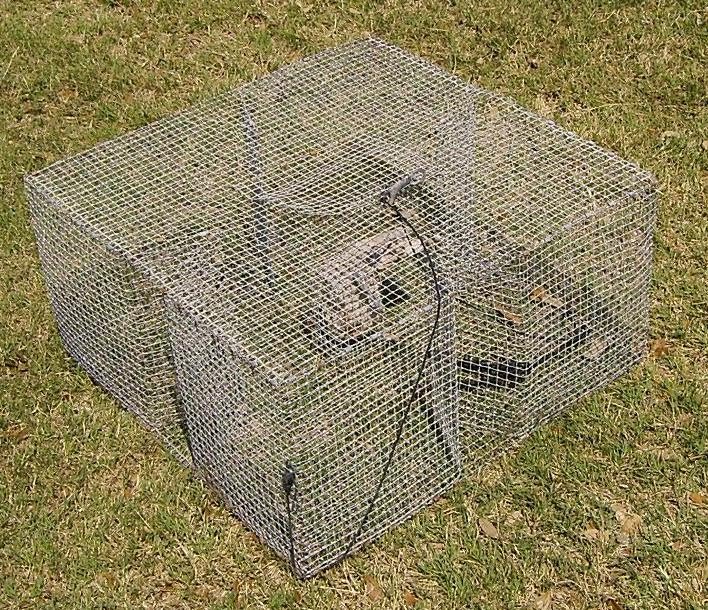
Riverwalker's Pics - Home-Made Fish Trap


Making traps has always been an excellent means for catching food in a survival situation. While traps don't guarantee that you will catch food, some traps work better than others in this regard. Being able to make a simple fish trap is one example. A good fish trap is a simple but effective means of catching food that leaves you with time to do other things...gather fire wood, build a shelter, etc. You also have an opportunity to catch more fish than you might be able to otherwise with a line and a hook. 


The design of any trap plays an important part in how effective your trap will be. The home-made fish trap pictured above is but one example of a very effective fish trap. This one has entrances on all four sides and a small bait cage in the middle. This increases the opportunity for the fish to enter your trap. It is made from simple hardware cloth and a few clips to hold it together. 


While simple in its design, it is very effective in its purpose. Simple designs that work effectively are always a good choice when making traps.


Got fish trap?


Riverwalker

Monday, April 18, 2011

Simple Survival Tips for the Disabled - Part One - Guide Dogs and Companion Animals


People with disabilities have certain additional problems they need to prepare for in case of an emergency or other crisis. Many disabled people use guide dogs or companion animals and this creates a unique series of problems that can be easily solved with a little advance planning. There will be many times during an emergency where persons using guide or companion dogs may become separated from their animal. This can create additional problems that may be avoided with the proper preparation. It is vitally important to take a few extra precautions ahead of time to prevent further problems.

There is a lot of training that is required for guide or companion animals. In addition, the owners also receive a great deal of training in the care and use of their guide dogs or companion animals. This is training that many people who come to your assistance in a crisis may not have. Even trained emergency personnel may lack sufficient training in this respect.

The first thing you will need is a good picture of your guide dog or companion animal, preferably one which includes you. Should you become separated from your guide dog or companion animal, it will be a lot easier for family, friends or emergency personnel to help you locate your animal if you become separated. Include any other identifying physical characteristics that may be specific to your animal that may not be readily apparent in the picture. Don’t forget to include their name and descriptions of their harness, leash or other items or gear your guide dog or companion animal is equipped with normally.

The second thing you will need is a list of “do’s and don’ts” for the handling and care of your guide dog or companion animal for those persons who may be assisting you. These instructions don’t need to be comprehensive, but they should contain specific information that can be read quickly and easily by any person who may be assisting you. Simple statements like, Don’t grab the harness, etc.

The third thing you will need is a list of food and care items for your guide dog or companion animal and their location. An emergency situation will not only be stressful for the persons involved but will also be stressful for your animal and it is important to have these types of items readily available for them.


If you have or use a guide dog or one that is simply a companion, it is important that you have these simple items handy in case of an emergency. If you have a friend or family member that uses a guide dog or companion animal, you should spend the time to learn the best way to assist them in an emergency.


There is also another very informative article with additional resources for the disabled at the following link:


Staying above the water line!

 Riverwalker

Saturday, April 16, 2011

Dehydrated Foods - Making the Wise Choice - Part One


Dehydrated meals that are pre-packaged and ready to go can be a real life saver in an emergency. They can be used to cook a meal in as little as 15 or 20 minutes and usually require little more than a few cups of water in the process. This minimizes time, effort and resources spent on meal preparation during a crisis.

There are a lot of choices available when it comes to using dehydrated foods. Packaging, cost per meal, nutritional content, shelf life and the manufacturing process are all important things to consider when deciding which type of pre-packaged dehydrated food you may wish to use in your emergency food storage. While it shouldn't be your only method of long term food storage, dehydrated foods should always be included as a part of any balanced food storage program.

Not everyone has the time or the ability to dehydrate and package their own dehydrated food items. This is when the ready-made dehydrated food packets can be used to fill the gap in your balanced long term food storage program.

After obtaining a sample packet of a ready-made dehydrated food packet, a decision was made to review this product and see if the Wise choice stands up when put to the test by Riverwalker.

Once the test has been completed, a further review of this item will be posted in Part Two with the complete results and my recommendations.

Staying above the water line!

Riverwalker

Friday, April 15, 2011

Survival Solutions for Persons with Disabilities or Physical Impairments

Quite often those persons who have disabilities or physical impairments are left out of the equation when it comes to being prepared for an emergency or a crisis. Persons with disabilities have much the same goal in life as any other person does but quite often have limited access to preparedness information in a useable format.

Thankfully, there is a good resource for preparedness information for those with disabilities. Documents in Braille or LARGE PRINT and videos in a sign language format (ASL) for the hearing impaired are just a few of the examples of the type of information that can be found at the following link:


The information on this website is free for anyone to use and there is no charge for their services.

It is important that our preparedness efforts include everyone. It is especially important to include those friends and family members who may have a disability or a physical impairment that may place an even greater stress on their preparedness efforts.


Staying above the water line!

Riverwalker

Thursday, April 14, 2011

Riverwalker's Pics - Texas Rattler


Many times the creatures in nature can be present and you may not see them. They are masters of the art of camouflage and blend in with their surroundings quite well. As seen in the above picture, this Texas rattler is well hidden by his surroundings and could be hard to see if you aren't being observant of your surroundings. You could find yourself in a life-threatening situation very quickly if you fail to pay attention to your environment.


Staying above the water line!

Riverwalker

Wednesday, April 13, 2011

Guidelines for Low Impact Wilderness Activities - Part Two - Behavior


Your outdoor activities will be more enjoyable if you observe a few simple guidelines for conducting yourself in a proper manner while in a wilderness setting. Your goal should be to strive to become a part of your natural environment and blend in with your surroundings.  Your behavior will make the process a lot easier, safer and create less stress for you. It will also lessen the impact of your activities upon the natural environment.

Guidelines for Behavior in Wilderness Areas

1.  Minimize the amount of noise you make while in a wilderness area. Excessive noise can disturb many animals which may have an adverse effect on them which you may not intend. Learning to travel quietly in a wilderness setting will also give you the opportunity to hear many of the sounds of nature that you might otherwise miss. There is an exception to this guideline. When traveling in bear country, it is best to use bear bells to inform bears of your presence.

2. Avoid disturbing any animals you may encounter. Do not chase or harass any animals or wildlife you may come across during your wilderness trip. You don’t want what may be their first encounter with people to be an unpleasant or stressful experience. Remember to never feed animals in the wild because this may hinder their ability to forage for their own food sources and may cause them to develop a dependence on an improper, unreliable and unnatural food source. Always keep your food items properly stored and out of reach of wildlife.

3.  When traveling through a wilderness area, utilize existing trails and designated campsites. Don’t take shortcuts or try to develop your own trails. Stay safe and avoid areas with steep slopes (both upward and downward slopes) so as to minimize the changes you may cause in the terrain. If you have to ascend or descend steep slopes while on the trail, be sure to use extra caution so as to avoid possible injury or making a major change in the natural environment.  When taking breaks on the trail, look for durable sites where you will have a minimum impact on the natural environment.

4. Avoid disturbing natural features as much as possible. Don’t disturb any cultural features or sites that may have archaeological or historical value. Don’t collect natural “souvenirs” of your trip…leaves rocks, plants, etc. where you find them.  Instead, take pictures of things with a unique interest to you or simply buy a postcard at the local souvenir shop.

 5. Use gear and hiking equipment that will have a minimum impact on the natural environment. Don't leave any camping gear or equipment behind when you leave and remember to take your garbage with you. Don't treat the natural environment as a dumping ground for your trash.

When you are a guest of nature, you should always act accordingly.

Staying above the water line!

Riverwalker

Tuesday, April 12, 2011

Simple Survival Tips - Treating Infected Wounds


Survival conditions often require safe, effective, inexpensive, easy to use and non-toxic methods for the treatment of wounds and injuries that may become infected. A lack of resources or services to properly treat simple medical conditions could become a life-threatening situation to your survival. Quite often simple resources are overlooked when seeking a solution to problems that can affect your survival.

One of the simplest solutions to this problem is sugar. Sugar has been used to treat wounds for thousands of years by many different cultures. Sugar was used widely by early Egyptians to treat wounds and the infections that often occurred as a result. Sugar can be used to kill bacteria and germs in open and infected wounds almost as effectively as the best antibiotics available today.

Sugar will also help speed up the healing process of the damaged skin tissue and reduce any inflammation that may be present. This is in addition to its antimicrobial action which kills bacteria and germs. This is accomplished by the osmosis and capillary action of the sugar granules. Powdered forms of sugar will be somewhat less effective and will require more frequent treatment and changes of bandages to achieve similar results.

Simply clean the wound area thoroughly and sprinkle sugar over the cut or scrape until it is completely covered. This can be aided by using a cream (such as petroleum jelly) around the outside perimeter of the wound to keep the sugar granules in place. Then cover the wound with a clean bandage. Use gloves if possible or thoroughly clean your hands to keep conditions as sterile as possible when treating the cut, scrape or wound.

Most injuries will require the wound to be cleaned, re-treated with sugar granules and a clean bandage applied every 4 to 6 hours to obtain the maximum healing benefits. Make sure the wound is covered completely and evenly with sugar granules and covered with a clean, fresh dressing each time.

Caution: Sugar should never be applied to openly bleeding wounds as it may actually increase the blood flow and further complicate your condition.

Sugar can be used to sweeten your tea or coffee but it can also help you as a first aid treatment for infections in a survival situation.

Disclaimer: This information is provided for informative purposes only and should not be considered medical advice of any kind. Always seek qualified professional medical help when needed.

Staying above the water line!

Riverwalker

Sunday, April 10, 2011

Guidelines for Low Impact Wilderness Activities - Part One - Planning Your Trip


Outdoor activities can be a truly enlightening experience if done properly. It will also help to give you a better understanding and knowledge of your natural environment. One of the main components for any type of outdoor activities is the proper planning of your trip. While it is virtually impossible to have a set of universal rules that cover all the possibilities when engaging in outdoor activities, following some simple guidelines will help to minimize your impact on the natural environment.  Here is a simple set of guidelines to help you plan an outdoor trip.


Guidelines for Planning a Wilderness Trip

1. Choose clothing and camping equipment in colors that are appropriate for your surroundings or the time of year (i.e., bright orange in hunting season). In general, choosing earth colors will help you blend in with the natural surroundings.

2. Carry only the equipment and camping gear you will need for your trip in the wilderness. If you pack it in, be prepared to pack it out.

3. Limit the number of people in your group to help minimize your impact on the natural environment. Large groups can cause large amounts of damage that may last for years.

4. Plan your trip to avoid seasons when the natural surroundings may be wet or muddy to avoid impacting areas during a time when they are extremely vulnerable to change (erosion, etc.) from your activities.

5. Plan your trip to avoid times where your presence or activities may disturb animals at critical times where they may be especially vulnerable to any type of disturbance (i.e., birthing season, etc.).

6. Plan your trip to make use of any readily available trails and campsites that already exist in the area. Any unnecessary activities that may cause you to go off trail or force you to camp in a new area will have a greater impact on the natural surroundings.

7. If you plan to take your pet, be prepared to keep them properly controlled or under restraint. Otherwise, it may be better to leave them at home. 

8. Make sure to have updated maps of any areas you plan to visit. This will help to lessen the chance of wandering off established trails in the area and help to minimize your impact.

Just as you would expect any visitor to your home to treat it with respect, you should also treat nature with the same respect when visiting the outdoors.

 Staying above the water line!

Riverwalker

Saturday, April 9, 2011

The Importance of Water


The world is a dirty place. We breathe in and consume numerous things that leave a lot of toxins in our body. This is where water is important to our survival. Almost everything will dissolve in water and being a main component of our blood it dissolves most of these toxins which are then flushed from our bodies.

Water with its neutral Ph is the closest thing to a universal solvent that you will find. The importance of this fact cannot be overlooked if you plan to survive for longer than a few days. While many recommend a gallon of water per day per person as a proper storage amount, this can leave you in drastically short supply of this critical resource. Not only does water help to rid our bodies of internal toxins but it also helps to remove external contaminants from our bodies as well. It works to keep the exterior portion of our bodies clean from a wide variety of things. 

Water also serves another unique purpose. It also provides the perfect medium for preparing our food. It allows the preparation of a wide variety of foods that will help sustain our bodies.

The importance of water in our daily lives makes it a critical component for survival. Without sufficient amounts of water for drinking, hygiene purposes and for cooking our food, we won’t survive anything very long.

When considering the amount of proper water storage, don’t leave yourself in short supply of this critical resource. You should plan for at least three gallons of water per day for each family member as a minimum amount to store for your survival.


All life as we know it would cease to exist without the unique properties of water that contribute to our survival.

Got water?

Riverwalker

Friday, April 8, 2011

Red Hot and Blue


In an urban environment, finding a source of food is always a challenge. On a recent road trip to the Dallas area, this was one of my main survival priorities. Fortunately, a decent food source was quickly found and the problem eliminated.

In Texas, one of the main food items required for survival by all Texans is good bar-b-que. Texans just won’t last long without it, myself included. Using my urban survival skills (and a local phone book), a good source of bar-b-que was quickly found at Red Hot and Blue. In addition to great bar-b-que, they also have dancing pigs and great blues music!

As a result, a hunger crisis was avoided and my attention could then be focused on other areas of my survival. Good survival skills are necessary when dealing with an urban environment.

May the pork be with you!


Staying above the water line!

Riverwalker

Wednesday, April 6, 2011

Road Trip

Been on a road trip for a few days and will be back home soon. Just wanted to leave a quick note for everyone that regular posting will resume shortly. Stay tuned for more "Stealth"...

Staying above the water line!

Riverwalker

Sunday, April 3, 2011

Riverwalker’s Bushcraft Code of Conduct


One of the main purposes of practicing bushcraft is to enable you to learn to become a part of your natural surroundings. While it is practically impossible to create an environment where you have little or no impact on your natural surroundings, there are several things that should be done in order to lessen the impact of your presence in nature. The manner in which you conduct yourself is an important part of practicing bushcraft.

Riverwalker’s Bushcraft Code of Conduct

1. Treat everything in Nature with respect. Remember that all things, both living and dead, serve a purpose in Nature. Make respect for nature one of your priorities.

2. Always be alert and observant of change. Even the smallest of changes in the environment can have a lasting effect. Be careful to minimize any changes you make in your surroundings by staying alert and observant for any change.

3. Know your surroundings. A thorough knowledge of the terrain, the flora and the fauna will help you maximize your ability to survive any conditions you may encounter and minimize the effects of your presence on the natural environment.

4. Kill only when necessary for your survival. Natural resources should be conserved at all times and utilized only when necessary for your survival. Be mindful not to waste natural resources through indiscriminate use.

5. Leave no trace of your presence. Leave only shadows behind and take only memories when you leave.


When practicing bushcraft, a little respect for nature will go a long way.

Got respect for nature?

Staying above the water line!

Riverwalker 

Saturday, April 2, 2011

Riverwalker's Pics - Garden Treasure


Sometimes you find more than weeds in your garden...


Staying above the water line!


Riverwalker

Friday, April 1, 2011

Mrs. RW's Survival Cooking Tips - Tip #2 - Cleaning With Fire


In any survival situation or crisis, clean water may be a resource that is in short supply. Using water to clean your cooking utensils may create a further shortage of this most valued of all resources. A simple solution to this problem is often overlooked.

Wiping down your cooking utensils and then using the heat of a fire to cleanse them will help you to save water and avoid any possible illness as a result of using contaminated utensils. The heat of a fire will effectively kill all the germs and bacteria on your utensils. This method only works if you are using metal utensils. 

In a survival situation, it is vitally important to avoid wasting your resources.

Staying above the water line!

Riverwalker


Related Posts with Thumbnails