Home Security
Staying above the water line!
Riverwalker


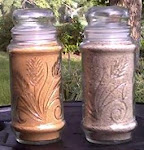
Camouflage is the art of blending in naturally and creatures in the wild are exceptionally good at hiding their presence. Many threats to your security will go unnoticed if you fail to be aware of your surroundings. Be cautious when in strange surroundings or areas that you aren’t familiar with because many times the threats to your safety and security will be hiding in plain sight.The picture above is a good example of what can be a very real threat to your security if you fail to be aware of your surroundings at all times.
Can you blend?
Staying above the water line!
Riverwalker


With a habitat that is quickly disappearing due to the increase of suburban expansion, many wild animals are quickly losing their fear of humans causing new threats to your survival. These threats can be real for you, your children and your pets.
Many suburban areas are being overrun by everything from coyotes and alligators to skunks, possums and raccoons. Many suburban areas are also being plagued by large deer populations that are destroying yards and gardens while creating traffic hazards as well. More remote suburban areas have additional hazards from even larger predators that may include wolves, bears and mountain lions depending upon the area.

Just remember that many of these animals are predators by instinct and will view you, small children and your pets as little more than their next meal. Coyotes in recent years have become especially bad about this in many areas as they have started hunting for food and prey in suburban areas. They are quite often infected with rabies creating an additional hazard.
You can read about the numerous coyote attacks on people and children here:
Drawn by food scraps in open dumpsters, uncovered trash bins and feed dishes for pets left out with easy access, these wild predators are taking advantage of easy meals provided unknowingly by many suburban homesteaders. In the absence of an easy meal, they are also viewing small pets and even small children as a new food source.
While smaller animals such as skunks and raccoons can be quite attractive to young children, they can also carry rabies and other diseases that can be a very real hazard to you and your pets. The treatment for rabies can be a painful experience and a hard lesson for anyone, including a young child, to learn.
One of the best things you can do is to notify animal control officers or a good pest control service in your area of any sightings. They normally monitor activities of this nature and are usually more aware of increasing populations of wild animals in suburban areas and the proper way to rid yourself of this type of hazard. You can also make sure not to leave pet foods out with easy access for wild animals, keep dumpsters closed and trash bins covered.
Got wild suburban predators? Don't become their next meal!
Staying above the water line!
One of the most important priorities for your survival is a supply of water that is safe for consumption. While many people that are in reasonably good health can go three or four days without water, those persons with weakened or compromised immune systems will need good drinking water a lot sooner than the average person. It is therefore important to take this factor into account when figuring your water storage needs.
Another factor that can have a bearing on your everyday survival is the fact that most municipal water systems contain very low levels of some bacteria that are resistant to chlorine disinfection or filtering techniques. While most healthy people don’t have a problem with these low levels of bacterial contaminants, those people who are sick or have medical problems that may have weakened their immune systems as a result will probably be more susceptible to these contaminants.
It is also not a good practice to trust bottled water. Most bottled waters are not sufficiently regulated to insure its safety and it may not be entirely safe for persons with weakened immune systems to consume. Some bottled water is little more than water from the tap that has undergone additional filtering.
The main point to remember is that when you are sick or have medical problems that may have compromised your immune system; boil your water to insure your safety.
Don’t wait for someone to issue a “boil water” directive.
Staying above the water line!
Riverwalker


Being prepared requires a great deal of determination on your part in order to effectively manage your resources. Your main resources fall into several very broad categories. Two of these main categories are your tangible and intangible resources. Further examination of these two categories gets you down to the very basis of two major problems affecting everyone in their preparedness efforts.
The lack of time, an intangible, and insufficient monetary resources, a tangible, plays a significant role in any efforts you may put forth in order to be more self-reliant. These are significant and valuable resources that are quite often wasted. With some careful planning, you can use the proper management of your time to decrease the lack of money that may hinder your preparedness efforts. Effectively managing your time will require you to develop new habits that will help you to eliminate wasted time and effort.
The first thing you will need to do is to thoroughly examine your daily routine to find out where you are wasting time. Unfortunately, we all waste a great deal of time and I include myself in this category as well. A careful check of your daily routine might shock you when you realize how much time is being wasted each and every day of your life. Your time will become more valuable if you can develop habits that allow you to better manage your time effectively.
The best way to kill time is to work it to death. This is an old saying that has a lot of truth to it and you can use it to your advantage. This can be an opportunity that shouldn’t be ignored. Putting in for some extra duty at your regular job, having a part-time job on the side or doing a little handyman work for others are great ways to make a little better use of your time. An extra 5 or 6 hours a week can make a big difference in your income at the end of a year. As little as two or three hours a week can give you several hundred dollars of extra income for your efforts each year.
By way of example, I currently work two part-time jobs on a regular basis in addition to my regular full-time employment. I also do part-time handyman work on the side using skills that have been obtained from my part-time work experience. This extra work usually amounts to about 12 to 16 hours a week or as little as two hours a day. Even with this extra work, I still manage to spend time with my family, watch a little TV (not a lot though), eat regular meals, sleep 6 to 8 hours a day and still have time to do a little cooking on my smoker barrel or read a good book. I also manage to do a little blogging as well, practice my photography skills, put in a little shooting practice with my shotguns and do some occasional traveling. I’ve been killing time by working it to death for almost two decades now and it has allowed me to become debt-free and able to be a little better prepared and more self-reliant in almost every aspect of my life. Time can be like money in your pocket if you use it wisely.
http://www.prepperpodcast.com/2010/02/prepper-podcast-episode-24.html
I spent a little time chatting with Matt about some of the ways you can save some time and money. Although I'm not a financial guru, at least I'm debt-free, which is more than I can say about the current economic state of our government.
Got some time to kill?
Staying above the water line!
Riverwalker


When making soup for your survival, take the time to properly store your leftovers. Following a few simple guidelines will keep your soup safe for later use if it isn’t consumed completely.
1.) Large amounts of hot leftovers should be divided and placed in smaller, shallow containers. These should be only a few inches deep in order to allow a faster cool down time in your refrigerator. These leftovers should be used within 3 to 4 days.
2.) For longer storage purposes or if the leftovers aren’t going to be used within a few days, leftover soup may be frozen and needs to be used within 60 to 90 days. Leave some headspace in your storage container to allow room for expansion.
3.) Soup leftovers should be thawed in the refrigerator and not out in the open or left sitting on the kitchen counter.
4.) When re-heating soup leftovers, use low heat and always bring the soup to a boil. Soup leftovers that are too thick may be thinned by adding additional broth or water.
Staying above the water line!
Riverwalker

Protecting yourself during normal economic times is hard enough but when things get bad it will be even harder. One of the easiest things you can do to protect yourself is to make sure you are guarding your personal information. The theft of your personal information can be as devastating as a natural disaster. If it ever happens, it will affect your life in ways you won’t expect.
Unfortunately, crime usually increases during hard times and most criminals are opportunists and will take advantage of any information you give them. Your information can be even more valuable to them than the money in your wallet. It will give them the ability to access money you haven’t even thought about spending. It can also make your life absolutely miserable when it happens.
In a time when we are more of a set of numbers than a living human being, the loss of your personal information should be guarded at all times. This is easily done by shredding those credit card offers, old personal papers, any old medical or business files and any other types of written information you may be discarding.
Don’t let yourself be robbed without even being aware of it until it’s too late!
Do a little survival shredding!
Staying above the water line!
Riverwalker
Being able to adapt to the adverse conditions that occur during a crisis or an emergency will help you be better prepared. Even creatures in nature have to adapt to different conditions in order to survive extreme changes in their environment. People that learn to adapt will survive and those who don’t may suffer the effects of any adverse conditions they encounter.
Adapting to change can be a difficult process that will require many people to expend additional effort when normal routines are interrupted. People are generally creatures of habit and become comfortable in their environment when they have developed a daily routine that is both familiar and comfortable. Unfortunately, changing your daily routines can be hard to accomplish.
Why change or vary your daily routine? Varying your daily routine from time to time will help you learn to adapt to changing conditions. You will also be better able to deal with small emergencies when they occur with fewer disruptions to your life. These disruptions can then be easily overcome without creating a major event that leaves you in a state of panic.
Adapting to small changes will increase your ability to deal with larger disruptions, if and when they occur. You can then become comfortable with change when it occurs and approach it with a new outlook that will allow you to overcome the adversity created by a crisis or an emergency.
How well can you adapt to change?
Staying above the water line!
Riverwalker

The black vulture, Coragyps atratus, in
A close relative of the turkey vulture, the black vulture is smaller and has a shorter tail, a black head and a wing span which is normally less than five feet. Its shorter, broader wings have white patches near the tips. Due to the specific nature of its body structure the black vulture is somewhat less efficient at soaring when compared with other vultures. As a result it alternates rapid wing flapping with shorter glides and is considered a very strong flyer. The black vulture, is also a member of the Falconiformes family and will also prey on small mammals, reptiles and other young birds. This is in addition to the practice of feeding off carrion, refuse and garbage. A large group of black vultures is also capable of attacking and killing larger animals.
Nothing compares with a family gathering for a meal!
Staying above the water line!
Riverwalker

A large portion of everyone’s budget goes towards the cost of food and throwing away food unnecessarily can be an expensive practice. This can lead to higher food costs you may not be able to afford. There are several common things that you should look for when checking a canned food item for potential problems if it has been damaged.
Always visually inspect your canned food items prior to opening and after they have been opened. This is a priority with any canned food item and should be a part of your food safety routine on a daily basis.
1.) If the can is bloated or bulging it is almost certainly going to be unsafe to consume. Cans become bloated when bacteria produces gases that will cause the can to expand outward.
3.) Visually check for any rust on the can. Rust can weaken the can and affect its structural integrity. This may allow air to enter the can and possibly contaminate the contents.
4.) Check for any dents on the seams on the top, bottom or sides of the can. The seams are the weakest points of any can. It is best to avoid canned food items with any apparent damage to their seams.
5.) Pay close attention when opening a canned food item to make sure the contents don’t spray from the can. This is also a good indicator that the contents are contaminated and should be discarded immediately.
6.) Look for dents with sharp creases. Sharp or severe dents in a can will also weaken the structural integrity of a can and may allow contamination of the contents. Cans that have sharp or severe creases should also be avoided.
7.) Visually inspect the contents once your canned food item has been opened. If it looks or smells bad, it probably is bad and will most likely be unsafe for you to consume.

Most people think hygiene is not important when dealing with survival. However that scratch on your arm from walking through thickets and brush, or that bug bite has a chance for infection if not kept clean.
A hot shower everyday is ideal, but as we know in most survival situations, excluding that week long visit to the in-laws, do not include hot showers with lavender scented bars of soap. If you’re fortunate enough to have soap on hand use a cloth and soapy water to wash yourself. Give extra focus to your feet, crotch, armpits, and hair because these are the most likely areas for infestation and infection.
If you’re in an area without water, you can also take an “air” bath. Remove as much clothing as practical and expose your body to the sun and air for at least one hour. Be careful not to allow yourself to sunburn. The same can be done with clothing. Shake it out and set it in the sun.
If you find yourself without soap, don’t give up hope. Some alternatives are to use ashes or sand, or make soap from animal fat and wood ashes.
How to Make Soap:
Tip: Add enough water to the pot to keep the fat from sticking to your pot while you cook it.
Note: The grease will work to counter the acidic nature of the lye, and you will want to get the mixture as close as possible.
Allow the soap to cool. You can use it in the semi-liquid form or pour it into a pan, and allow it to harden, and then cut it into bars for later use.
You can use the soap to keep your hands, hair, and clothing clean. This will reduce germs on your hands and wounds. It will also cut back on the chance of lice or infections on your head, and reduce the chances of skin infection or parasitic infestations.
Neanderthal




 Posts
All Comments
Posts
All Comments