Wednesday, July 7, 2010

Riverwalker's Pics - Following the Mountain Stream - Part Three

In my efforts to determine if following a mountain stream downhill is actually a good thing to do when you may become lost on a mountain, several actual truths became very evident in attempting this course of action. Surprisingly enough, a little common sense would have sufficed to realize the truth of the matter concerning this action in a survival situation.

First, the shortest distance between two points is a straight line. Small creeks and streams don't run in a straight line (see pic above) and they quite literally have more curves than a mountain road. So be prepared to do a lot more walking. This will also take extra time and effort on your part.

Second, not all streams and creeks empty into a river at their journey's end. Some disappear or just plain fizzle out and become little more than a trickle of water. Dave and Cody from the show Dual Survival found this out in the Valley of the Volcanoes when the stream they were following literally disappeared into the ground.

Third, streams don't always lead you back to civilization. In this case, the mountain stream led to a nice valley but no discernible signs of civilization (Duh! RW...why do you think they call it a wilderness area).

There were a couple of things gained in the effort. The temperatures were a lot more moderate at a lower elevation and the trees were sparser...which would make it easier for a rescue team to spot you and a lot easier to bear the more moderate temperatures with an improvised shelter. There was also a lot more open ground to build a signal fire without the risk of starting a major forest fire. In the pic below, you can see the nice valley that the stream eventually led to on its way down the mountain.


Following a mountain stream is a great way to enjoy nature but may not be your best course of action if you're lost. Use common sense survival techniques that will serve you a lot better if you become lost. These simply involve being prepared ahead of time.

First, make sure someone else knows where you are going and when you will be back. Second, have a set of good maps and a thorough knowledge of the area you will be traveling in before you set out. Third, have a means of communication (RW, Jr. had his hand-held radio on the trip and one back at the cabin so we could stay in touch with the others) that is effective for the type of terrain where you are traveling. Fourth, don't forget a good survival kit...just in case!

Staying above the water line!

Riverwalker

Tuesday, July 6, 2010

Choosing a Hydraulic Log Splitter

Fireplaces are great as an alternate heat source but require a lot of wood and you may want to consider using a hydraulic log splitter to ease that burden. You could also use it to create an alternate source of income. When you are purchasing a hydraulic log splitter, you must keep in mind the following considerations: service, loading, horsepower, the capacity in tons, and the maintenance requirements.

A hydraulic log splitter is a good investment for those who own a fireplace and need to cut wood in large quantities. They are especially useful to those who may want to operate a business cutting wood to make extra money. If you have such a business, then you are quite familiar with the long hours of back-breaking work involved. A hydraulic log splitter can do everything you need in a smaller amount of time and save you a great deal of labor in the process. These powerful machines not only chop and split firewood, but they can also be used to prepare pieces of wood for other types of wood-working projects that could generate additional income for you.

Considerations for Choosing a Hydraulic Log Splitter

1.) Service

Your first priority in selecting a hydraulic log splitter is to understand how it would be of service to you. Select a high-end model if you will be using the splitter to split logs that will be used for commercial building projects. If you need to chop firewood, a cheaper model is a better option for you and will save you money. Don’t be fooled by fancy extras on certain models, especially when they don’t suit your needs.

2.) Loading

Another consideration when using a hydraulic log splitter is how the logs are loaded. There are two ways to do this, either horizontally or vertically. When you do your work on a sloped terrain, a log splitter that loads horizontally will be the better choice for you. This type also ensures your safety and makes it easier to operate.

3.) Horsepower

One of the things you’ll need to know is the rated horsepower capacity of the splitter. If it will be used for chopping and splitting wood, you can settle on one with about five to eight horsepower. If you need to use this for commercial or business purposes, you will probably need to purchase one with a larger horsepower capacity and a much stronger engine. This is mainly for safety purposes. Overusing a weak log splitter with a heavy load can create unsafe working conditions, cause damage to the machine and may also overheat or burn up the engine.

4.) Capacity in Tons

The capacity in tons of your log splitter should also be part of your consideration. A hydraulic log splitter’s ton capacity is generally in the range of one to twenty-five tons of splitting power. One to five ton capacity is capable of splitting logs and wood to be used in a fireplace. One that ranges from five to twenty-five ton capacity or higher is better suited for professional or business use.

5.) Maintenance Requirements

Before making your purchase, inquire about the maintenance requirements of the hydraulic log splitter. It is advisable to purchase one that is self-lubricating and can maintain itself without too much time and effort on your part. Otherwise, you’ll have to deal with constant sharpening of the blades because regular usage makes them dull rapidly.

Always remember to follow the manufacturer’s safety precautions in handling and using your log splitter. You should also learn from a professional operator or one who has experience with this machine before handling one yourself. It also won’t hurt to do a little extra research about hydraulic log splitters in order to have as much information about their use as possible.

Staying above the water line!

Riverwalker


Monday, July 5, 2010

Power Outage Preparations

Preparations for a power outage need to cover the disruption caused by both short term and long term power outages. A power outage can be either a major inconvenience or a serious threat to you and your family. Some power outages can be expected, such as those caused by thunderstorms, blizzards, tornados or hurricanes, while other types of power outages due to a failure of infrastructure can happen suddenly and be totally unexpected. A power outage can be as little as a few minutes or as long as several weeks.

Our dependence on the current power system can actually become a life-threatening event in our modern society. The advent of all-electric homes that are totally dependent upon grid power could have devastating effects upon you or your family. If you don’t have some source of power that is independent of grid power, you may find yourself in a position where you have no light and no heat. If a blizzard or thunderstorm were to down power lines, it may take days or even weeks to make repairs. In an era of high-tech gadgets, people can actually die in their own homes due to a power outage if they are not prepared.

There are quite a few things that you will be missing during a power outage. The first one is light. If you don’t like stumbling around in the dark, you will need a good light source. The second thing you will miss is heat. If it’s cold outside or you get wet from a downpour, you will need some way to stay warm or to get dry. You will also need some way to cook meals or be prepared to eat your food cold. You will need a safe and reliable means to cook. You may even need water if the municipal water system malfunctions during the power outage.

Most of the items you will need for a short term power outage are already in your home. Things like extra clothes, blankets, food and water, a good first aid kit, a fire extinguisher and an emergency radio are all items you should already have on hand. If you have a wood-burning fireplace, you are ahead of the game but if not you will need an alternate source for heating and cooking. A propane heater or propane-powered camp stove will help to solve this problem. Just remember to always have proper ventilation when using these items. An outdoor grill can be used for cooking but remember why they call it an outdoor grill. Use it outdoors and never use it indoors!

For long term power outages, you may want to consider a small portable generator that can be used to run power to a freezer or refrigerator. Make sure you have plenty of power cords available to run from your generator that will handle the load and extra fuel for the generator. During short term power outages, just refrain from accessing items in your refrigerator or freezer until needed to help them maintain their temperatures. You can also cover them with blankets, quilts, etc. to provide a little extra insulation. You should also make sure you have some type of hand-crank or solar charger for your cell phone or access to a land-line in order to maintain communications. Be prepared to leave if a power outage looks like it is going to become a serious long term event.

Just remember to keep a clear head, remain calm and don’t take unnecessary risks when using your heating or cooking equipment during a power outage.

Staying above the water line!

Riverwalker

Saturday, July 3, 2010

The Survival Arsenal - The Pistol, the Shotgun and the Rifle

There are countless firearms available at very reasonable prices, both new and used, even in today’s market. Certain factors will need to be addressed in order to maximize the benefit of your survival arsenal while minimizing its cost. Creating a survival arsenal can be a daunting task, especially if you are on a tight budget. Trying to figure out what and how many firearms you need is quite simple if you approach the problem with a little common sense, knowledge of your own limitations and a firm realization of the intended purpose of your survival arsenal.


There are three basic purposes for any type of firearm. These are for protection purposes, hunting and for sport. While shooting firearms can be quite enjoyable as a sport, in a survival situation you will want to conserve your ammunition as much as possible and limit the amount of wear and tear on your firearm. That leaves us with the other two basic uses…protection and hunting. These two main uses, protection and hunting, should factor prominently into any decision you make when building a survival arsenal.

The next factor that enters into the equation is who will be using the firearm and what their abilities are and their level of training. Most men have no problem shooting a 12 gauge pump shotgun with 000 buck, a high-powered rifle or a pistol with a lot of kick. The bigger question here is can your wife, your daughter or your son or other family member use the necessary firearm with confidence if you aren’t there to do the shooting for them. Don’t sell the ladies, the senior citizens or the younger ones short when it comes to using firearms. With the right training, knowledge and firearm, other family members can build skills that may become equal to or even greater than your own. Knowledge and training in the use of the firearms in your survival arsenal will be a critical factor.


The next factor to consider when building a survival arsenal is the reliability of the firearm you will be using and the ease of maintenance and repair for that particular weapon. In a survival situation, there may not be a gunsmith available and you may have to rely on your own ability to effect repairs. If you don’t have sufficient knowledge to effectively do minor repairs on a particular firearm, you may need to consider a different one. A rifle you can’t fix or easily repair, if it becomes non-functional, will be little more than a club in a defensive situation and may wind up being just so many spare parts. Firearms that are reliable and have ease of maintenance and repair should be ranked high on the list for your survival arsenal.


In addition to the factors above, you will need to consider the limitations of certain firearms and their practical uses when it comes down to your two basic needs in any type of survival situation…protection and hunting. Firearms generally have a usefulness often designated by their range. The pistol is usually considered most appropriate at close range, the shotgun at intermediate distances and the rifle for long range purposes. Any survival arsenal should include at least one firearm that will be appropriate for the range and distances its use may involve.


With the exception of certain pistols, the .357 magnum being one of those exceptions, most pistols are basically for protective purposes at close ranges and do not figure in as significant weapons for use in hunting. Pistols of the right caliber can be effective hunting weapons but require a great deal of skill and expertise on the part of the user to be effective. The question here is do you go with a revolver or a semi-automatic pistol? Most revolvers are very reliable and many have been proven trustworthy in the field by either the military or law enforcement over an extended period of time. The same can also be said for many semi-auto pistols as well. In the majority of cases, a good revolver in a common caliber will be sufficient for the average person. More experienced shooters may find the same to be equally true of semi-auto pistols. In this regard, it therefore becomes more of a personal choice and will be dependent mainly upon your shooting skills and your knowledge of the firearm when making a choice between a revolver and a semi-auto pistol for your survival arsenal.


Shotguns are probably the best weapon ever designed for the combination of hunting and protection which is only limited by their effectiveness at short or intermediate distances. A good shotgun alone can satisfy the two basic needs in a survival situation and there are many used and new models available that are relatively low cost. This makes them another must have firearm for your survival arsenal. Your main choices in this area will be the single shot, pump action or the semi-auto shotgun in either of the more common 12, 20 or .410 gauges. Each type has its advantages and disadvantages. Single shot shotguns usually have very reliable and simple mechanical actions but lack the extended round capability of a pump action or semi-auto shotgun. Once again your skills and expertise should be considered when deciding which type will be your best choice. With a wide range of ammunition available that is suitable for both hunting and protection, shotguns are quite simply a must have for any survival arsenal.


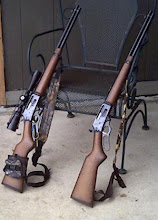
A good rifle should be your next consideration. Most rifles are designed to be highly effective at longer ranges and can be effectively used for hunting purposes but can also be used for protection. Some rifles are more specifically designed for use in hunting and this will probably be one of its more important uses on a day to day basis in a survival situation. Their effectiveness will generally be limited only by the proficiency and skill of the user. When it comes to choosing a rifle for your survival arsenal, the choices become harder. Bolt action, lever action or semi-auto rifles can all be good choices for your survival arsenal and the only real limitation here is your budget, your knowledge of the firearm and your proficiency. There are many reasonably priced surplus military rifles available and a great number of very reliable lever action rifles as well. Most semi-auto rifles tend to be a little more costly but there are still bargains that can be found if you keep an eye out for them. Hunting will be one of the critical uses for your rifle in a survival situation and their long range capability will factor significantly into the protection factor as well. A rifle that is both reliable and trustworthy will afford you the necessary means for providing value in both hunting and protection at longer ranges that will be a necessary part of any survival arsenal.


Remember to keep in mind that ammunition supplies may become critical and you will probably need to keep your choices for firearms in your survival arsenal based on the more common and readily available calibers and types of ammunition. This will vary depending upon the type of firearm and your budget restraints. The more common calibers will be easier to procure in a survival situation than specialized ammunition that may end up being extremely difficult to find, if not impossible. If your budget allows, a pistol, a shotgun and a rifle that is suitable for use by each member of your family will form a solid foundation for a survival arsenal.

Staying above the water line!

Riverwalker

Real Life Survival - Staying Above the Water Line! - Part Three

It seemed as though the water was rising almost as fast as his adrenaline levels. He had some major problems now and needed to concentrate on his options. The first step was to analyze the main components that composed his current threat. His major goal had suddenly changed. Being stuck on a bridge had changed his immediate perspective. He realized his major goal was now going to be focused on getting off that bridge as soon as possible. During a disaster or in a crisis situation, it is important to realize that many things will change quickly and suddenly.

It had been almost thirty minutes since traffic had stopped and there was no real clue as to what had brought everyone to a screeching halt. He stood silently in the rain. He was hoping there wouldn’t be much longer before he could get moving once again or he would have to abandon any plans for getting home this day. He was burning daylight and time was running out. He silently laughed to himself as he thought about that saying. With all the clouds, there wasn’t a whole lot of daylight anywhere right now. He needed information about what was happening and he needed it now. Locking his truck, he set off on foot towards the end of the bridge.

Now stupidity can be a very dangerous thing. Although it causes the most problems for the person doing something stupid, it can also lead to problems for others through no fault of their own. He now knew this was the case. Apparently, the driver who had just sped past in the driving rain had lost control of his car as he left the bridge. Talk about the mess caused by the irresponsible driver was now filtering back to his area. Maybe the driver didn’t know that it is extremely easy to lose control when the highway is wet or the road surface changes, such as when you cross a bridge. After that, you’ll be hydroplaning with little or no control. Life can be pretty hard sometimes but it can be a lot harder if you do something stupid.

It seems everyone was waiting for the cops and an ambulance. He hoped nobody was seriously injured but this wasn’t a delay he wanted. Emergency services were going to have to use the shoulder of the highway to get there. That would take time and it was the one thing he didn’t have any to spare at the moment. The main lanes were already full of cars that weren’t moving and had no place to go. The rain was also starting to fall just a little bit harder. More rain meant more water. The last thing anybody needed now was more rain.

The foolhardy driver had spun around on the wet highway and then was struck by another vehicle. After being struck by the other vehicle, his car had rolled down the embankment and wound up on the service road. He could see the flashing lights of the ambulance as it was pulling up to it. At least he was going to get some help; hopefully it had arrived in time. But what was holding up traffic now? Then he saw it! The telltale signs of a busted radiator were now visible. Steam was rising from the hood of a vehicle up ahead. The vehicle that had struck the car of guy who was speeding in the rain was now disabled and turned at an angle. It was blocking both lanes. Fortunately, the driver who looked shook up did not appear to be seriously injured. It had now become a waiting game. He knew the wait for emergency services to arrive was going to be a long one. During abnormal weather conditions, the response time of emergency services will be even longer due to increased demand for their services.

He had information now. He had to act on his previous plan and spur some action. Standing around and waiting for someone else to do something just wasn’t his style. Someone had to step up and get things going again and he was just the one to do it. He needed to get going and get going now. He couldn’t wait the extra time that might be necessary while people waited for emergency services. Sometimes all people need is a simple solution to their problem and once presented with a viable solution will act on it in a surprisingly efficient manner.

He approached the stranded vehicle and suggested that if several of the guys standing around would help; the car could be moved to the shoulder and the traffic lanes could be cleared. It also made even more sense when he explained his reasoning. If we could get the traffic moving again, emergency services could get there faster and without an untimely delay with the lanes of the highway open. A short time later with a little push and shove, the damaged vehicle was sitting on the shoulder of the road. He waved to the driver with the damaged vehicle as he went past. He had offered him a ride but the guy said he was going to wait for a wrecker. Unlike the driver standing next to his car on the side of the road, he had enough waiting for one day and was glad to be moving towards his destination.

He was moving again and he was still:

Staying above the water line!

Riverwalker


Friday, July 2, 2010

Riverwalker's Pics - Following the Mountain Stream - Part Two

Traveling down the mountain and following the stream became easier as the trees began to thin out. The flow of the stream had lessened from the levels that were seen higher up and where the stream was closer to the snow line. There were still adequate natural materials that could be used to build a shelter if necessary and quite a few nice open spots that would have made a good campsite. The stream was also easier to cross at this point, which was not always that easy higher up where the flows were running above normal. More later...

Staying above the water line!

Riverwalker

Thursday, July 1, 2010

Riverwalker's Pics - Artificial Camouflage


Imitation is the sincerest form of flattery. Sometimes it can become necessary to imitate nature when it comes to the art of camouflage. At certain times, a little artificial camouflage can help.

Got artificial camouflage?

Staying above the water line!

Riverwalker
Related Posts with Thumbnails